TRW & Co · Investment, Economic Zones & Projects
Environmental Clearance Lawyer in Chittagong (Chattogram): DoE Approvals and Compliance

An environmental clearance lawyer in Chittagong helps factories, developers and projects secure and keep the Department of Environment's Environmental Clearance Certificate. The Environment Conservation Rules 2023 sort projects into Green, Yellow, Orange and Red categories with different studies and renewal cycles. In Chattogram, hills, rivers and the coast make compliance closely watched.
Key pointThe DoE, not the applicant, decides a project's category, and the certificate covers only the process and capacity described. Expanding, changing fuel or adding a line without amending the clearance is the most common way compliant factories become non-compliant.
At a glance
Section 12 requirement
Section 12 of the Environment Conservation Act 1995 bars establishing an industrial unit or project without an environmental clearance certificate from the DoE.
2023 Rules replaced 1997
The Environment Conservation Rules 2023 (SRO No. 53) took effect in March 2023 and repealed the long-standing 1997 Rules.
Four risk categories
Projects are classed Green, Yellow, Orange or Red; Orange needs an initial environmental examination and Red a full environmental impact assessment.
Online for zones
Under a June 2021 memorandum with the DoE, BEPZA's zone enterprises can apply for and renew environmental clearance online.
Local enforcement
Chattogram has a Divisional Environment Court, and DoE mobile courts regularly fine units for hill cutting, filling water bodies and pollution.
Swipe or scroll →
What an environmental clearance lawyer in Chittagong handles
An environmental clearance lawyer in Chittagong helps factories, developers, ports, energy projects and ship recycling yards obtain and keep the Environmental Clearance Certificate (ECC) that the Department of Environment (DoE) requires before an industrial unit or project operates. The work covers categorisation, location clearance, impact studies, the ECC application, renewals, inspections, enforcement notices and, when needed, appeals and court proceedings.
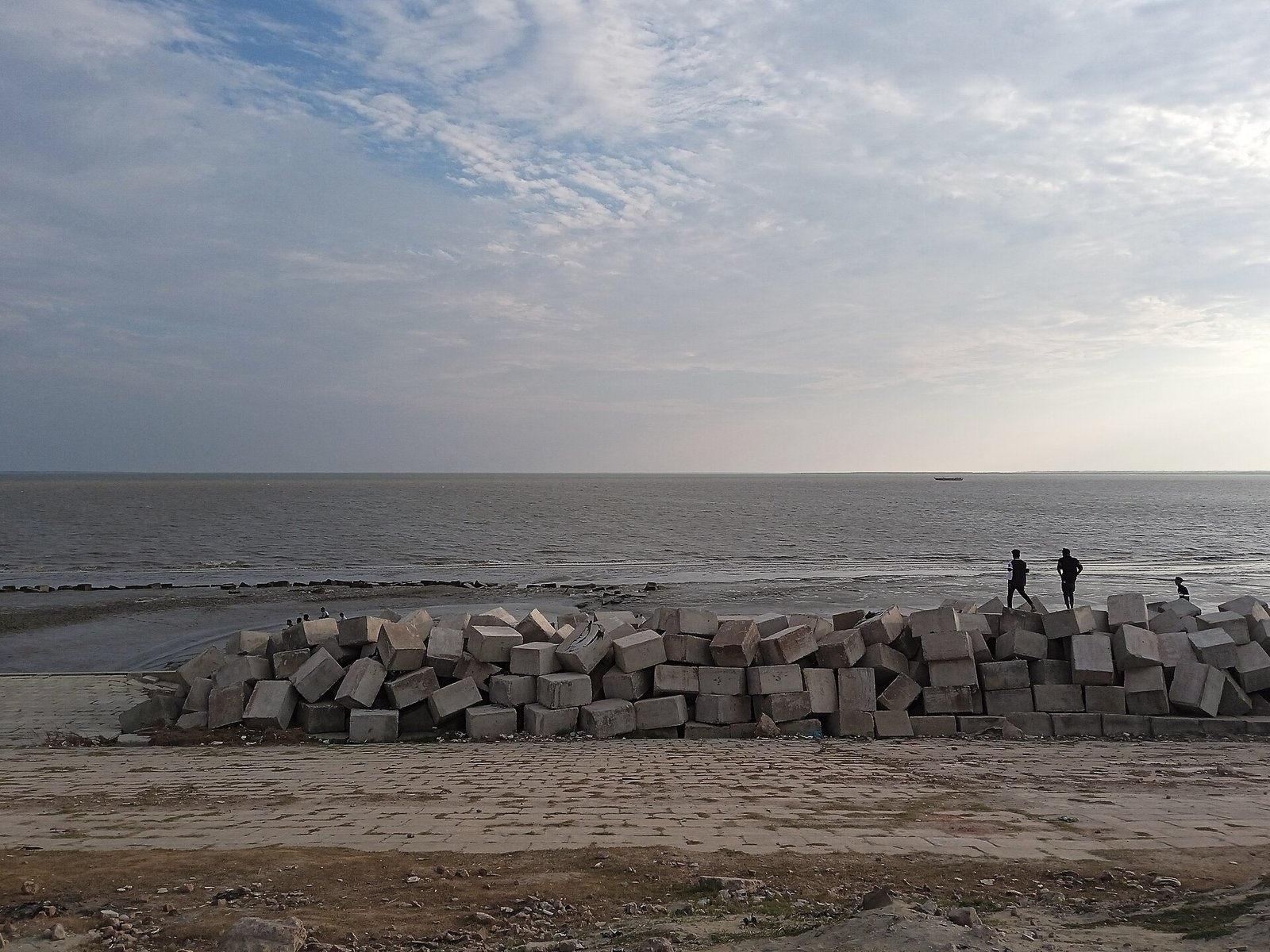
Chattogram is one of the most environmentally sensitive industrial regions in Bangladesh. Its hills, the Karnaphuli river and its tributaries, the Sitakunda coast with its ship recycling yards, and the industrial belts along the Dhaka–Chattogram highway all sit close to housing and farmland. Environmental compliance here attracts close attention from the DoE, the courts, the media and international buyers.
Environmental clearance becomes a legal question at predictable moments: when a new plant is planned, when a factory changes its process or expands, when a renewal is refused, when the DoE issues a notice or fine, or when a buyer, lender or acquirer asks for proof of compliance. In each case the record matters, and gaps are expensive to fix later.
This page explains the law after the 2023 rules, how the categories work, the process in Chattogram, the special arrangements for EPZs and economic zones, and the risks we see most often. For zone projects, see also our BEPZA approvals page.
The legal framework: the 1995 Act and the 2023 Rules
The foundation is the Bangladesh Environment Conservation Act 1995. Section 12 provides that no industrial unit or project may be established or undertaken without an environmental clearance certificate from the Director General of the DoE, in the manner set by the rules. The Act also allows the government to declare ecologically critical areas, gives the Director General wide powers to issue directions and require remedial measures, and creates offences and penalties.
The detail sits in the Environment Conservation Rules 2023 (SRO No. 53 of 2023), which took effect in March 2023 and repealed the Environment Conservation Rules 1997. The 2023 Rules classify industrial units and projects into four categories, Green, Yellow, Orange and Red, according to their pollution potential and risk to health and the environment. They set the procedure for location clearance and environmental clearance, criteria for environmental impact assessment and environmental management plans, environmental quality and discharge standards, treatment plant requirements, fees and an appeal procedure.
Regulators and courts in Chattogram
The Department of Environment administers clearance through its head office and field offices, including its offices in Chattogram that cover the city and the wider division. Enforcement runs through DoE inspections, notices, fines and mobile courts. Criminal cases under the Act are tried by the environment courts set up under the Environment Court Act 2010, and Chattogram has a Divisional Environment Court. Regulatory decisions can also be challenged in the High Court Division by writ.
Other regimes overlap. Projects in the city need CDA planning and building approval, factories need fire and DIFE licences, and ship recycling yards have their own licensing under the Ship Recycling Act 2018. An environmental clearance lawyer in Chittagong has to sequence all of them. See our pages on CDA building approval and factory licensing.
How the four categories work
Categorisation is the most important early decision, because it fixes the studies required, the time involved and how often the certificate must be renewed. The schedules to the 2023 Rules list activities by category, and borderline cases need careful reading.
| Category | Risk level | What is usually required | Practical notes |
|---|---|---|---|
| Green | Lowest | Application for environmental clearance with basic project information | Generally no separate location clearance stage; the longest validity of the four categories |
| Yellow | Moderate | Location clearance, then environmental clearance, with process and waste information | Common for smaller manufacturing and service units; local authority consent often needed |
| Orange | Substantial | Location clearance, initial environmental examination (IEE), environmental management plan, then environmental clearance | Effluent treatment design is usually central; renewals are more frequent |
| Red | Highest | Location clearance, terms of reference, full environmental impact assessment (EIA) with management plan, then environmental clearance | Large industry, energy, chemicals and similar projects; the longest process and closest scrutiny |
The DoE decides the category, not the applicant. Describing a project too narrowly to fit a lower category is a false economy: if the DoE or a later inspection takes a different view, the clearance may be treated as invalid. We read the schedules against the actual process flow and raise any doubt with the DoE early.
Chattogram-specific issues
Several local features shape how an environmental clearance lawyer in Chittagong approaches a project.
Hills, wetlands and water bodies
Chattogram's hills and ponds are protected by environmental and other laws, and hill cutting and filling of water bodies are frequent subjects of DoE action and litigation in the city. Sites that involve cutting, levelling or filling need particular care, and an ECC for a factory does not authorise unlawful earthworks on the same land.
EPZs and economic zones
Enterprises in BEPZA's zones can apply for and renew environmental clearance online under a memorandum BEPZA signed with the DoE in June 2021. The Invest Bangladesh FAQ lists environmental clearance among the services available through its online one-stop service. In both cases the DoE's substantive standards still apply; the zone route changes the channel, not the rules.
Industrial belts and older factories
Many factories in the Kalurghat, Nasirabad, Sholoshahar, Bayazid and Sitakunda areas were set up decades ago and have expanded in stages. Their clearance files often lag behind the plant on the ground. An environmental clearance lawyer in Chittagong will usually start such a review by comparing the last certificate with today's capacity, processes and fuel, then plan any amendment before the next renewal or buyer audit.
Ship recycling and the coast
Sitakunda's ship recycling yards need environmental clearance alongside yard approvals and ship-specific permissions, and projects on the coast or riverbank may touch ecologically critical areas. Our ship recycling page covers that regime.
An environmental clearance certificate is not a one-time permit. It is a promise about how a plant will operate, and the DoE can test that promise at every renewal and inspection.
The clearance process, step by step
The DoE launched new software in November 2024 to make the ECC process paperless, from application to tracking and downloading the certificate. The legal sequence for a typical Orange or Red project is as follows; Green and Yellow projects follow a shorter version.
- Categorise the project. Map the process flow, raw materials, emissions and waste against the 2023 Rules' schedules and confirm the category.
- Secure the site and local consents. Confirm land title and permitted use, and obtain the local authority's no-objection or consent where required.
- Apply for location clearance. Submit the application with site plans, process description and, for Red projects, the proposed terms of reference for the EIA.
- Prepare the IEE or EIA. Commission qualified consultants to prepare the study and environmental management plan, including effluent treatment and waste handling.
- Build to the approved design. Construct and install pollution controls, such as an effluent treatment plant, as approved in the location clearance and studies.
- Apply for environmental clearance. Submit the ECC application with the required documents and fee, and respond promptly to DoE queries and site inspections.
- Operate within conditions and renew on time. Monitor, keep records and apply for renewal before expiry, since higher-risk categories must renew more often.
Documents to assemble
Expect to provide company documents, land ownership or lease papers, a site layout and location map, the process flow diagram, a raw materials and products list, the local authority's consent, effluent treatment and waste management plans, the IEE or EIA where required, and proof of fee payment. Projects in the city should also have CDA approvals in hand or in progress. Inconsistency between the site plan, the process description and the building approval is a common reason for queries.
Impact studies, consultants and the lawyer's role
For Orange and Red projects, the initial environmental examination or environmental impact assessment is the core of the application. It describes the baseline environment, predicts the project's effects, and sets out the environmental management plan the operator will follow. The DoE reviews it in detail, and its commitments become, in effect, conditions of operation.
Technical consultants prepare the study, but legal review matters. An environmental clearance lawyer in Chittagong checks that the project description matches the company's approvals, land documents and building plans, that commitments in the management plan are realistic and affordable, and that the study addresses issues likely to be raised by neighbours, the DoE or later litigants. Overpromising in a study creates obligations the plant may not be able to meet.
Public concern is part of the picture. Projects near housing, schools, rivers or hills in Chattogram can attract complaints and, occasionally, public interest litigation. Engaging early with the local authority and affected neighbours, and recording that engagement, helps both the application and any later dispute. Where a project's impacts cross into other regimes, such as land acquisition or port works, we coordinate with those teams as well; see our land acquisition page.
Inspections, enforcement and appeals
The DoE inspects facilities, samples discharges and responds to complaints. Under the 1995 Act the Director General can issue directions, require remedial measures, impose penalties and, after notice, order closure or direct utility providers to disconnect services. DoE mobile courts in Chattogram regularly fine units for brick kiln violations, hill cutting, filling water bodies, black smoke and similar offences.
The 2023 Rules provide an appeal procedure against decisions on clearance, heard by an appellate authority. Appeals are time-limited, so a refusal or condition should be reviewed as soon as it arrives. Criminal prosecutions go to the environment court, and an unlawful or disproportionate regulatory decision can be challenged by writ in the High Court Division, where our advocates appear; see our writ petitions page.
Enforcement in Chattogram is uneven but real. Prothom Alo reported in October 2025 that the Chattogram Divisional Environment Court had a substantial backlog, with only a small share of its cases under the Environment Conservation Act, while DoE mobile courts imposed significant fines. For a business, the practical risk is less a prison sentence than fines, closure orders, utility disconnection and loss of buyer confidence.
Risks and common mistakes
These are the problems an environmental clearance lawyer in Chittagong is most often asked to fix.
Building or operating before clearance
Some projects start construction on the strength of a location clearance, or begin trial production before the ECC is issued, to meet buyer deadlines. That exposes the business to DoE action, fines and possible closure, and it can complicate the eventual application because the DoE is then assessing a plant that already exists. If time is short, discuss sequencing with the DoE openly rather than proceeding without approval. Lenders and buyers increasingly ask for the certificate before funding or ordering.
Expanding or changing the process without amending the ECC
A certificate covers the activity, capacity and process described in the application. Adding a dyeing line, increasing boiler capacity, changing fuel or adding a product can move the unit into a different category or breach its conditions. Treat any material change as a trigger to review the clearance, and apply for an amendment before the change, not after an inspection discovers it.
Letting the renewal lapse
Validity periods differ by category, and higher-risk categories must renew more often. Missing a renewal leaves the unit operating without valid clearance, which buyers' auditors and banks will notice even if the DoE does not. Diarise renewal dates well ahead, keep monitoring records ready, and file renewals early so that queries can be answered before expiry.
An effluent treatment plant that exists only on paper
DoE inspections and buyer audits increasingly check whether effluent treatment plants actually run, by reviewing energy use, chemical consumption and discharge samples. A plant that is installed but not operated, or bypassed, can lead to heavy penalties and reputational damage. Keep operating logs, maintenance records and test results, and make sure the plant's capacity matches current production.
Buying a site or business without environmental due diligence
Acquirers of factories in Chattogram sometimes inherit unpaid DoE penalties, pending cases, unauthorised expansions or contaminated land. Environmental due diligence should check the clearance history, conditions, inspection reports, notices, court cases and the real state of pollution controls. Price and protect against what you find with warranties, indemnities or conditions to closing. Our due diligence page explains the wider process.
Keep a single environmental compliance file for each site: the category decision, location clearance, ECC and every renewal, conditions, monitoring results, inspection reports and correspondence. When a buyer audit, bank review or DoE notice arrives, that file is your first line of defence.
Foreign investors, lenders and buyers
Many Chattogram projects are financed or bought by foreign parties who bring their own environmental and social standards. International lenders, development finance institutions and brand buyers often require compliance with their own frameworks in addition to Bangladeshi law, and ask for the ECC, monitoring data and corrective action plans as conditions of funding or orders.
TRW & Co's offices in Dhaka, Singapore, Dubai and London help align those requirements with the DoE process, review environmental covenants in loan and supply agreements, and advise foreign parents on their exposure. For overseas investors, our foreign investment page covers the wider entry process.
Non-resident Bangladeshis who own family factories, warehouses or development land in Chattogram face the same rules from a distance. Clearances often lapse when the owner is abroad and the site is run by relatives or managers. A periodic review of the clearance file, renewal dates and any DoE correspondence, organised through a local lawyer holding a proper power of attorney, prevents that drift. Our NRB property page explains how owners abroad can manage Chattogram assets.
How TRW & Co helps with environmental clearance
As an environmental clearance lawyer in Chittagong, TRW & Co works from our office at Court Hill, alongside technical consultants chosen by the client.
Categorisation and strategy
We review the project against the 2023 Rules, advise on the likely category and sequence clearance with CDA, fire, DIFE and zone approvals.
Applications and renewals
We prepare and file location clearance, ECC and renewal applications, coordinate consultants' studies and respond to DoE queries.
Notices and enforcement
We respond to DoE notices, attend hearings, negotiate corrective action plans and challenge disproportionate penalties or closure orders.
Appeals and litigation
We handle appeals under the 2023 Rules, defend environment court cases and, where needed, file writ petitions in the High Court Division.
Transactions and finance
We run environmental due diligence for acquisitions and loans, and draft environmental warranties, covenants and conditions precedent.
Compliance programmes
We build site compliance files, renewal calendars and internal procedures so that buyer audits and inspections find a clean record.
Read our article on the environmental clearance process at DoE Chattogram, or browse all of our practices.
Checklist for decision-makers
- Have we confirmed the project's category under the 2023 Rules against the real process flow?
- Is the site's title, permitted use and position relative to hills, water bodies and ecologically critical areas checked?
- Do we have location clearance and, where needed, an approved IEE or EIA before building?
- Is the effluent treatment and waste plan designed for actual capacity, with operating records kept?
- Will any expansion, new line or fuel change trigger an ECC amendment?
- Are renewal dates diarised with time to answer DoE queries?
- Do our lenders' and buyers' environmental requirements match what the ECC covers?
- Do we know the appeal deadline if an application is refused or conditioned?
To speak to an environmental clearance lawyer in Chittagong, contact our Chattogram office at info@trw.co or +880 1779 127165, or visit Room 4022, Annex 2, District and Sessions Judge Court Building, Court Hill (Porir Pahar), Kotwali, Chattogram 4000.
Frequently asked questions
01Does every business in Chattogram need environmental clearance?
Every industrial unit or project covered by the Environment Conservation Act 1995 and the schedules to the 2023 Rules needs clearance before it is established or operated. Offices and many small service businesses fall outside, but factories, workshops, hotels, hospitals, developers of larger projects and most processing activities fall inside. Where an activity is not obviously listed, take advice before starting, because operating without a required certificate is an offence.
02What is the difference between location clearance and environmental clearance?
Location clearance is the first stage for Yellow, Orange and Red projects. It confirms that the chosen site is acceptable and, for higher-risk projects, approves the scope of the impact study. Environmental clearance comes later, once the plant is designed and pollution controls are in place, and authorises operation subject to conditions. Lower-risk Green projects generally go straight to environmental clearance.
03How long does it take to get an ECC in Chattogram?
It depends mainly on the category. Green and Yellow projects need less information and usually move faster, while Orange and Red projects need an IEE or EIA, which take time to prepare and review. The DoE's online system has reduced paperwork, but incomplete applications and inconsistencies between documents still cause most delay. We give a project-specific estimate once we have seen the process flow and site.
04We are in an EPZ. Do we deal with the DoE directly?
BEPZA and the DoE signed a memorandum in June 2021 so that EPZ investors can apply for and renew environmental clearance online through BEPZA's service channel. The DoE's standards, categories and conditions still apply, and the DoE can still inspect. Economic zone enterprises can use the online one-stop service now run by Invest Bangladesh. An environmental clearance lawyer in Chittagong can help with either route.
05What happens if the DoE refuses or conditions our clearance?
The 2023 Rules provide an appeal to an appellate authority, and appeals are time-limited, so act as soon as the decision arrives. Often the better first step is to understand the DoE's concern and address it with further information or design changes. If the decision is unlawful or disproportionate, a writ petition in the High Court Division may be available. We review the decision, advise on the best route and prepare the appeal or petition.
06We have received a DoE notice or fine. What should we do?
Read the notice carefully for its legal basis, the alleged breach and any deadline. Preserve monitoring records, photographs and correspondence, and avoid informal admissions. Respond in writing within the time allowed, with evidence of compliance or a credible corrective plan. Where a hearing is offered, attend with your technical consultant. If a closure or disconnection order is threatened, take legal advice immediately, because urgent remedies may be needed.
07Does a buyer's or lender's audit replace DoE clearance?
No. Buyer and lender standards are contractual and sit on top of Bangladeshi law. An audit pass does not cure a missing or expired ECC, and a valid ECC does not guarantee a buyer audit pass. Most international buyers and lenders ask to see the ECC and its renewals, so keeping the statutory clearance current is the starting point for both.
Sources and official materials
- Bangladesh Environment Conservation Act 1995 (UNEP LEAP record) — Primary statute; section 12 clearance requirement
- Environment Conservation Rules 2023, SRO No. 53 (UNEP LEAP record) — Categories, location and environmental clearance, appeals
- Department of Environment — Clearance administration, notices and field offices
- BEPZA and DoE memorandum on online environmental clearance — Online ECC issue and renewal for EPZ investors (2021)
- Invest Bangladesh FAQ — Environmental clearance among one-stop services
- BEPZA: Information for Investors — Zone rules relevant to EPZ projects
General information only, current as at 2 November 2026. It is not legal advice and does not create an advocate–client relationship. It reflects the law of Bangladesh unless stated otherwise, and the law, court practice and official fees change frequently. Check current official sources and take advice on the facts of your matter.