
TRW & Co · Family Law
Family Court Lawyer in Chittagong: Chattogram Family Court and e-Family Court
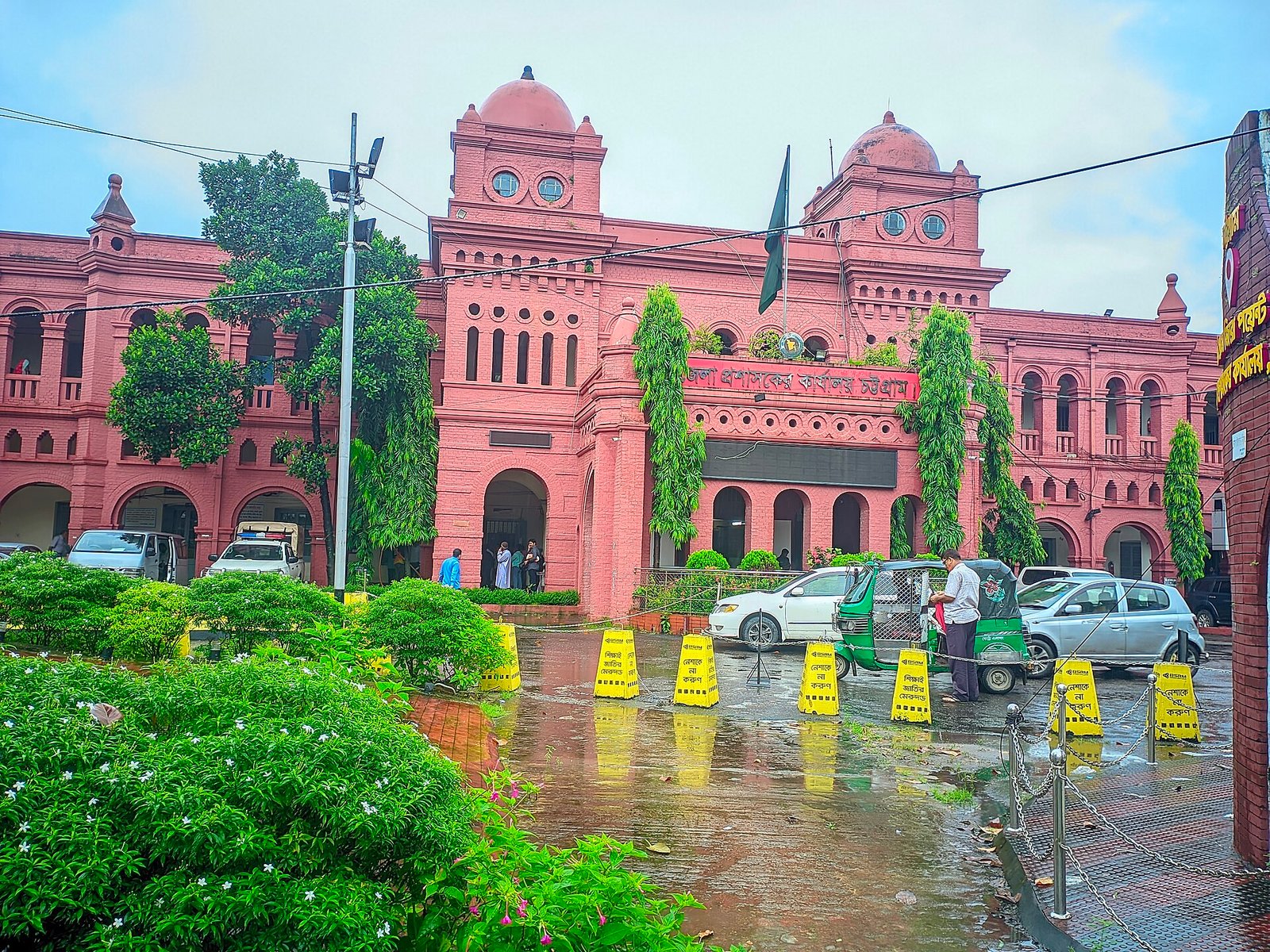
A family court lawyer in Chittagong guides clients through the courts that decide divorce, dower, maintenance, conjugal rights and child custody. Since the Family Courts Act 2023 replaced the 1985 Ordinance, and since Chattogram's e-Family Court opened in November 2025, how a case is filed and heard has changed. The law applied and the evidence needed have not.
Key pointThe Chattogram e-Family Court lets parties file, receive SMS notices and attend hearings online, which matters most for spouses working abroad; but it applies exactly the same law, so weak evidence fails online just as it does in the courtroom.
At a glance
Five matters only
Section 5 of the Family Courts Act 2023 limits Family Courts to divorce, restitution of conjugal rights, dower, maintenance, and guardianship and custody.
New Act in force
The Family Courts Act 2023, passed in September 2023, replaced the Family Courts Ordinance 1985 and widened the appellate route.
e-Family Court launched
Chattogram's e-Family Court began on 30 November 2025, allowing NID-verified online filing, SMS notices, dashboards and remote attendance.
Reconciliation is built in
Family Courts attempt reconciliation before evidence is recorded, and many dower and maintenance disputes settle at that stage.
Appeals at District Judge rank
Appeals lie to courts of District Judge rank within a short statutory period, with further recourse to the High Court Division.
Swipe or scroll →
What the Chattogram Family Court does
A family court lawyer in Chittagong works in a specialised civil forum that handles the disputes families find hardest to settle on their own: divorce, dower, maintenance, restitution of conjugal rights, and the custody and guardianship of children. These cases are not heard in the ordinary civil list. They go to Family Courts with their own statute, their own reconciliation stages and, since late 2025, their own online platform in Chattogram.
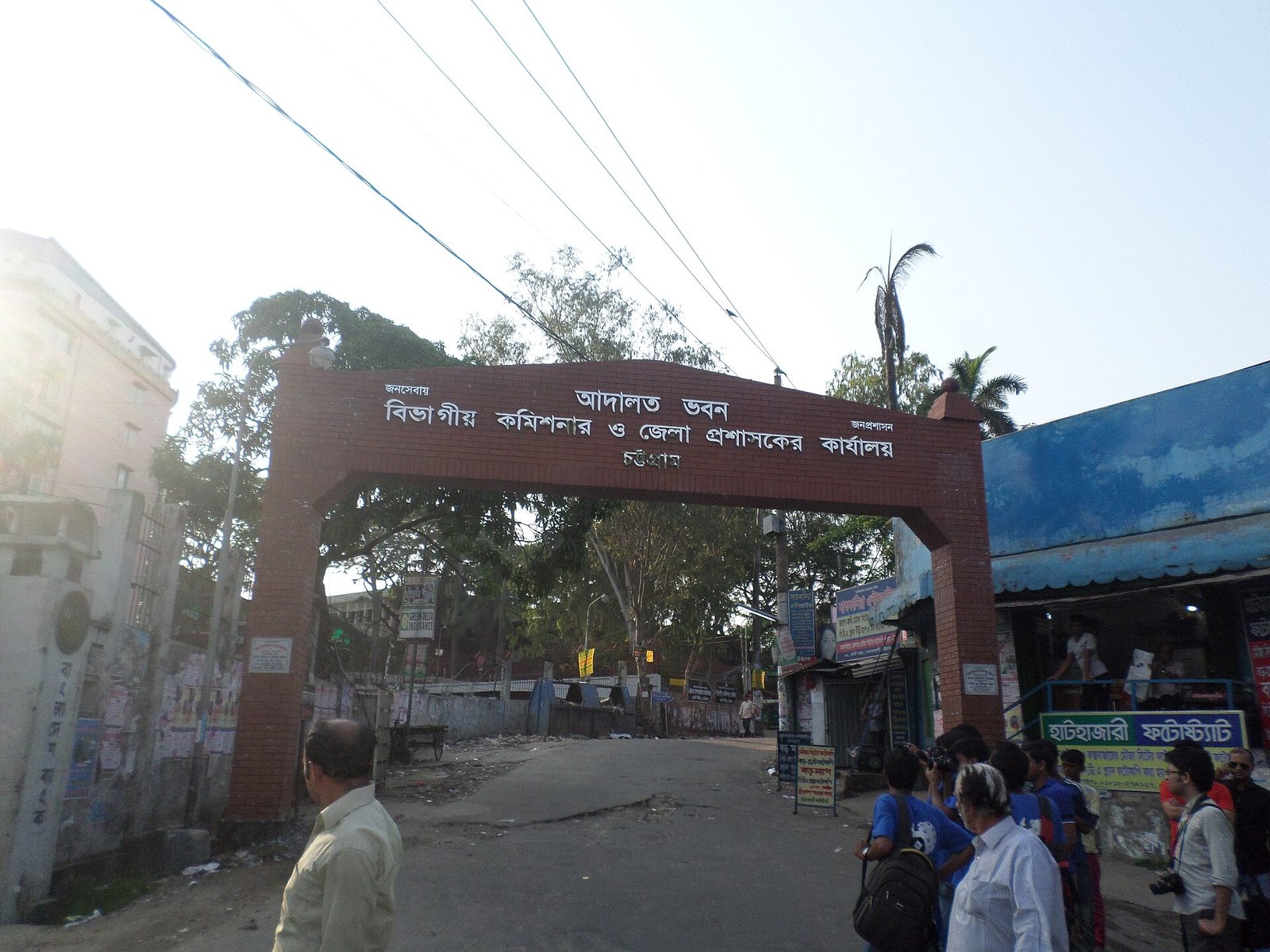
The Family Courts sit within the Chattogram civil court system at the district court complex near Kotwali Mor, the same hub that houses many of the city's civil and criminal courts. Parties come from across Chattogram city and the district's upazilas, and a large share of cases involve a spouse working overseas.
This page explains how the Family Court and the e-Family Court work, how a case moves from plaint to decree, and where a lawyer adds value. For the substantive law on each type of claim, see our pages on divorce, dower recovery, maintenance and child custody.
The legal framework: the Family Courts Act 2023
Family Courts in Bangladesh now operate under the Family Courts Act 2023, passed by Parliament in September 2023. It replaced the Family Courts Ordinance 1985, carrying over most of the old structure while making some targeted changes.
Jurisdiction under section 5
Section 5 of the 2023 Act gives Family Courts exclusive jurisdiction over five matters:
- dissolution of marriage;
- restitution of conjugal rights;
- dower (denmohor);
- maintenance; and
- guardianship and custody of children.
Matters outside that list go elsewhere. Inheritance, wills and heba (gift) disputes belong to the ordinary civil courts; claims by parents for maintenance from their children go to the magistrates under the Parents' Maintenance Act 2013; violence in the home is addressed under the Domestic Violence (Prevention and Protection) Act 2010 and, where relevant, the criminal law. Choosing the wrong forum wastes months, so a family court lawyer in Chittagong should confirm the forum before anything is filed.
What changed in 2023
Two changes matter most in practice. First, appeals from Family Court decrees are no longer confined to the District Judge's own court; the government can assign them to other courts of District Judge rank, which was intended to ease appellate backlogs. Second, the court fee payable on filing was increased, though it remains modest by comparison with ordinary civil suits; check the current fee before filing.
The Act applies to citizens of every faith. Muslim, Hindu, Buddhist and Christian families use the same Family Courts, while the substantive rules on marriage, divorce and maintenance come from each community's personal law and related statutes such as the Muslim Family Laws Ordinance 1961 and the Hindu Marriage Registration Act 2012. Custody and guardianship claims also draw on the Guardians and Wards Act 1890.
Who presides
Family Courts are not a separate cadre of judges. They are constituted from the civil judiciary at the level of Assistant Judge and Senior Assistant Judge, so the same judicial officers who hear ordinary civil suits also sit as Family Courts for defined areas of Chattogram. The appellate court is a court of District Judge rank. Above that, the High Court Division of the Supreme Court exercises revisional and constitutional supervision.
The five case types in practice
Each of the five section 5 matters raises its own practical questions in Chattogram. A brief orientation helps clients understand what the court will focus on.
Dissolution of marriage
A wife who does not hold a delegated right of divorce, or whose husband refuses khula, can sue for dissolution on the grounds recognised by the Dissolution of Muslim Marriages Act 1939, such as failure to maintain, cruelty or desertion. A husband's talaq, by contrast, runs through the notice and arbitration council procedure under the Muslim Family Laws Ordinance 1961 rather than through the Family Court, although disputes about its validity often surface in later Family Court cases.
Dower and maintenance
Unpaid dower is a debt owed to the wife and is commonly claimed together with maintenance for the wife and children. The court looks at the kabinnama terms, what has already been paid, and the husband's means. Interim maintenance can be sought while the case continues, which matters for families who have lost their main source of income.
Restitution of conjugal rights
Suits for restitution of conjugal rights are less common and are often filed in response to a wife's claim for maintenance or dissolution. Courts have questioned whether such suits can be used to compel cohabitation, and outcomes depend heavily on the facts.
Custody and guardianship
Custody cases are decided on the child's welfare under the Guardians and Wards Act 1890, with personal-law rules on hizanat as the starting point. Interim orders on residence, visitation and travel are frequently needed, and a family court lawyer in Chittagong will often run custody alongside maintenance in the same court.
The Chattogram e-Family Court
On 30 November 2025 the e-Family Court began operating in Chattogram, inaugurated at the Chattogram District Bar Association auditorium. It followed the launch of the first e-Family Court in Dhaka a week earlier and covers the same five categories of case that section 5 assigns to Family Courts.
The platform, at efamilycourt.judiciary.gov.bd, is designed to run a case from filing to judgment online:
- Registration: users register with their National ID number, date of birth, name, mobile number and email, verified by a one-time password.
- Lawyers: advocates upload their Bar Council certificate and vakalatnama, and litigants can select their lawyer on the platform.
- Filing and documents: pleadings and documents are uploaded digitally rather than filed on paper.
- Notices: hearing dates and updates are sent by SMS, and a dashboard shows progress, dates and outcomes.
- Hearings: parties and lawyers can attend remotely, and testimony can be given digitally.
Manual procedures continue alongside the digital system, so a case can still be run in the physical courtroom where that suits the client better. For a step-by-step walkthrough, read our article on how online family cases work in Chattogram.
For a wife in Hathazari or a husband working in Riyadh, the e-Family Court changes the practical cost of going to court. It does not change the law, the evidence the judge needs, or the value of preparing properly.
Physical courtroom or e-Family Court: choosing a route
A family court lawyer in Chittagong will usually discuss with the client which route suits the case. Both lead to the same kind of decree; the difference is in logistics, speed of service and the practicalities of giving evidence.
| Factor | Physical Family Court | e-Family Court |
|---|---|---|
| Filing | Paper plaint and documents at the court registry | Online upload after NID and OTP registration |
| Notices and dates | Process service and cause lists | SMS alerts and an online case dashboard |
| Attendance | In person at the court complex | Remote attendance from any location |
| Evidence | Witnesses attend court | Digital testimony, subject to the court's directions |
| Best suited to | Cases with many witnesses or parties uncomfortable with technology | Parties abroad, in upazilas, or seeking to limit court visits |
| Law applied | Identical: Family Courts Act 2023 and the parties' personal law | |
Some clients start online and attend in person for key hearings. The practical question is whether the other side, and the witnesses, can engage with the platform reliably. Where they cannot, the advantages of the online route shrink.
How a Family Court case runs: plaint to decree
The stages below apply to most Family Court suits in Chattogram, whether filed on paper or online. Our article on Family Court procedure in Chattogram sets the stages out in more detail.
- Pre-filing assessment. We confirm the cause of action, the right Family Court for the parties' residence, limitation, and whether any compulsory pre-case mediation requirement applies in the district at the time of filing.
- Plaint and filing. The plaint sets out the claim, with the kabinnama, divorce documents, evidence of means and children's records annexed. It is filed in the court registry or uploaded to the e-Family Court.
- Summons and written statement. The court summons the defendant, who files a written statement and supporting documents.
- Pre-trial reconciliation. Before evidence is recorded, the court attempts to reconcile the parties or reach a compromise. Many dower and maintenance cases settle here.
- Interim relief. Applications for interim maintenance, interim custody, visitation or restraint on removing a child can be made while the case is pending.
- Evidence and arguments. If there is no settlement, witnesses are examined and cross-examined and documents proved. Lawyers then argue the case.
- Judgment and decree. The court gives judgment, which may include a final attempt at compromise before the decree is drawn up.
- Appeal and execution. An aggrieved party may appeal to the appellate court of District Judge rank within the statutory period. Money decrees for dower and maintenance are executed through the Family Court.
Mandatory pre-case mediation through district legal aid offices, run by the National Legal Aid Services Organization, has been introduced in phases for family and certain other disputes since 2025. Chattogram was not among the districts named in the notifications we have reviewed, but the list keeps growing. We check the current position before filing so that a Chattogram case is not delayed on a technicality.
Documents a family court lawyer in Chittagong will ask for
Most Family Court disputes turn on a handful of documents. Gather originals or certified copies early, because the other side may control them once the dispute begins.
- Marriage: the kabinnama (nikahnama) or other marriage registration certificate, showing dower terms and any delegated right of divorce (talaq-e-tafweez).
- Divorce: any talaq notice, proof of service on the Union Parishad or City Corporation chairman or mayor, and the divorce registration certificate. Our page on khula and wife-initiated divorce covers the wife's routes.
- Identity: NIDs or passports of both spouses, and birth registration certificates of the children.
- Means: salary slips, business records, remittance receipts, bank statements and property records to show the husband's or father's capacity to pay.
- Children: school, medical and vaccination records to support custody and maintenance claims.
- Communications: messages and emails relevant to the dispute, preserved in a way that can be proved in court.
Common mistakes in Chattogram Family Court cases
Filing in the wrong forum
Family Courts can only hear the five categories in section 5. Inheritance shares, disputes over gifts, and parents' maintenance claims belong elsewhere, and criminal complaints such as dowry demands or violence follow their own route. A claim filed in the wrong forum can be returned or dismissed after months of delay. Equally, combining connected claims, such as dower, maintenance and custody, in one well-planned Family Court strategy often saves time and costs. Plan the forum and the claims together before anything is filed.
Treating reconciliation as a formality
The pre-trial reconciliation stage is where many cases are won or lost. A party who arrives without a realistic proposal on dower, maintenance or contact with the children misses the chance to shape a settlement the court will record. A party who agrees too quickly may accept less than the law allows. Prepare for reconciliation as carefully as for trial: know the figures, the documents and the fallback position.
Weak evidence of the husband's income
Maintenance and, often, the practical recovery of dower depend on showing what the other party earns or owns. Many husbands in Chattogram work abroad or run cash businesses, and income is easy to understate. Remittance records, social media, property records, trade licences and witnesses can all help. A claim with no evidence of means tends to produce a low award, however strong the entitlement.
Missing appeal deadlines
Appeals from Family Court decrees must be filed within a short statutory period, and delay must be explained with sufficient cause. Parties sometimes lose the right to appeal while waiting for a certified copy or negotiating informally. Apply for certified copies immediately after judgment and take advice on appeal prospects straight away. Where a decree is wrong in law, the appellate route is usually more effective than a fresh suit.
Assuming the e-Family Court removes the need for preparation
The online platform reduces travel and paperwork. It does not change what the judge must be shown. Documents still need to be legible, complete and properly proved, witnesses still need to be prepared, and a party joining remotely must have a reliable connection and a private space. Poorly uploaded documents or a failed video link at a key hearing can cost as much as a missed physical appearance.
Probashi and cross-border Family Court cases
Chattogram district sends large numbers of workers overseas, especially to the Gulf, Malaysia, Singapore, Italy and the UK. Family Court disputes regularly involve a husband abroad and a wife and children in Chattogram, or the reverse.
A party abroad can instruct a family court lawyer in Chittagong, sign a vakalatnama, and follow the case on the e-Family Court platform. Documents executed abroad, such as powers of attorney or affidavits, usually need attestation by the Bangladesh mission and further steps in Bangladesh before they can be relied on. Our pages on divorce for probashis and powers of attorney from abroad explain those steps.
Enforcing a Chattogram maintenance or dower decree against a husband abroad is harder than obtaining it. Assets in Bangladesh, such as land, bank accounts or business interests, are the usual target. TRW & Co's offices in Dhaka, Singapore, Dubai and London help locate assets and coordinate parallel steps where a party lives overseas.
How TRW & Co acts as your family court lawyer in Chittagong
TRW & Co's Bangladesh advocates appear in the Chattogram Family Courts, the appellate courts and the High Court Division. As a family court lawyer in Chittagong, we run matters from our office at Room 4022, Annex 2, District and Sessions Judge Court Building, Court Hill (Porir Pahar), Kotwali, Chattogram 4000.
Case strategy and forum
We decide which claims to bring, in which Family Court, and in what order. Dower, maintenance and custody claims are planned together so that evidence is gathered once.
Online and in-person filing
We file and run cases in the physical Family Court or on the e-Family Court platform, including registration, uploading and remote hearings for clients in Chattogram or abroad.
Reconciliation and settlement
We prepare clients for the reconciliation stages with clear figures and options, and draft compromise terms that can be recorded and enforced.
Trial advocacy
We examine and cross-examine witnesses, prove documents including electronic evidence, and argue the case on the applicable personal law and statute.
Appeals and revisions
We advise quickly after judgment, obtain certified copies and file appeals before the court of District Judge rank, with further recourse to the High Court Division where warranted.
Execution of decrees
We trace assets and take execution steps to recover dower and maintenance arrears, including against parties who live abroad but hold property in Bangladesh.
We never promise a result. Family Court decisions depend on evidence, the applicable personal law and the judge's assessment, and our role is to put the strongest lawful case before the court.
Checklist before you instruct a family court lawyer in Chittagong
- Identify which of the five Family Court matters apply: divorce, conjugal rights, dower, maintenance, or custody and guardianship.
- Collect the kabinnama, divorce papers, NIDs, children's birth certificates and any previous court orders.
- Note where each party and each child now lives; this decides which Family Court can hear the case.
- Gather evidence of income and assets of the paying party.
- Decide whether you prefer the physical court or the e-Family Court, and check that you can register online.
- If you live abroad, arrange a vakalatnama and, where needed, an authenticated power of attorney.
- Write down what a fair settlement would look like, so you are ready for reconciliation.
To discuss a case with a family court lawyer in Chittagong, contact our Chattogram office, email info@trw.co or call +880 1779 127165. See also our family law overview, all practices, the Chattogram office hub, and our guide to which Chattogram court hears your case.
Frequently asked questions
01Where is the Family Court in Chattogram?
Family Courts in Chattogram are constituted from the civil judiciary and sit at the district court complex near Kotwali Mor, with jurisdiction divided by area across the city and district. Which court hears a case depends mainly on where the parties, or the children in a custody case, live. Since 30 November 2025 cases can also be filed and heard through the e-Family Court platform. We confirm the correct court for your address before filing.
02What cases can the Chattogram Family Court hear?
Under section 5 of the Family Courts Act 2023, Family Courts have exclusive jurisdiction over dissolution of marriage, restitution of conjugal rights, dower, maintenance, and guardianship and custody of children. They cannot hear inheritance, wills or gift disputes, which go to ordinary civil courts, or claims by parents for maintenance from their children, which go to magistrates under the Parents' Maintenance Act 2013. Violence in the home has its own protective and criminal routes.
03How do I file a case on the e-Family Court?
You or your lawyer register on efamilycourt.judiciary.gov.bd using your NID number, date of birth, name, mobile number and email, verified by OTP. Lawyers upload their Bar Council certificate and vakalatnama. The plaint and documents are then uploaded, and hearing dates are sent by SMS and shown on a case dashboard. Parties can attend hearings remotely. Paper procedures continue alongside the platform, so a case can still be run in person where that is more practical.
04Can I run a Family Court case in Chattogram from abroad?
Yes. You can instruct a Bangladeshi advocate, sign a vakalatnama, and follow the case through the e-Family Court dashboard, attending remotely where the court allows. Documents signed abroad, such as powers of attorney and affidavits, usually need attestation by a Bangladesh mission and further formalities in Bangladesh. Some steps may still require attendance or court-approved video arrangements. Starting with complete, authenticated documents avoids repeated delays.
05Is mediation compulsory before filing a family case in Chattogram?
Since 2025 the government has made pre-case mediation through district legal aid offices compulsory for family and certain other disputes in phases, district by district. The notifications we have reviewed did not include Chattogram, but the list keeps expanding. Because a case filed without a required mediation step can be delayed, we check the current notification before filing. Voluntary mediation and the Family Court's own reconciliation stages remain available in every case.
06How long does a Family Court case take in Chattogram?
There is no fixed timeline. A case that settles at the reconciliation stage can finish much sooner than one that goes to full evidence, judgment and appeal. Duration also depends on how quickly the defendant is served, the court's list and how many witnesses are called. The e-Family Court is intended to reduce delays from paper handling and repeated attendance, but outcomes data is not yet available. We give a realistic estimate after reviewing the facts.
07Can I appeal a Family Court decision?
Yes. Under the Family Courts Act 2023, appeals lie to a court of District Judge rank, which may be the District Judge's own court or another court of that rank assigned by the government. The appeal must be filed within a short statutory period, and late appeals require sufficient cause. After the appeal, further recourse to the High Court Division is limited to revisional and constitutional grounds. Apply for certified copies immediately after judgment.
Sources and official materials
- Family Courts Act 2023 — Jurisdiction, procedure and appeals of Family Courts
- e-Family Court (Bangladesh Judiciary) — Online filing, notices and remote hearings
- Supreme Court of Bangladesh — High Court Division judgments and practice
- Guardians and Wards Act 1890 — Custody and guardianship law applied by Family Courts
- Bangladesh Laws (Ministry of Law) — Official statute database
- National Legal Aid Services Organization — Legal aid and pre-case mediation schemes
General information only, current as at 2 November 2026. It is not legal advice and does not create an advocate–client relationship. It reflects the law of Bangladesh unless stated otherwise, and the law, court practice and official fees change frequently. Check current official sources and take advice on the facts of your matter.



