
TRW & Co · Land & Property
Flat Purchase Lawyer in Chittagong (Chattogram)

Buying an apartment in Chattogram means relying on a developer, the landowners who gave it the land and the CDA approvals behind the building. A flat purchase lawyer in Chittagong checks all three before you pay, negotiates terms that bite if handover slips, and acts quickly when a developer delays, deviates from the plan or will not register the deed.
Key pointYour flat is only as good as the developer's authority from the landowners. Make sure your flat is within the developer's allocation and that the landowners or a registered power of attorney stand behind your sale deed.
At a glance
CDA is the authority
In the Chattogram area, CDA is the designated authority for developer registration under the Real Estate Development and Management Act 2010, as well as building approvals.
Statutory delay remedy
Section 15 of the 2010 Act obliges a developer that misses the agreed handover to refund payments with compensation, at the agreed or a statutory default rate.
Register the agreement
Agreements for sale must be registered, and ownership passes only by a registered sale deed covering the flat and its undivided land share.
Check the approved plan
Floors or units built outside CDA approval risk enforcement and make utilities, mortgage and resale harder, so compare the plan with the building.
Criminal backstop
The Land Crimes Prevention and Remedy Act 2023 makes failing to transfer property after full payment, and double sales, criminal offences.
Swipe or scroll →
What a flat purchase lawyer in Chittagong checks
Buying an apartment means buying two things at once: a defined unit in a building and an undivided proportionate share of the land beneath it. A flat purchase lawyer in Chittagong checks both, together with the developer's authority to sell, the building approvals and the contract terms, and then acts if the developer delays, deviates from the plan or refuses to register the deed.
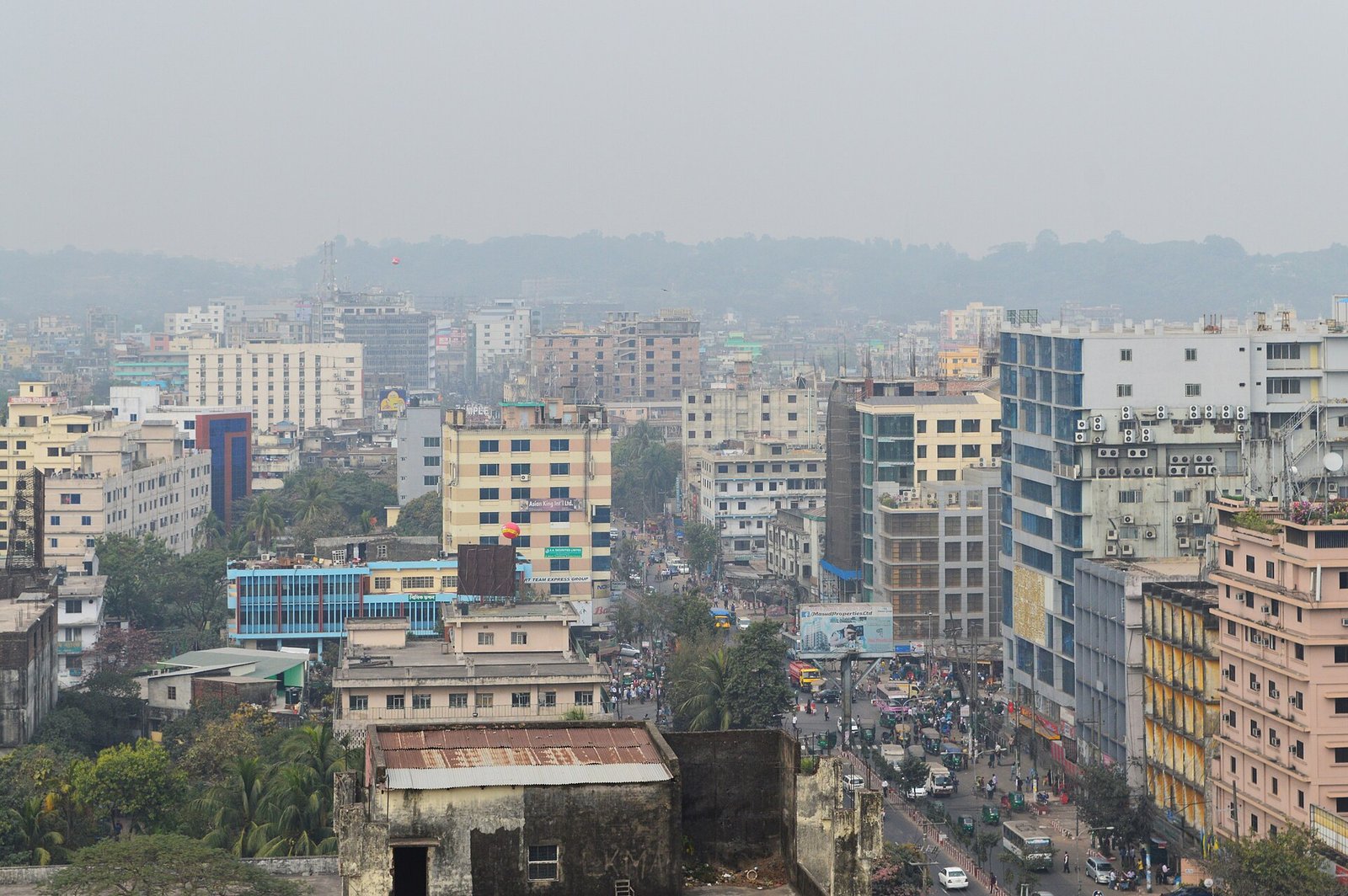
Chattogram's apartment market has grown from the older neighbourhoods of Panchlaish, Khulshi and Nasirabad to newer projects around Bayazid, Oxygen, Chandgaon, Halishahar and the CDA residential areas. Most projects are built under landowner-developer agreements, in which a family contributes land and the developer builds, sells the developer's share of flats and hands the rest to the landowners. That structure creates three parties whose rights must line up before a buyer's money is safe.
Problems typically arise in one of four ways: the land title is weak; the developer's authority from the landowners is incomplete or disputed; the building exceeds or departs from the CDA-approved plan; or the developer takes the money but delays handover and registration. Each is easier to prevent than to litigate.
Who needs this advice
- First-time buyers and families upgrading within Chattogram.
- Probashis buying a flat for parents or retirement from the Gulf, UK or Singapore.
- Buyers taking a home loan, whose bank will run its own checks.
- Buyers already facing delayed handover, defects or a refusal to register.
The legal framework for apartment purchases
Several laws apply to a typical Chattogram flat purchase:
- Real Estate Development and Management Act 2010. The core statute for developers and buyers. It requires developers to register with the designated authority, regulates advertising, allotment and payment terms, and gives buyers specific remedies. In the Chattogram metropolitan area the designated authority is the Chattogram Development Authority (CDA). Section 15 requires a developer who fails to deliver within the agreed time to refund the money paid with compensation, either at the rate stated in the agreement or, where the agreement is silent, at a statutory default rate, within a fixed period.
- Transfer of Property Act 1882 and Registration Act 1908. The sale of a flat with its land share must be by registered deed, and agreements for sale must also be registered. Until registration, the buyer has contractual rights, not ownership.
- Specific Relief Act 1877. Gives the remedy of specific performance, compelling a developer or landowner to execute and register the sale deed, and injunctions to stop a second sale of the same flat.
- Land Crimes Prevention and Remedy Act 2023. Makes it an offence to fail to transfer land to a buyer after receiving full payment, and to sell the same property twice or by concealing information.
- CDA building and planning controls. Land-use clearance and building plan approval from CDA govern how many floors, what setbacks and what use are permitted. A building that exceeds its approval can face enforcement, including demolition of unauthorised parts.
Until the sale deed is registered in your name, you own a contract, not a flat. Every protection in the purchase is about getting from one to the other safely.
Pre-purchase checks for Chattogram projects
A flat purchase lawyer in Chittagong runs a project-level check before you sign anything binding. The aim is to confirm that the developer can deliver what it is selling.
| Check | What we look at | Why it matters |
|---|---|---|
| Land title | Landowners' deed chain, khatians, mutation and tax | A weak land title undermines every flat in the building |
| Developer's authority | Registered landowner-developer agreement and power of attorney | The developer can only sell its allocated flats, and only within its authority |
| Developer registration | Registration under the Real Estate Act with CDA | An unregistered developer is a regulatory and practical risk |
| Approvals | CDA land-use clearance and approved building plan | Floors or units outside the approval can be enforced against |
| Encumbrances | Project loans, mortgages and bank NOCs | A mortgaged project needs the lender's release for your share |
| Litigation | Suits between landowners, developers or co-heirs | Injunctions can halt construction or registration |
| Allocation | Flat schedule, parking and common areas | Prevents double allotment and disputes over parking and roof |
The land-level work overlaps with our land title verification service, while approval questions draw on our CDA building approval practice. For a buyer-side summary, see our article Buying a Flat in Chittagong: 15 Legal Checks.
Buying a resale flat
For a second-hand flat in an older Panchlaish or Khulshi building, the checks shift. Instead of the developer's authority, we trace the seller's registered deed back to the original allotment, confirm that the seller's land share was mutated, check for bank mortgages and unpaid service charges, and ask the owners' association whether any dispute affects the unit. If the seller inherited the flat, all heirs must join the sale or the heirship must be documented.
Contract terms that protect the buyer
Developers use standard-form allotment letters and agreements. Many are fair; some leave the buyer with few rights. The terms worth negotiating are the ones that decide what happens when the project goes wrong.
Payment schedule tied to progress
Link instalments to verifiable construction stages rather than calendar dates, and avoid paying most of the price before the structure is complete. Keep every receipt and pay through banking channels.
Handover date and compensation
State a clear handover date, a limited grace period and the compensation for delay. The Real Estate Act provides a statutory fallback, but an express clause avoids argument.
Specifications and approved plan
Attach the approved plan, the floor plan of your unit, the measured area (and how it was calculated, including common space), and the specification schedule. Vague references to "standard fittings" generate disputes.
Registration deadline
Fix the date by which the developer and landowners must execute and register the sale deed, and who pays registration costs, stamp duty and taxes.
Dispute resolution
Agreements commonly provide for arbitration before court proceedings. Check the seat, the appointment mechanism and whether interim relief from court remains available. Our arbitration team reviews these clauses.
The purchase process step by step
- Shortlist and request documents. Ask for the landowners' title papers, landowner-developer agreement, power of attorney, CDA approvals and developer registration.
- Legal vetting. We review title, authority, approvals, encumbrances and litigation, and visit the site.
- Negotiate the agreement. We mark up the allotment letter or agreement for sale on payment, delay, specifications, registration and disputes.
- Sign and register the agreement for sale. Register it at the sub-registry so your contractual rights are protected against later dealings.
- Pay against milestones. Pay by bank transfer, obtain receipts and keep a file of progress photographs and notices.
- Pre-handover inspection. Inspect the unit against the specification schedule and list defects in writing before taking possession.
- Register the sale deed. Execute and register the deed for the flat and its land share at the Chattogram sub-registry office with jurisdiction.
- Post-registration steps. Complete mutation of the land share, transfer the City Corporation holding and utility accounts, and join the owners' association.
Insist that the landowners join the sale deed, or that the developer's registered power of attorney expressly authorises the sale of your specific flat. If a landowner later disputes the developer's authority, a deed signed by the wrong party is the weakest possible position.
Registration costs, stamp duty and taxes on transfer are set by law and revised from time to time; our guide to deed registration in Chittagong explains the components, and we confirm the current figures before you budget.
Documents to collect and keep
- Landowners' deeds, khatians, mutation and land development tax receipts.
- Registered landowner-developer agreement, supplementary agreements and power of attorney.
- Developer's registration under the Real Estate Act, trade licence and company documents.
- CDA land-use clearance and approved building plan, with any revisions.
- Lender's no-objection letter if the project or land is mortgaged.
- Your allotment letter, registered agreement for sale, payment receipts and bank records.
- Handover letter, defect list and the registered sale deed.
- Chattogram City Corporation holding records and utility transfer documents after handover.
Developer disputes: delay, defects and refusal to register
When a project stalls, buyers often wait too long, hoping the developer will catch up. A flat purchase lawyer in Chittagong will first secure your position, then choose the remedy.
Handover is years late
Check the agreement's handover date, grace period and delay clause, then send a formal legal notice. Under section 15 of the Real Estate Development and Management Act 2010, a developer that fails to deliver within the agreed time must refund the money paid with compensation, or the parties can agree an extension with compensation. Some buyers prefer to keep the flat and claim compensation; others want their money back. The right choice depends on how far construction has progressed and the developer's financial position. See our article on delayed flat handover.
The developer will not register the deed
Refusal to register after full payment is common where the developer is in dispute with the landowners or wants to extract extra charges. A suit for specific performance can compel execution and registration, and a temporary injunction can stop a second sale meanwhile. The Land Crimes Prevention and Remedy Act 2023 makes failure to transfer after receiving full payment an offence. We often combine a legal notice, an injunction application through our injunctions team and, where justified, a criminal complaint.
Extra floors or deviation from the approved plan
Additional floors or units built outside the CDA approval put the whole building at risk of enforcement and can make registration, utility connections and resale harder. Buyers can complain to CDA, seek injunctions and claim damages. Before buying in an existing building, compare the number of floors and units on site with the approved plan. If you already own a flat, take advice before joining or opposing enforcement, as your interests may differ from those of the developer.
Defects, smaller area or missing facilities
Short-measured area, missing lifts or generators, water ingress and inferior fittings are typical complaints. Record defects in writing before and at handover, commission an independent engineer's report and claim under the agreement. Where the sums are large or many buyers are affected, a coordinated claim, through arbitration or the civil courts, is often more efficient. Our construction disputes team handles technical evidence.
Landowner and developer fall out
If the landowners terminate the agreement or sue the developer, buyers of the developer's flats can find themselves caught in between. Your protection depends on whether your agreement for sale is registered, whether landowners joined it, and how far your payments are documented. Intervening early, and negotiating a tripartite solution, often achieves more than separate litigation. Our real estate development lawyers act on landowner-developer agreements.
Home loans, handover and life after purchase
The purchase does not end at handover. Several steps decide whether the flat can later be mortgaged, sold or inherited without trouble.
Buying with a home loan
Banks and housing finance institutions lending against a Chattogram flat commission their own legal and technical review, and they usually require a registered agreement, the landowners' consent, the approved plan and, often, a tripartite agreement between lender, developer and buyer. The bank's lawyer acts for the bank. A flat purchase lawyer in Chittagong acting for you makes sure that the conditions the bank imposes are ones the developer can actually meet, and that loan disbursements are tied to the same construction milestones as your own payments.
Taking possession
Do not accept keys without a written handover letter and a signed defect list. Once you move in, it becomes harder to show that defects existed at handover. Check the measured area against the agreement, confirm the parking space allocated to your unit, and ask for the as-built drawings and warranties for lifts, generators and pumps where they exist.
Common areas and the owners' association
Roofs, stairs, lobbies, parking and the land share belong to the flat owners collectively, subject to the deeds. Disputes over rooftop use, parking and service charges are among the commonest after handover. The developer should hand over common areas, documents and any reserve funds to an owners' association. We draft association constitutions and advise on disputes where the developer retains control.
Mutation and municipal records
After registration, mutate your undivided share of the land so that the record of rights reflects your ownership, and transfer the City Corporation holding and utility accounts. Our mutation lawyers handle this routinely as part of a purchase. A file with a registered deed, mutated khatian and municipal records in your name is what a future buyer, lender or heir will ask to see.
For a family, the same file supports succession later: if an owner dies, heirs with a clean registered and mutated title can transfer or divide the flat without first having to repair the purchase. That is why we encourage clients to treat a flat purchase lawyer in Chittagong as part of the purchase budget, not an optional extra.
Buying from abroad: NRB purchasers
A large share of Chattogram apartment buyers are probashis. The risks are familiar: paying instalments without seeing progress, relying on relatives to check documents, and discovering problems only at handover. We act as your eyes on the ground: vetting before you sign, reporting at milestones, inspecting before handover and representing you at the sub-registry under a power of attorney executed abroad.
Payments should travel through formal banking channels so that the source of funds is documented for tax and for any later sale or repatriation. Our NRB property team coordinates with TRW's offices in London, Dubai and Singapore for document signing and attestation.
How TRW & Co acts as your flat purchase lawyer in Chittagong
Project and title vetting
We review land title, landowner-developer documents, CDA approvals, developer registration and encumbrances, and report risks in plain language before you commit.
Contract negotiation
We mark up allotment letters and agreements for sale on payment, delay compensation, specifications, registration and dispute resolution.
Registration and mutation
We prepare and attend registration of the agreement and sale deed, then complete mutation of your land share and the City Corporation holding transfer.
Developer disputes
We issue legal notices, pursue refunds and compensation, bring specific performance suits and injunctions, and represent buyers in arbitration and in the Chattogram courts.
Our Bangladesh advocates work from the Court Hill office and appear in the Chattogram civil courts. For matters needing writ relief, filings go to the High Court Division through the Supreme Court of Bangladesh. We do not guarantee outcomes; we do give a candid assessment of each option. Contact our Chattogram office, see all practice areas or return to the Chattogram office hub.
Checklist before you pay a developer
- Have you seen the landowners' title documents and a registered landowner-developer agreement?
- Is your flat within the developer's allocated share, and does the power of attorney cover its sale?
- Does the CDA-approved plan match the floors and units being built?
- Is the developer registered under the Real Estate Development and Management Act 2010?
- Is the project or land mortgaged, and will the lender release your share?
- Does the agreement fix handover and registration dates and delay compensation?
- Will the agreement for sale be registered, and are all payments made through banks?
- Who will inspect, accept handover and attend registration if you are abroad?
An hour with a flat purchase lawyer in Chittagong before signing costs far less than years of arguing about a flat that cannot be registered. If you are already in dispute, early advice preserves options that disappear once deadlines pass or the developer's assets are gone.
The best time to involve a flat purchase lawyer in Chittagong is before the booking money, when every term is still negotiable and walking away costs nothing. The second-best time is the moment a developer misses a milestone, while documents are fresh and remedies are still on the table.
Frequently asked questions
01What should I check before booking a flat in Chattogram?
Ask for the landowners' title documents, the registered landowner-developer agreement and power of attorney, the developer's registration under the Real Estate Development and Management Act 2010, the CDA land-use clearance and approved building plan, and confirmation of any project loan. Check that your flat is within the developer's allocated share. A lawyer should review these and visit the site before you pay a booking amount. If the developer will not share them, treat that as a serious warning.
02The developer is years late. Can I get my money back?
Often, yes. Section 15 of the Real Estate Development and Management Act 2010 requires a developer that fails to deliver within the agreed time to refund what you paid with compensation, at the rate in your agreement or, if none is stated, at a statutory default rate, within a fixed period. You can also agree an extension with compensation. Whether a refund is realistic depends on the developer's finances. We usually begin with a legal notice and move to arbitration or court if needed.
03I have paid in full but the developer will not register my deed. What now?
Send a formal legal notice, then consider a suit for specific performance to compel execution and registration, with a temporary injunction to stop the flat being sold again. Under the Land Crimes Prevention and Remedy Act 2023, failing to transfer property after receiving full payment is an offence, so a criminal complaint may also be appropriate. If the problem is a dispute between the developer and the landowners, a negotiated tripartite solution can be faster.
04Do I need to register the agreement for sale?
Yes. Agreements for sale of immovable property must be registered under the Registration Act 1908, and an unregistered agreement gives far weaker protection against later dealings. Registration also creates an official record of your rights if the developer sells the same flat twice. The final sale deed for the flat and its undivided land share must also be registered before ownership passes.
05Is it safe to buy a flat in a building with extra floors?
Be cautious. Floors or units built beyond the CDA-approved plan can be subject to enforcement, including demolition of unauthorised parts, and may cause problems with utility connections, bank mortgages and resale. Compare the number of floors and units on site with the approved plan, and ask whether your unit is within the approval. If it is not, the price should reflect the risk, or you should walk away.
06Can I buy a flat in Chattogram while living abroad?
Yes. We can vet the project, negotiate the agreement, monitor construction, inspect before handover and attend registration on your behalf under a properly attested power of attorney. Send payments through formal banking channels so that the source of funds is documented. Our offices in London, Dubai and Singapore can help with signing and attestation logistics, and we send photographs and short written reports at each construction milestone.
07Who pays registration costs and taxes on a flat purchase?
This is a matter for the agreement, but in practice the buyer usually bears stamp duty, registration fees and related charges on the sale deed, while the seller bears taxes on gains where applicable. The rates are set by law and revised from time to time, so confirm current figures before budgeting. Make sure the agreement states clearly who pays what, and that the developer cannot delay registration over a dispute about costs.
Sources and official materials
- The Transfer of Property Act, 1882 — Sale of immovable property by registered deed
- The Registration Act, 1908 — Registration of agreements for sale and sale deeds
- Land Crimes Prevention and Remedy Act, 2023 — Failure to transfer after payment, double sales, forgery
- Chattogram Development Authority — Developer registration, land-use clearance and building approval
- Chattogram City Corporation — Holding tax and municipal records
- Ministry of Land, Bangladesh — Land records, mutation and land services
- Supreme Court of Bangladesh — High Court Division, writ and appellate jurisdiction
General information only, current as at 2 November 2026. It is not legal advice and does not create an advocate–client relationship. It reflects the law of Bangladesh unless stated otherwise, and the law, court practice and official fees change frequently. Check current official sources and take advice on the facts of your matter.



