
TRW & Co · Civil Litigation, Arbitration & Writs
Decree Execution Lawyer in Chittagong (Chattogram)

A decree execution lawyer in Chittagong turns a court win into payment or possession. Execution under the Civil Procedure Code, the Artha Rin Adalat Ain and the Family Courts Act lets a decree-holder attach and sell property, recover land and, where justified, seek civil detention. The 2025 amendments to the Code strengthened several of these tools.
Key pointUnless the appellate court has stayed it, a decree stays executable while an appeal is pending, and the three-year period for applying to execute keeps running; waiting for the appeal is one of the commonest ways decree-holders lose ground.
At a glance
Code governs execution
Sections 36 to 74 and Order XXI of the Civil Procedure Code set out who executes, how decrees transfer between districts, and the available modes of execution.
Three-year application window
Article 182 of the Limitation Act generally requires an execution application within three years, and section 48 of the Code sets a twelve-year outer limit.
2025 Code amendments
Changes effective May 2025 allow execution within the suit record, police assistance through section 94A, and civil detention of up to six months.
Bank decrees differ
Under the Artha Rin Adalat Ain, third-party claimants must deposit or bond ten per cent of the decretal amount, and a sale certificate transfers ownership.
Transfer to Chattogram
Section 39 lets a decree from Dhaka or elsewhere be sent to the Chattogram court where the debtor's property lies for execution there.
Swipe or scroll →
What decree execution means in Chattogram
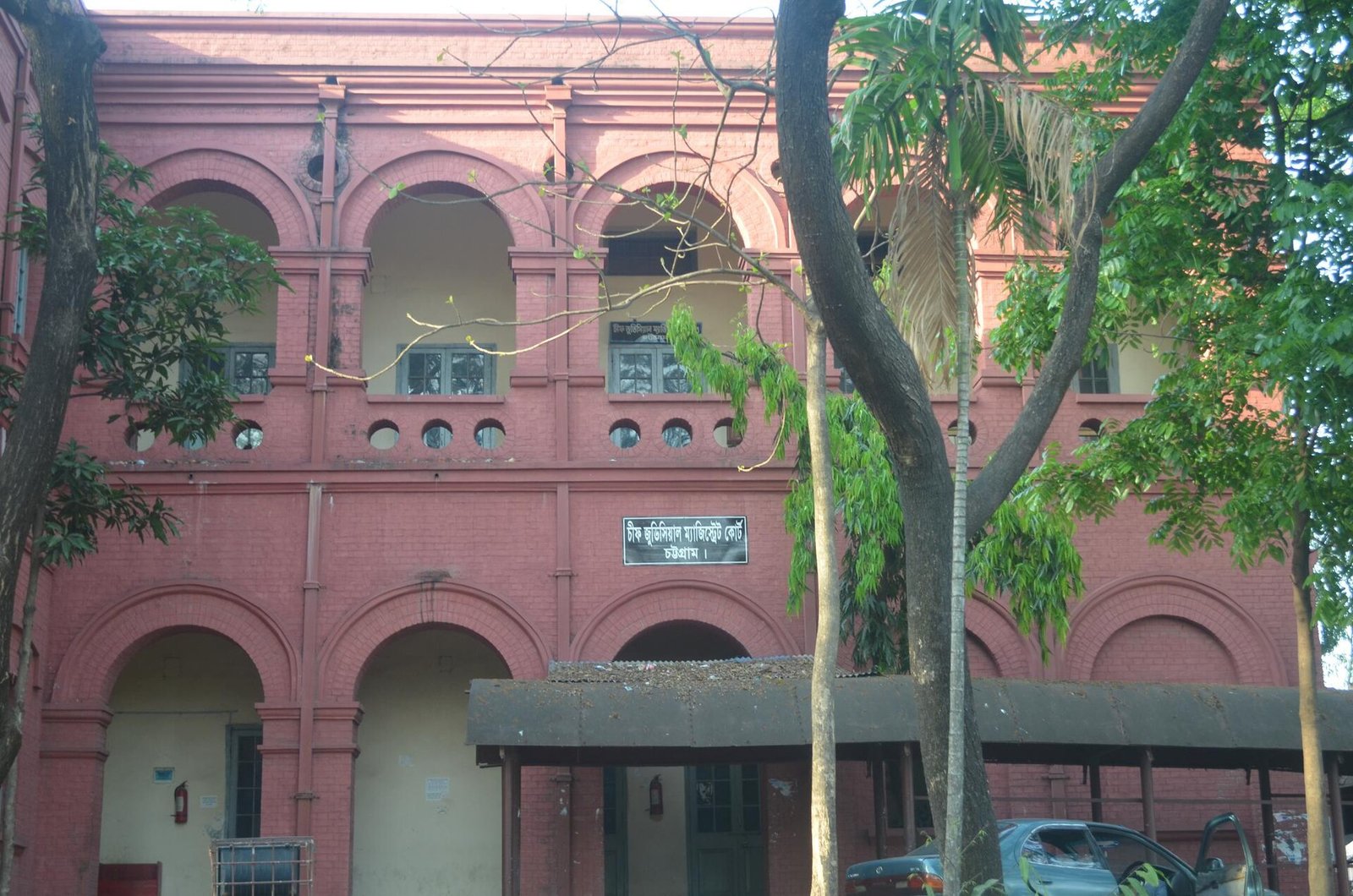
A decree execution lawyer in Chittagong takes over where the trial lawyer stops. Winning a suit gives you a decree; it does not put money in your account or a tenant out of your building. Execution is the separate court process that forces the losing party, the judgment debtor, to pay, deliver property, vacate land or do what the decree requires.
In Chattogram the decrees that most often need executing are money decrees in commercial and contract suits, Money Loan Court decrees obtained by banks, decrees for possession and partition of land, rent and eviction decrees, family court decrees for dower and maintenance, and arbitral awards treated as decrees. Each type has its own court and its own pressure points, but all share one feature: debtors who have lost on the merits often fight hardest at the execution stage.
For many litigants this is the most frustrating part of the case. Execution proceedings can last as long as the suit itself if they are not pushed. Knowing which tool to use, against which asset and in which order, is what shortens them.
The legal framework for executing decrees
The core law is Part II (sections 36 to 74) and Order XXI of the Code of Civil Procedure 1908. Special statutes add their own rules for particular decrees, most importantly the Artha Rin Adalat Ain 2003 for bank and financial institution claims, and the Family Courts Act 2023 for family decrees.
Key provisions of the Code
- Which court executes (section 38). A decree may be executed by the court that passed it or by the court to which it is sent for execution.
- Transfer (section 39). Where the debtor or the property is within another court's local limits, the decree can be transferred there. This is how a Dhaka decree reaches land in Chattogram.
- Questions for the executing court (section 47). Disputes between the parties about execution, discharge or satisfaction are decided by the executing court, not by a separate suit.
- Modes of execution (section 51). Delivery of property, attachment and sale, arrest and detention in civil prison, appointment of a receiver, or any other manner the relief requires.
- Attachable property (section 60). Most property of the debtor can be attached, with exemptions for certain necessities, tools and protected income.
- Order XXI. The detailed procedure: the application, notice to the debtor, attachment of different kinds of property, claims by third parties (rule 58), proclamation and sale, setting aside sales (rules 89 and 90) and delivery of possession against resistance.
The 2025 amendments to the Code
The Code of Civil Procedure (Amendment) Ordinance 2025, which took effect in May 2025, made several changes aimed squarely at execution. Practitioners report these key points:
- A new Order XXI rule 104 lets the decree-holder apply for execution within the suit record itself, and allows the court to direct law enforcement to deliver possession if execution is resisted.
- A new section 94A lets courts direct executive authorities, including the police, to assist with execution and to report compliance.
- A new rule 30A permits civil detention of a judgment debtor for up to six months for an unpaid money decree, with the Government bearing subsistence costs; section 57 and rule 39, which required the decree-holder to pay subsistence, were repealed.
- Section 56 now protects from arrest only women who are old, infirm, pregnant or breastfeeding, rather than women generally.
Parliament reviewed the interim government's ordinances in 2026, so a decree execution lawyer in Chittagong should confirm the current text of each provision before relying on it in a particular case.
Time limits
Under Article 182 of the Limitation Act 1908, an application to execute a decree must generally be made within three years, with time restarting from certain steps in aid of execution. Section 48 of the Code sets a twelve-year outer limit. The High Court Division confirmed in Jess Smith & Sons Cotton LLC v Patriot Spinning Mills (2026) that section 5 of the Limitation Act cannot be used to excuse a late execution application unless a statute allows it.
Money Loan Court, family and land decrees
Money Loan Court decrees
Bank decrees from the Artha Rin Adalat in Chattogram are executed by that court under the 2003 Ain, which applies the Code only so far as it is consistent. Three points matter in practice. A third party claiming mortgaged or attached property must use section 32 and deposit security of ten per cent of the decretal amount or an equivalent bond. A sale certificate under section 33 transfers ownership to the purchaser, and the court can then issue a writ of possession. And an appeal by the borrower requires a deposit of half the decretal amount.
The High Court Division applied those rules in Writ Petition No. 1275 of 2024, decided on 29 May 2025, which concerned an execution case before the Artha Rin Adalat, Chattogram. Third parties who had not furnished the bond could not unwind the sale certificate or the writ of possession. Banks and auction purchasers should read our pages on the Money Loan Court and debt recovery.
Family court decrees
Decrees for dower and maintenance are executed by the family court that passed them. The amounts are often modest, but non-payment is common and the debtor may be abroad. Attachment of salary, bank accounts or land, and civil detention, are all available. See our dower practice and maintenance practice for the substantive claims.
Land, partition and possession decrees
A decree for possession or partition must be implemented on the ground. That involves the court's nazir or a commissioner, sometimes a survey, and delivery of possession in the presence of police if resistance is expected. After execution, the record of rights should be updated through mutation so the win is reflected in the land office. Our partition and possession recovery pages cover the underlying suits.
| Type of decree | Executing court | Main law | Notable feature |
|---|---|---|---|
| Money decree in a civil or commercial suit | Court that passed it, or the court where assets lie on transfer | CPC Part II and Order XXI | Attachment, sale, garnishee, civil detention |
| Bank or financial institution decree | Artha Rin Adalat, Chattogram | Artha Rin Adalat Ain 2003 | Third-party claims need a 10% deposit or bond |
| Dower or maintenance decree | Family court that passed it | Family Courts Act 2023 with the CPC | Debtor often abroad; salary and account attachment |
| Possession or partition decree | Civil court that passed it | CPC Order XXI and Order XX | Delivery through nazir or commissioner, police help |
| Arbitral award or foreign decree | District Judge's court, then transfer | Arbitration Act 2001; CPC section 44A | Narrow objection grounds |
Choosing the right execution tool
The Code offers a menu, and a decree-holder can usually choose the mode. The art lies in picking the one most likely to make this debtor pay. A decree execution lawyer in Chittagong should compare the options against the debtor's real position.
- Bank accounts and receivables. Garnishee-style attachment of balances and debts owed to the judgment debtor is quick and often decisive for trading companies.
- Land and buildings. Attachment and sale are slower, but land in Chattogram rarely disappears. Check existing mortgages first, because a bank's charge will rank ahead.
- Shares and business assets. Shares in private companies can be attached, though their value may be hard to realise. Plant and stock can be attached but may be hidden or moved.
- Civil detention. The threat of detention, now up to six months under the 2025 changes, often produces payment from debtors who have assets but refuse to use them.
- Receivership. Useful where the debtor has an income stream, such as rent from a building, that can be collected for the decree-holder.
Companies, directors and guarantors
A decree against a private limited company binds the company, not its directors personally. If the company is an empty shell, a decree execution lawyer in Chittagong will look at who else is liable: personal guarantors named in the decree, partners in a partnership firm, or a holding company that signed the contract. In bank cases, guarantors are usually joined from the start and their personal property can be pursued in the same execution. Where assets were stripped out of the company before judgment, transfers made to defeat creditors may be challenged, and winding up may become a realistic pressure point; see our insolvency practice.
Execution is won by preparation. The decree-holder who arrives with an asset map, the right mode and an answer to the debtor's next objection usually collects; the one who files a bare application usually waits.
The execution process step by step
The steps below describe how a decree execution lawyer in Chittagong typically runs a money decree in the Chattogram civil courts. Possession and family decrees follow similar stages with different end points.
- Check the decree and the clock. We confirm the decree is final or executable despite appeal, calculate limitation under Article 182, and note any stay.
- Map the assets. Land records, company filings, bank relationships, vehicles, receivables and pending cases tell us what to target and where.
- File the execution application. In the prescribed form, specifying the mode of execution and the property, either as a separate case or, where available, within the suit record.
- Notice and attachment. The court issues notice to the debtor where required and orders attachment of the specified property, often at the first hearing where there is a risk of transfer.
- Deal with objections and claims. Debtors raise section 47 objections; third parties file claims under rule 58 or, in bank cases, section 32. We answer each on the record.
- Sale or delivery. For attached property, the court settles a sale proclamation and holds the auction; for possession, the nazir delivers possession, with police assistance if ordered.
- Defend the result. Applications to set aside the sale and appeals or revisions to the High Court Division follow in contested cases. We resist unconditional stays.
- Payment out and satisfaction. Funds are paid to the decree-holder, sale certificates issued, and satisfaction recorded so the case can be closed.
Documents and evidence
A decree execution lawyer in Chittagong will ask for:
- A certified copy of the decree and judgment, and of any appellate decree.
- Details of payments already received, so the claim is accurate and interest is calculated correctly.
- Asset evidence: khatian and deed copies, holding numbers, RJSC records of shareholdings, bank and branch details, vehicle registrations.
- Information on other decrees or bank mortgages over the same property.
- For a decree from another district or from abroad, the transfer order or certificate of non-satisfaction.
- A power of attorney if the decree-holder lives abroad or is a company acting through an officer.
Ask for attachment at the very first hearing if there is any sign the debtor is selling property or moving money. A registered transfer made after attachment is void against the decree-holder; one made before attachment has to be challenged separately, which takes far longer.
Risks and common mistakes
Waiting too long to file
Decree-holders sometimes wait for voluntary payment or for an appeal to finish before applying. Unless the appellate court has stayed execution, the decree remains executable and the three-year period under Article 182 keeps running. The High Court Division has confirmed that section 5 cannot rescue a late execution application. If an appeal is pending, file for execution anyway and let the debtor seek a stay; that also forces the debtor to offer security.
Attaching the wrong property
Attaching land that belongs to the debtor's relatives, or a flat already sold under an unregistered agreement, invites a third-party claim under Order XXI rule 58 that can stall the case for months. Verify title in the record of rights and the sub-registry before attaching. In bank cases, remember that a third party must deposit or bond ten per cent of the decretal amount to be heard, which deters speculative claims.
Ignoring prior bank charges
Many Chattogram commercial properties are mortgaged to banks. A money decree-holder who sells mortgaged property may find that the bank's claim absorbs the proceeds, or that the bank's own execution in the Money Loan Court takes priority. Search for charges and pending Artha Rin cases first, and consider whether receivables or unencumbered assets are a better target.
Defective sale proclamations
Execution sales are set aside where the proclamation misdescribes the property, undervalues it or was not published properly. That gives the debtor a second chance and delays payment. Insist on an accurate description, a realistic valuation and proper publication, and attend the sale. A clean sale record is the best defence to an application under rules 89 or 90.
Debtor abroad or hiding assets
Some debtors move to the Gulf or the UK and leave property in relatives' names. Execution can still proceed against property in Bangladesh, and benami or fraudulent transfers can be challenged. Where the debtor has assets abroad, consider whether the decree can be enforced there. Civil detention is effective only if the debtor returns, so asset-based tools are usually the priority.
NRB and cross-border decree-holders
Many clients who instruct a decree execution lawyer in Chittagong live abroad: non-resident Bangladeshis who won a land or money suit, foreign suppliers with a decree against a local buyer, or companies whose Bangladesh subsidiary was the claimant. They need someone on the ground to attend hearings, deal with the nazir and the land office, and keep the case moving.
TRW & Co's offices in Dhaka, Singapore, Dubai and London help clients sign powers of attorney abroad, track debtors' foreign assets and, at the end, remit recovered funds through the banking system. For foreign awards and judgments, see our award and judgment enforcement page; for NRB-specific issues, our NRB practice and the article on running a court case in Chattogram from abroad.
How TRW & Co helps as a decree execution lawyer in Chittagong
Our Bangladesh advocates appear in the Chattogram civil courts, the Artha Rin Adalat, the family courts and the High Court Division. We treat execution as a recovery project with a plan, a budget and a target asset list.
Execution strategy
We review the decree, limitation and the debtor's position, then recommend the mode of execution and the order in which assets should be targeted.
Asset searches
We search land, company and court records and identify bank relationships, so that attachment is sought against property that actually belongs to the debtor.
Attachment and sale
We file and prosecute execution cases, obtain attachment, settle sale proclamations, attend auctions and secure sale certificates.
Possession delivery
For land and tenancy decrees, we work with the court's nazir and the police to deliver possession, then follow through with mutation.
Objections and claims
We answer section 47 objections, rule 58 claims and section 32 claims in bank cases, and oppose stays that are not backed by security.
Higher court work
We handle revisions, appeals and writs in the Supreme Court of Bangladesh arising from execution, and seek directions for time-bound disposal.
To discuss a decree that has not been satisfied, contact our Chattogram team. You can also explore our practices and the TRW & Co Chattogram office.
Checklist for decree-holders
- Is the decree final, or is an appeal pending with or without a stay?
- When was the decree passed, and how much of the three-year period under Article 182 remains?
- What does the debtor own in Chattogram, and is any of it mortgaged to a bank?
- Is there a risk of transfer that justifies asking for attachment immediately?
- Which mode of execution is most likely to produce payment from this debtor?
- Are third parties likely to claim the property, and is the title evidence ready?
- If the debtor is abroad, are there assets there worth pursuing?
- Who will attend court, the land office and the auction if you live outside Bangladesh?
Court information and cause lists are available from the Chattogram district judiciary. Our article on how to execute a decree in Bangladesh sets out the basics, and a decree execution lawyer in Chittagong can turn them into a plan for your case.
Frequently asked questions
01How long do I have to execute a decree?
Article 182 of the Limitation Act 1908 generally requires an execution application within three years, with time restarting from certain steps in aid of execution, and section 48 of the Code of Civil Procedure sets a twelve-year outer limit. The High Court Division confirmed in 2026 that section 5 cannot be used to excuse a late execution application. If an appeal is pending without a stay, the clock is still running, so file promptly.
02Can I execute a Dhaka decree against property in Chattogram?
Yes. Section 39 of the Code allows the court that passed the decree to send it for execution to the court within whose local limits the debtor lives or the property is situated. The Chattogram court then attaches and sells the property or delivers possession. You need a certified copy of the decree, a certificate of non-satisfaction and the transfer order. We usually apply for transfer and attachment together where there is any risk of the property being sold.
03Can a judgment debtor be sent to civil prison?
Arrest and detention in civil prison is one of the modes of execution in section 51 of the Code, subject to safeguards such as a hearing on the debtor's means. Under the 2025 amendments, detention can last up to six months for an unpaid money decree and the Government bears subsistence costs, replacing the old requirement that the decree-holder pay. Protection from arrest now covers only women who are old, infirm, pregnant or breastfeeding. Confirm the current text before applying.
04What can I do if someone else claims the attached property?
A third party can file a claim or objection under Order XXI rule 58 of the Code, and the executing court investigates whether the property belonged to the debtor at the date of attachment. In Money Loan Court execution, a third party must use section 32 of the Artha Rin Adalat Ain and deposit security equal to ten per cent of the decretal amount or an equivalent bond. Good title evidence answers most claims quickly.
05Does a pending appeal stop execution?
Not automatically. A decree remains executable unless the appellate court grants a stay, which it may make conditional on the debtor depositing money or giving security. In Money Loan Court cases, the borrower's appeal itself requires a deposit of half the decretal amount. We usually recommend filing for execution while an appeal is pending; it protects your limitation position and puts pressure on the debtor to offer security.
06How are possession decrees enforced?
The executing court directs its nazir, sometimes with a survey commissioner, to deliver possession of the decreed land or building. If resistance is expected, the court can direct police assistance, and the 2025 amendments added express powers to require law enforcement help. Once possession is delivered, the record of rights should be corrected through mutation at the land office so that the decree is reflected in official records.
07Can a decree be executed if the debtor lives abroad?
Yes, against property in Bangladesh. Land, bank accounts, shares and rents can be attached and sold whether or not the debtor is present, after proper notice. Civil detention only works if the debtor returns. If the debtor has significant assets in the UK, the Gulf or Singapore, consider whether the decree can be enforced there under local law. A decree-holder living abroad can act through a registered power of attorney.
Sources and official materials
- Code of Civil Procedure 1908 — Part II and Order XXI on execution of decrees
- Artha Rin Adalat Ain 2003 (Bangladesh Laws) — Execution of bank decrees, sections 32 and 33
- Limitation Act 1908 — Article 182 time limit for execution
- Family Courts Act 2023 — Execution of dower and maintenance decrees
- Writ Petition No. 1275 of 2024 (HCD, 29 May 2025) — Third-party claims in Artha Rin Adalat, Chattogram execution
- Jess Smith & Sons Cotton LLC v Patriot Spinning Mills, Arbitration Appeal No. 24 of 2024 (HCD, 2026) — Article 182 and no condonation under section 5
- Chattogram District Judiciary — Chattogram civil courts and cause lists
General information only, current as at 27 October 2026. It is not legal advice and does not create an advocate–client relationship. It reflects the law of Bangladesh unless stated otherwise, and the law, court practice and official fees change frequently. Check current official sources and take advice on the facts of your matter.



