
TRW & Co · Employment, Labour & RMG Compliance
EPZ Labour Law Lawyer in Chittagong (Chattogram)

An EPZ labour law lawyer in Chittagong advises employers and workers in the Chattogram and Karnaphuli export processing zones, where the Bangladesh EPZ Labour Act 2019 replaces most of the national Labour Act. BEPZA supervises industrial relations, workers organise through welfare associations rather than trade unions, and disputes go to the EPZ Labour Court.
Key pointThe 2025 and 2026 amendments to the Bangladesh Labour Act did not change the EPZ Labour Act 2019, so zone enterprises in Chattogram still follow a separate code with its own representation rules, conciliation machinery and courts.
At a glance
Separate statute applies
The Bangladesh EPZ Labour Act 2019 applies to workers and employers in BEPZA export processing zones and has effect notwithstanding other laws.
Welfare associations, not unions
Zone workers form one workers' welfare association per industrial unit, with an application backed by at least 20 per cent of permanent workers.
Thirty-day grievance rule
Section 28 requires a worker's written grievance to reach the employer by registered post within 30 days of learning of the cause.
Own courts and tribunal
Disputes go to the EPZ Labour Court, with appeals to the EPZ Labour Appellate Tribunal, not to Chattogram's ordinary Labour Courts.
Reform still pending
The 2025 to 2026 Labour Act reforms left the EPZ Act unchanged; the government has said it plans to harmonise the zone law later.
Swipe or scroll →
What an EPZ labour law lawyer in Chittagong does
An EPZ labour law lawyer in Chittagong advises employers and workers in export processing zones on the separate labour regime that applies inside them. Zone enterprises are not governed by the ordinary Bangladesh Labour Act 2006 for most purposes. They follow the Bangladesh EPZ Labour Act 2019, with the Bangladesh Export Processing Zones Authority (BEPZA) supervising industrial relations and specialist EPZ courts hearing disputes.
Chattogram is where this regime matters most. The country's first export processing zone opened in South Halishahar, the Karnaphuli EPZ sits in North Patenga, and BEPZA Economic Zone at Mirsharai has added a large new site. Together they employ a very large workforce in garments, footwear, electronics, accessories, bicycles and light engineering, much of it in foreign-owned factories.
The questions are practical. How much notice must a zone employer give? Can workers form a union? Who decides a dispute about unpaid wages, and how quickly? What happens when a factory closes or lays off workers because orders dry up? An employer who applies mainland rules by mistake, or a worker who files in the wrong court, can lose time and sometimes the claim itself.
This page explains the EPZ Labour Act framework, how it differs from the national Labour Act, the dispute route through BEPZA's conciliation machinery and the EPZ Labour Court, and the decisions that most often go wrong for employers and workers in the Chattogram zones.
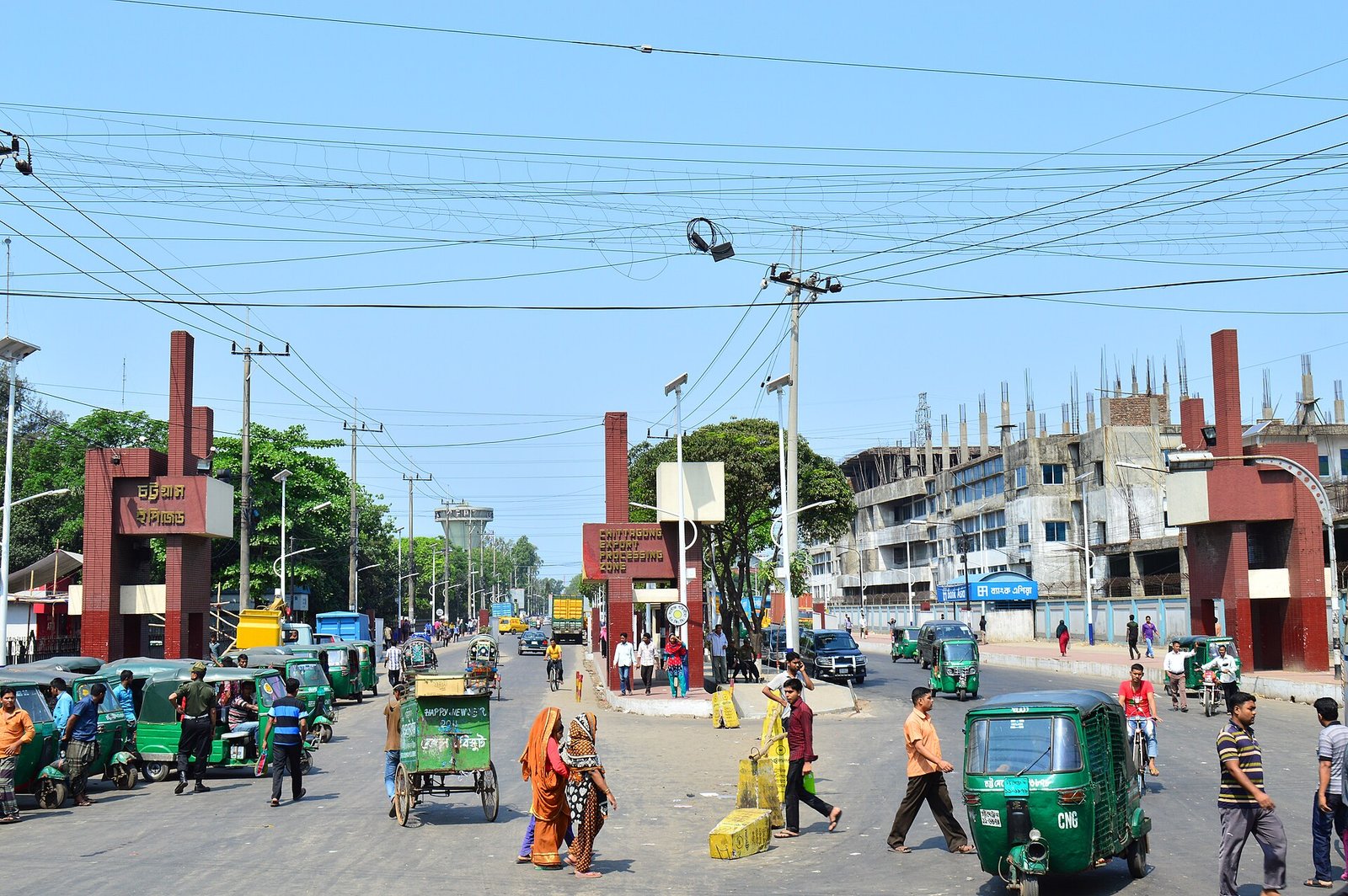
The legal framework: the Bangladesh EPZ Labour Act 2019
The EPZ Labour Act 2019 replaced the earlier EPZ Workers Welfare Association and Industrial Relations Act 2010 with a single code covering conditions of service, maternity, safety, hours, wages, compensation for injury and industrial relations in the zones. BEPZA publishes the Act among its investor information materials, and an English version was issued by statutory notification in 2021.
Scope and overriding effect
The Act applies to workers and employers in industries located in export processing zones under BEPZA, and it states that it has effect notwithstanding other laws. That is why most Labour Act provisions, and the Labour Courts in the city, do not govern a dispute inside CEPZ or the Karnaphuli EPZ. Economic zones outside BEPZA, including those now under the Invest Bangladesh Authority, are generally governed by the national Labour Act unless a specific exemption applies.
What the Act covers
The Act is organised in chapters that mirror the national code: conditions of employment and service; maternity benefit; occupational safety, health and welfare; working hours and leave; wages and payment; an EPZ Wages Board; compensation for injury by accident; workers' welfare associations and industrial relations; conciliation and arbitration; the EPZ Labour Court and Appellate Tribunal; and inspection. Many detailed rules on termination benefits are close to the mainland figures, but the institutions and the collective rights are different.
Reform status in 2026
Bangladesh amended the national Labour Act by ordinance in November 2025 and by an Act of Parliament in April 2026, extending union rights, lowering registration thresholds and adding anti-discrimination rules. Those reforms did not amend the EPZ Labour Act 2019. The government has said it intends to harmonise the EPZ law with the core protections of the amended Labour Act in a later phase, as the Chief Adviser's office reported in June 2025. An EPZ labour law lawyer in Chittagong should check the current text before advising, because further change is expected.
How EPZ labour law differs from the Labour Act
Employers moving between mainland and zone operations, and workers moving between factories, often assume the rules are the same. On service conditions they are similar; on representation, inspection and disputes they are not.
| Issue | EPZ Labour Act 2019 | Labour Act 2006 (as amended) |
|---|---|---|
| Worker representation | Workers' welfare associations; one per industrial unit | Trade unions, now with fixed membership thresholds and up to three per establishment |
| Threshold to form a body | Application supported by at least 20% of permanent workers | Fixed numbers scaled to workforce size, starting at 20 members |
| Supervising authority | BEPZA, through its Executive Chairman and labour and industrial relations officials | Department of Labour and DIFE |
| First-instance forum | EPZ Labour Court | Chattogram First and Second Labour Courts |
| Appeal | EPZ Labour Appellate Tribunal | Labour Appellate Tribunal |
| Termination notice (permanent workers) | Up to 120 days, depending on category, or pay in lieu | 120 days for monthly-rated and 60 days for other permanent workers |
Workers' welfare associations
Under the 2019 Act, workers in a zone enterprise may form a workers' welfare association rather than a trade union. An application must be supported by at least 20 per cent of permanent workers and goes to BEPZA's labour and industrial relations wing; registration is approved by the Executive Chairman. Only one association may exist in each industrial unit, at least 30 per cent of its executive council posts are reserved for women, and its council serves a three-year term. The registered association acts as the workers' collective bargaining agent.
These rules were relaxed when the Act was drafted. Reports of the 2018 cabinet approval in The Daily Star describe the removal of the earlier referendum requirement and a lower consent threshold. International bodies and unions continue to press for full freedom of association in the zones.
Service conditions and benefits
The Act sets notice periods, retrenchment and discharge compensation, resignation benefits, lay-off pay, retirement benefits and maternity benefit. For example, termination of a permanent worker otherwise than for misconduct requires written notice of up to 120 days, depending on the worker's category, or pay in lieu, with compensation calculated on completed years of service. Resignation requires 30 days' notice from permanent workers. An EPZ labour law lawyer in Chittagong works through these figures with payroll before any exit is announced.
Grievances, conciliation and the EPZ Labour Court
Disputes inside the zones follow their own path. Getting the sequence right matters, because the Act sets short time limits and a claim in the wrong forum can be rejected.
- Individual grievance. A worker with a grievance about dismissal, discharge, retrenchment or termination sends a written complaint to the employer by registered post within 30 days of learning of the cause, under section 28 of the Act.
- Employer's decision. The employer investigates, gives the worker a hearing and communicates its decision in writing. Silence or an unsatisfactory decision opens the next stage.
- Complaint to the EPZ Labour Court. The worker may take the matter to the EPZ Labour Court within the time the Act allows. Claims for unpaid wages and injury compensation have their own provisions and limits.
- Collective disputes and conciliation. Disputes between a welfare association and the employer go first to negotiation and then to a conciliator appointed by BEPZA under the Act.
- Arbitration or strike notice. If conciliation fails, the parties may refer the dispute to an arbitrator. Otherwise strikes and lock-outs are possible only after the steps and majorities the Act requires.
- Appeal. Orders of the EPZ Labour Court can be appealed to the EPZ Labour Appellate Tribunal within the time limits in the Act; appeals against wage orders, for example, must be filed within 30 days.
- High Court Division. Questions of jurisdiction or legality may reach the High Court Division of the Supreme Court through writ proceedings.
Workers in CEPZ, the Karnaphuli EPZ and other BEPZA zones should not file in the city's ordinary Labour Courts. Check the workplace address against BEPZA's zone list before filing. An EPZ labour law lawyer in Chittagong confirms the forum first, because a case in the wrong court is lost time.
Documents and evidence
EPZ disputes are won or lost on records. BEPZA conciliators and the EPZ Labour Court expect the employer to produce the documents the Act requires it to keep, and workers are better placed when they keep copies of their own.
For employers
- BEPZA permission, the enterprise's service rules and any BEPZA approval of them.
- Appointment letters, service books, identity cards and the worker register.
- Attendance, wage sheets, overtime and leave records, with bank or mobile wallet payment evidence.
- Show-cause notices, inquiry reports, minutes of hearings and the final decision for any disciplinary case.
- Correspondence with the welfare association and BEPZA's labour and industrial relations wing.
- Calculations of notice, compensation and final dues, with acknowledgments of payment.
For workers
- Appointment letter, identity card and any payslips or wage messages.
- The termination or dismissal letter, or a written note of when and how you were told.
- Copy of your grievance letter and the registered post receipt.
- Names of witnesses and any messages from supervisors.
Risks and common mistakes in the zones
We see the same issues repeatedly in Chattogram's zones. Most can be avoided by treating the EPZ Act as its own code rather than a copy of the mainland one.
Applying Labour Act rules or forms inside a zone
Group HR teams sometimes use the Labour Act templates for show-cause notices, termination letters and settlement forms in an EPZ unit. Many service rules look alike, but the representation, conciliation and forum provisions are different, and the EPZ Act overrides other laws inside the zone. Letters that cite the wrong statute or direct workers to the wrong court weaken the employer's position and confuse the worker. Keep separate templates for zone and mainland units, and have them reviewed against the current EPZ text whenever the law changes.
Mass terminations and closures without BEPZA engagement
Order cancellations and buyer exits can force lay-offs, retrenchment or closure. In the zones, BEPZA expects to be informed and involved, and the Act sets specific rules on lay-off compensation, retrenchment notice and compensation, and closure. Announcing job losses before the calculations, BEPZA engagement and funding are in place often leads to unrest and emergency intervention. Plan the sequence with legal advice: assess the legal basis, calculate dues, engage BEPZA and the welfare association, then communicate to workers with payment arrangements ready.
Interfering with a welfare association
Employers must not obstruct the formation or work of a welfare association, discriminate against its officers or members, or set up a body under management control. Doing so can lead to complaints, BEPZA intervention and proceedings, and it is a recurring focus of international buyers and labour-rights monitors. Treat the association as the legitimate bargaining agent once registered, keep minutes of meetings, and respond to charters of demand in writing within a reasonable time.
Missing the grievance deadline
For workers, the most damaging mistake is waiting. The 30-day period to send a written grievance starts when the worker learns of the cause, not when negotiations fail. Employers sometimes promise to pay later, and by the time it becomes clear they will not, the deadline has passed. Send the grievance by registered post even if talks continue, and keep the receipt. A worker can still settle after a grievance is sent; the reverse is often not possible.
Unclear status of contractor and agency staff
Zone factories use contractors for security, cleaning, canteens and some production work. Whether those workers fall under the EPZ Act, who their employer is, and whether the zone enterprise carries any liability depends on the contract structure and how the work is done in practice. Disputes arise when a contractor fails to pay. Review contractor agreements for compliance warranties, payment proof and audit rights, and keep records showing the contractor pays its staff.
Inside a BEPZA zone, the question is never just what the law says about notice or wages. It is which statute, which authority and which court, and an error on any of the three can undo an otherwise sound decision.
Foreign owners, buyers and workers abroad
Many Chattogram zone enterprises are owned from China, Korea, Japan, Hong Kong, Taiwan, Europe or the Gulf, and their decisions are made far from the factory floor. Head-office instructions on restructuring, wage policy or discipline need to be translated into steps that work under the EPZ Act and are acceptable to BEPZA.
International buyers also matter. Brand codes of conduct, European due diligence laws and audit programmes look closely at freedom of association, wages and grievance mechanisms in Bangladeshi zones. An EPZ labour law lawyer in Chittagong can help align the factory's legal obligations with buyer requirements, so the same records satisfy both BEPZA and the auditor. Our RMG compliance team works on that interface.
Workers who have moved abroad after leaving a zone job can still pursue claims through an authorised representative. TRW & Co's offices in Dhaka, Singapore, Dubai and London help foreign owners with board approvals and group policy, and help Bangladeshi workers overseas arrange the documents needed to run a case in Chattogram.
How TRW & Co helps as your EPZ labour law lawyer in Chittagong
We act for zone enterprises, investors and, subject to conflict checks, workers and executives. Our Bangladesh advocates appear before the EPZ Labour Court and Appellate Tribunal and in the High Court Division, and we work alongside BEPZA's labour and industrial relations officials on conciliation.
Service rules and HR policy
We draft or review service rules, appointment letters, disciplinary procedures and handbooks for zone units, and support BEPZA approval where needed. Templates are kept separate from mainland documents.
Discipline and termination
We advise on misconduct inquiries, discharge, retrenchment and termination, calculate dues under the Act and prepare letters, so decisions survive scrutiny in the EPZ Labour Court.
Welfare association relations
We advise on formation and registration issues, charters of demand, collective negotiations and settlements, and on avoiding conduct that could be treated as interference.
Restructuring and closure
We plan lay-offs, retrenchments and closures with BEPZA engagement, funding and communications, coordinated with our BEPZA team on lease, customs and exit issues.
Disputes and litigation
We represent parties in conciliation, arbitration, the EPZ Labour Court, the Appellate Tribunal and writ proceedings, and negotiate settlements that can be recorded properly.
Transactions and due diligence
When a zone factory is bought, sold or refinanced, we review labour liabilities, pending cases, welfare association agreements and unpaid dues, and build protections into the deal.
For mainland employment matters, see our labour lawyer and Labour Court pages; for zone set-up, see Chittagong EPZ. Our full list of services is on our practices page and the Chattogram office hub.
Checklist for zone employers
Before taking any significant workforce decision in a Chattogram zone, an EPZ labour law lawyer in Chittagong would expect the following to be in place.
- Confirmation that the site is within a BEPZA export processing zone and the EPZ Act applies.
- Service rules current and, where required, approved.
- Complete worker register, attendance, wage, overtime and leave records.
- Separate EPZ templates for show-cause, inquiry, termination and settlement documents.
- A written disciplinary procedure followed in every case, with minutes.
- Dues calculations checked against the Act before any exit is announced.
- A plan for BEPZA engagement on lay-off, retrenchment or closure.
- Records of engagement with the welfare association and responses to demands.
- Contractor agreements with payment and compliance protections.
- A watch on reform: the EPZ Act is expected to be harmonised with the amended Labour Act.
Our article on the EPZ Labour Act 2019 sets out the key rules in more detail, and the guide to choosing an EPZ in Chittagong compares the zones. To speak to an EPZ labour law lawyer in Chittagong, contact our office at Room 4022, Annex 2, District and Sessions Judge Court Building, Court Hill (Porir Pahar), Kotwali, Chattogram 4000, email info@trw.co or call +880 1779 127165.
If you are a worker in a Chattogram EPZ
Workers have real rights under the EPZ Act, but the time limits are short. If you have been dismissed, terminated or not paid, send a written grievance to your employer by registered post within 30 days and keep the receipt. Talk to your welfare association, which can raise the matter with management and BEPZA.
If the employer does not resolve the grievance, the next step is the EPZ Labour Court, not the city's Labour Courts. Bring your appointment letter, identity card, payslips and the termination letter. Free legal aid may be available through the government legal aid service for those who qualify. An EPZ labour law lawyer in Chittagong can tell you quickly whether your claim is in time and what the realistic outcomes are.
Frequently asked questions
01Does the Bangladesh Labour Act apply in CEPZ?
For most purposes, no. Enterprises in BEPZA export processing zones, including the Chattogram EPZ and the Karnaphuli EPZ, are governed by the Bangladesh EPZ Labour Act 2019, which has effect notwithstanding other laws. Many service conditions are similar to the Labour Act, but representation, supervision and dispute forums differ. Economic zones outside BEPZA are generally governed by the national Labour Act. Check the zone before relying on either statute.
02Can EPZ workers form a trade union?
Not under the current law. The EPZ Labour Act 2019 allows workers to form a workers' welfare association, one per industrial unit, which acts as the collective bargaining agent. An application must be supported by at least 20 per cent of permanent workers, and BEPZA's Executive Chairman approves registration. The national Labour Act reforms of 2025 and 2026 did not extend trade union rights to the zones, although further harmonisation has been announced as a goal.
03Where do I file a case if I worked in a Chattogram EPZ?
In the EPZ Labour Court, not the First or Second Labour Court in the city. First send a written grievance to your employer by registered post within 30 days of learning of the dismissal or other cause. If the employer does not resolve it, you can complain to the EPZ Labour Court within the time the Act allows. Appeals go to the EPZ Labour Appellate Tribunal.
04How much notice must a zone employer give to terminate a worker?
Under the EPZ Labour Act 2019, terminating a worker other than for misconduct requires written notice of up to 120 days, depending on the worker's category, or wages in lieu, plus compensation based on completed years of service. Retrenchment, discharge, lay-off and dismissal for misconduct each have their own rules. Calculate dues from the current text before issuing any letter.
05What role does BEPZA play in labour disputes?
BEPZA supervises industrial relations in the zones through its Executive Chairman and its labour and industrial relations officials. It registers welfare associations, appoints conciliators for collective disputes and monitors compliance. In practice BEPZA also intervenes when unrest or closures threaten a zone. Employers planning lay-offs or closures should engage BEPZA early rather than after workers react.
06Can DIFE inspect factories inside the zones?
Inspection in the zones is organised under the EPZ Labour Act, with BEPZA playing the central role. When the Act was approved, government reports said inspectors from the Department of Inspection for Factories and Establishments would also be able to inspect EPZ factories. In practice zone employers should be ready for BEPZA inspections, buyer audits and joint visits, and keep the same core records for all of them.
07Do you act for workers as well as employers?
Yes, subject to conflict checks. We act for zone enterprises on compliance, discipline, restructuring and disputes, and for workers and executives on unpaid dues, unlawful termination and compensation. Workers should act quickly, because the 30-day grievance window is short. Those with limited means may also qualify for government legal aid.
Sources and official materials
- BEPZA: Information for Investors — Includes the Bangladesh EPZ Labour Act 2019 and zone rules
- BEPZA: At a glance — Zones, services and labour relations role
- BEPZA: Chattogram EPZ — The country's first EPZ in South Halishahar
- The Daily Star: Govt relaxes EPZ labour law (2018) — Cabinet approval of the EPZ labour law changes
- Dhaka Tribune: Progress on labour sector reforms (June 2025) — Plan to harmonise EPZ law after the Labour Act reform
- Supreme Court of Bangladesh — High Court Division writ jurisdiction
General information only, current as at 2 November 2026. It is not legal advice and does not create an advocate–client relationship. It reflects the law of Bangladesh unless stated otherwise, and the law, court practice and official fees change frequently. Check current official sources and take advice on the facts of your matter.



