TRW & Co · Inheritance and succession
Probate and Letters of Administration in Bangladesh
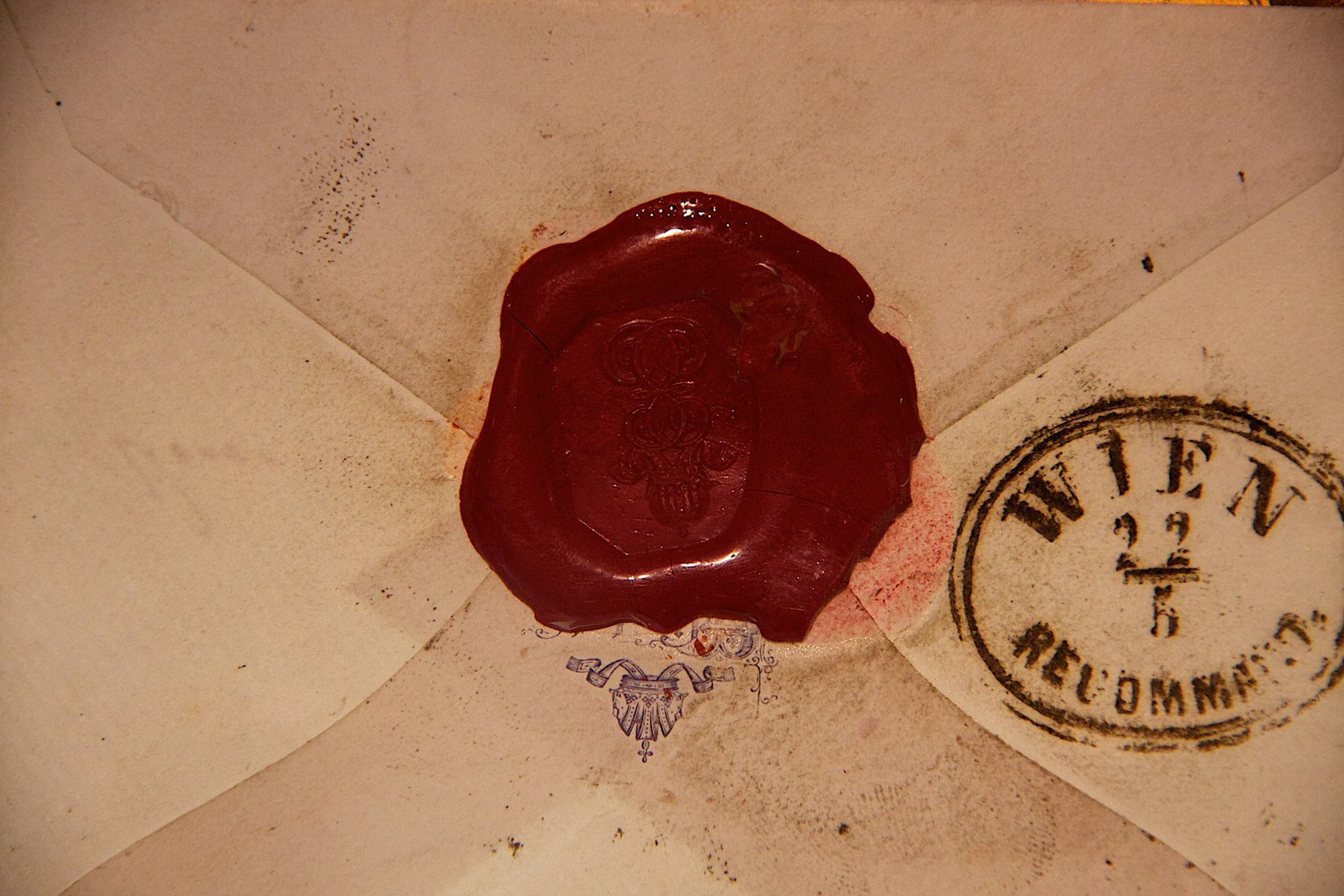
Probate in Bangladesh is the court order proving a will and confirming the executor's authority. Under the Succession Act 1925 it is required for Christian wills and most Hindu and Buddhist wills, but not for Muslim wills. In Chattogram, petitions go to the District Delegate's court; where no executor acts, the court grants letters of administration instead.
Key pointProbate is not about registration: an unregistered will can be proved, as the High Court Division confirmed in a Chattogram appeal in November 2025. What decides most cases is whether the attesting witnesses can still be found and whether every heir was given notice.
At a glance
Governing law
The Succession Act 1925 governs probate and letters of administration, with jurisdiction in the District Judge and District Delegates for non-contentious cases.
Who must obtain it
Section 213 bars executors and legatees from establishing rights in court without probate for Christian wills and most Hindu and Buddhist wills.
Muslim wills excluded
Section 213 does not apply to wills made by Muslims, and the Appellate Division held a probate case over a Muslim will not maintainable in 2024.
Where to file
In Chattogram, probate cases are filed before the District Delegate at the district court building and heard by a Joint District Judge's court.
Contested cases
A caveat or written objection turns the probate case into a contentious proceeding, which in practice is converted into a title suit and tried on evidence.
Swipe or scroll →
Probate in Bangladesh: the short answer
Probate in Bangladesh is the court's certificate that a will is genuine and that the named executor may administer the estate. It is granted under the Succession Act 1925 by the District Judge or, for uncontested cases, by a District Delegate. In Chattogram, probate petitions are filed in the civil courts at the district court building and are heard by the District Delegate's court.
Whether you need it depends on who made the will. The Act makes probate compulsory, in the sense that no right as executor or legatee can be established in court without it, for wills by Christians and for most wills made by Hindus, Buddhists and others covered by the Act. It does not apply to wills made by Muslims at all.
Where there is no executor, or the executor will not act, the court grants letters of administration instead. With a will, these are letters "with the will annexed". Without a will, they let an administrator collect and distribute the estate under the applicable personal law.

When probate is legally required, and when it is not
The key provision is section 213 of the Succession Act 1925. Its first subsection says that no right as executor or legatee can be established in any court unless a competent court in Bangladesh has granted probate of the will, or letters of administration with the will annexed.
The second subsection limits that rule. It does not apply to wills made by Muslims. For Hindus, Buddhists, Sikhs and Jains it applies only to wills in the classes described in clauses (a) and (b) of section 57: wills made within the territories of Bangladesh on or after 1 September 1870, and wills made elsewhere so far as they relate to immovable property in Bangladesh. In practice that covers almost every Hindu or Buddhist will a Chattogram family is likely to see.
For Christians the testamentary provisions of the Act apply in full, so probate in Bangladesh is the normal route whenever a Christian testator appoints an executor. Section 58(2) makes those provisions the general law of testamentary succession in Bangladesh, subject to the exclusions for Muslims and the limited application to Hindus and related communities.
Muslim wills sit outside the probate system
The Appellate Division confirmed the position in Civil Appeal No. 133 of 2023, decided on 23 January 2024. A probate case over a Muslim father's will was held not maintainable, because sections 57, 58 and 213 do not reach Muslim wills. The court also noted that a bequest to an heir is invalid unless the other heirs consent after the testator's death, and that silence or inaction is not consent.
For Muslim families the practical tools are different: proof of heirs, a succession certificate for bank deposits and securities, mutation of inherited land and, if heirs cannot agree, a partition suit. Our guide to Muslim inheritance shares explains how the fixed shares work.
Probate, letters of administration and succession certificates compared
Families thinking about probate in Bangladesh often confuse the three grants. They do different jobs, and filing for the wrong one wastes months. The table summarises the usual position.
| Grant | When it is used | Who applies | What it does |
|---|---|---|---|
| Probate | A will names an executor and the testator was a Christian, or a Hindu, Buddhist or other person whose will falls within section 57(a) or (b) | The executor named in the will | Proves the will and confirms the executor's authority over the whole estate |
| Letters of administration with the will annexed | There is a will but no executor, or the executor has died, renounced or will not act | Usually a principal beneficiary | Gives an administrator authority to carry out the will |
| Letters of administration (intestacy) | No valid will, and a full grant is needed to deal with the estate | A person entitled to the estate under the applicable law | Authorises collection and distribution under the personal law of succession |
| Succession certificate | Debts and securities such as bank deposits, savings instruments and shares | An heir or person entitled | Lets institutions pay safely; it does not cover land and is not a grant over the whole estate |
A succession certificate is often quicker for a single bank account. But it is not a substitute where the law requires probate, and the Act itself restricts certificates in some situations. Our step-by-step guide to the succession certificate process covers that route.
The legal framework and the Chattogram courts
Probate and administration are governed by the later Parts of the Succession Act 1925, which deal with executors and administrators, grants, caveats, contentious proceedings and the duties of grantees. The main provisions people meet in practice are these:
- Jurisdiction. Section 264 gives the District Judge jurisdiction to grant and revoke probate and letters of administration. Section 300 gives the High Court Division concurrent jurisdiction, though ordinary estates are dealt with in the district.
- District Delegates. Section 265 allows the appointment of District Delegates to deal with non-contentious cases. In Chattogram, probate cases are registered before the District Delegate and heard by a Joint District Judge's court acting in that capacity.
- Who can obtain probate. Probate can be granted only to an executor appointed by the will. If there is no such executor, administration with the will annexed is the route.
- The petition. Section 276 sets out what a petition for probate must contain, and section 281 requires verification by one of the witnesses to the will where one is available.
- Caveats. Section 284 allows any person with an interest to lodge a caveat, after which the court will not proceed until the caveator has had notice.
- Appeals. Section 299 provides for appeals from the District Judge's orders to the High Court Division.
A recent Chattogram appeal shows how this works. In First Miscellaneous Appeal No. 368 of 2023, decided on 3 November 2025, the High Court Division set aside an order of the District Delegate and Joint District Judge, 1st Court, Chattogram, which had dismissed a petition under section 276 because the will was unregistered. Wills are not compulsorily registrable, the court said, and the probate court must examine due execution, attestation by at least two witnesses and genuineness instead.
The firm's Bangladesh advocates appear before the District Delegate and District Judge in Chattogram on probate and administration petitions, and in the High Court Division on appeal. Our wills and probate practice handles both drafting and the work that follows a death.
How to apply for probate in Bangladesh, step by step
The sequence below reflects an uncontested petition in Chattogram. Timelines depend on the court's list, how complete the papers are and whether notices draw objections, so we do not quote fixed durations.
- Locate the original will. The court will want the original. If only a copy survives, a separate application is needed to prove the lost will's contents, which is harder.
- Confirm the testator's community and the right grant. Check whether section 213 applies, whether the named executor is alive and willing, and whether probate or administration with the will annexed is correct.
- Value the estate. Court fees in probate matters are calculated on the value of the estate under the court-fees law, so list land, flats, accounts, shares and debts with supporting papers.
- Draft and verify the petition. The petition states the death, the will, the executor's details, the heirs and the property. An attesting witness verifies it where possible, and the executor swears to it.
- File before the District Delegate in Chattogram. The case is registered as a probate case and the court directs notice to the heirs and issues citations so that anyone with an interest can object.
- Prove the will. If no caveat is filed, the executor and at least one attesting witness give evidence of execution and attestation, and the court checks the testator's capacity and the will's genuineness.
- Receive the grant. The court grants probate; in administration cases it may also require the administrator to give security. The grant is then used with banks, the AC Land office, RJSC and share registrars.
- File the inventory and accounts. Section 317 requires the executor to exhibit an inventory and later an account to the court. Many executors overlook this duty.
Collect the attesting witnesses' current addresses before you file. In a Chattogram probate case the most common delay is a witness who has moved, gone abroad or died. If neither witness can be found, the court needs other evidence of handwriting and execution, and the case slows down.
Contested probate: caveats and conversion to a suit
Once a caveat or written objection is filed, the matter stops being a simple documentary application. Section 295 sets out the procedure for contentious cases, and in Bangladesh practice the probate case is converted into a title suit and tried on evidence. In First Appeal No. 151 of 2006, for example, a Narayanganj probate case was converted into a title suit after written objections, and the High Court Division decided the appeal on 31 October 2022.
In contested probate in Bangladesh, the person propounding the will carries the burden of proving it. The court asks whether the testator signed or acknowledged the will, whether two witnesses attested it, whether the testator understood what was being signed, and whether any suspicious circumstances surround the will. A will that disinherits close family, appears late or was drafted by a main beneficiary invites closer scrutiny.
The caveator must show an interest in the estate. Heirs who would take on intestacy usually qualify. Contested probate in Bangladesh can take years through trial and appeal, so many families negotiate a settlement after the first exchange of evidence. Our inheritance lawyers advise both executors and objecting heirs.
Administering the estate after the grant
Obtaining probate in Bangladesh is a means, not an end. The executor or administrator becomes the deceased's legal representative, and the estate vests in that person for administration. Only the grantee can sue for the estate's debts while the grant stands.
The practical work in Chattogram usually involves:
- Bank accounts and deposits. Presenting the certified grant to each bank, which will check it against the account records before releasing funds.
- Land and flats. Applying for mutation at the AC Land office in the grantee's or beneficiaries' names, then executing transfers to beneficiaries where the will requires. Our page on mutation (namjari) explains that process.
- Shares. Asking the company to register transmission, and applying to the High Court Division for rectification of the register if it refuses without good reason.
- Debts and taxes. Paying the deceased's debts and dealing with any tax filings before distributing legacies.
- Accounts. Keeping proper accounts, because beneficiaries can ask the court to call for them and the court can revoke a grant for just cause.
An illustrative scenario from Chattogram
This scenario is illustrative only; the parties are generic. A retired Hindu businessman in Chattogram dies leaving a typed will, signed before two neighbours, which appoints his nephew as executor. The estate includes a flat in Nasirabad, a share of ancestral land in an upazila and fixed deposits.
The nephew petitions the District Delegate under section 276. One neighbour verifies the petition; the other has moved to Dhaka. A daughter files a caveat alleging that her father lacked capacity. The case is converted into a title suit, and both sides call evidence: the attesting witnesses, the family doctor and the advocate who typed the will.
The court grants probate after finding due execution and no suspicious circumstances. The nephew then uses the grant at the bank and the AC Land office. Had the testator been Muslim, the probate route would not have been available at all, and the family would have used a succession certificate and mutation instead.
Common mistakes and risks
Filing a probate case for a Muslim will
The probate provisions do not govern Muslim wills, and the Appellate Division has held such a case not maintainable. Families sometimes use probate proceedings to seek what is really a partition of inherited property. That approach wastes time and costs, and the court can reject the case at the outset. If a Muslim testator left a will, the questions are whether the one-third limit for non-heirs and the consent rule for heirs are satisfied, and those are tested in a civil suit or partition proceedings rather than probate.
Assuming an unregistered will is invalid
Registration of a will is optional. The High Court Division confirmed in a Chattogram appeal decided in November 2025 that registration is not a condition of validity or admissibility. The probate court looks at execution, attestation and genuineness. Registration or deposit can still help, because it makes the will harder to suppress and easier to prove, but a lower court cannot dismiss a petition simply because the will was not registered.
Leaving heirs out of the petition
Every heir who would take on intestacy should be named and served. A grant obtained without proper notice to the family is vulnerable to revocation for just cause, which can unravel transfers the executor has already made. Prepare a reliable family tree before filing, with copies of death certificates and identity documents, and check for heirs abroad or from an earlier marriage.
Distributing before debts and accounts are settled
An executor who hands property to beneficiaries before paying the estate's debts can be personally exposed. Executors should also file the inventory and account the Act requires. Keeping records of every receipt and payment protects the executor if a beneficiary later challenges the administration or asks the court to call for accounts.
Executors and heirs abroad
Many Chattogram estates have executors or beneficiaries in the UK, the Gulf or Singapore. Probate in Bangladesh can still proceed. An executor abroad can usually appoint an attorney through a power of attorney executed before a Bangladesh mission and authenticated for use at home; our guide to the NRB power of attorney explains the formalities.
Evidence is the harder part. If an attesting witness lives abroad, the court may allow evidence on commission or other arrangements, but the request must be made early. Where the deceased also held assets outside Bangladesh, a separate grant or resealing may be needed in that country, and the Bangladeshi grant is often the starting point. TRW & Co's offices in Dhaka, London, Dubai and Singapore help coordinate documents and foreign counsel.
What to do next: a checklist
- Find the original will and any codicils, and keep them safe and unmarked.
- Confirm the testator's community and whether section 213 makes probate necessary.
- Check that the named executor is alive, willing and able to act.
- Trace both attesting witnesses and the person who drafted the will.
- List every asset with documents, and value the estate for court fees.
- Prepare a family tree naming every heir, including those abroad.
- Decide whether a succession certificate alone would meet the family's needs.
- Plan for the inventory and accounts the executor must later file.
If you are an executor or an heir in Chattogram, our Chattogram office can review the will and advise on the right grant. Contact us at info@trw.co or +880 1779 127165, or visit Room 4022, Annex 2, District and Sessions Judge Court Building, Court Hill (Porir Pahar), Kotwali, Chattogram 4000.
Frequently asked questions
01Is probate mandatory in Bangladesh?
It depends on the testator. Under section 213 of the Succession Act 1925, no right as executor or legatee can be established in court without probate or letters of administration with the will annexed. That rule applies to Christian wills and to Hindu, Buddhist, Sikh and Jain wills made in Bangladesh or dealing with land here. It does not apply to wills made by Muslims. In practice, banks and land offices also expect a grant before dealing with an executor.
02Where do I file a probate petition in Chattogram?
Probate petitions are filed in the civil courts at the Chattogram district court building, where they are registered as probate cases before the District Delegate. A Joint District Judge's court usually hears them in that capacity. The District Judge has overall jurisdiction to grant and revoke probate, and the High Court Division hears appeals from those orders. If the case becomes contested, it continues as a contentious proceeding in the same court system.
03What is the difference between probate and letters of administration?
Probate is granted only to an executor named in the will and confirms that the will is valid. Letters of administration are granted to someone else, usually a main beneficiary or heir. They are used where a will names no executor, or the executor has died or refuses to act, in which case they are letters with the will annexed. They are also used where there is no valid will and someone needs authority to administer the whole estate.
04Does a will need to be registered to obtain probate?
No. Registration of a will is optional in Bangladesh. In First Miscellaneous Appeal No. 368 of 2023, decided on 3 November 2025, the High Court Division set aside a Chattogram order that had dismissed a probate petition because the will was unregistered. The court said the probate court must examine due execution, attestation by at least two witnesses and genuineness. Registering or depositing a will can still make it easier to prove.
05How long does probate take in Bangladesh?
There is no fixed timetable. An uncontested petition with the original will, available attesting witnesses and complete papers on the heirs moves faster than one with missing witnesses or heirs abroad. Once a caveat is filed, the case becomes contentious and is tried on evidence, which can take years with appeals. Preparing the witnesses, valuation and family tree before filing is the most reliable way to avoid delay.
06Can an executor living abroad obtain probate in Bangladesh?
Yes. An executor abroad can usually act through an attorney appointed by a power of attorney executed before a Bangladesh mission and authenticated for use in Bangladesh. The executor may still need to give evidence, which can sometimes be arranged by commission or other court-approved means. Applications for those arrangements should be made early. Assets abroad may need a separate grant or resealing in that country.
Sources and official materials
- Succession Act, 1925 (Act No. XXXIX of 1925) — Probate, letters of administration, caveats, contentious cases and executors' duties
- Appellate Division, Civil Appeal No. 133 of 2023 — Sections 57, 58 and 213 do not reach Muslim wills; consent of heirs (23 January 2024)
- High Court Division, First Miscellaneous Appeal No. 368 of 2023 — Chattogram probate case; wills not compulsorily registrable (3 November 2025)
- High Court Division, First Appeal No. 151 of 2006 — Contested probate case converted into a title suit (31 October 2022)
- Supreme Court of Bangladesh — Judgments and cause lists of the High Court and Appellate Divisions
General information only, current as at 2 November 2026. It is not legal advice and does not create an advocate–client relationship. It reflects the law of Bangladesh unless stated otherwise, and the law, court practice and official fees change frequently. Check current official sources and take advice on the facts of your matter.