TRW & Co · Employment, Labour & RMG Compliance
RMG Compliance Lawyer in Chittagong (Chattogram)
An RMG compliance lawyer in Chittagong helps garment and textile factories meet the legal duties behind every buyer audit: licences, wages, hours, safety, unions and environmental clearance. With the Labour Act amended in 2025 and 2026, wage revisions pending and European buyers tightening due diligence, Chattogram factories need compliance built on the law, not just audit checklists.
Key pointA clean buyer audit does not prove legal compliance. The 2026 Labour Act amendments strengthened union rights and enforcement, so factories that manage only to audit protocols can still face DIFE notices, Labour Court claims and buyer suspensions.
At a glance
Labour Act amended 2026
Parliament passed the Labour (Amendment) Bill on 9 April 2026, confirming the November 2025 ordinance on unions, lay-off, discrimination and unfair labour practices.
Tk 12,500 minimum wage
The entry-level garment wage of Tk 12,500 a month was set in December 2023; unions are pressing for a new wage board in 2026.
Nine per cent increments
A government gazette raised the annual increment for RMG workers to 9 per cent with effect from December 2024.
RSC safety programme
The RMG Sustainability Council implements the Bangladesh Safety Agreement between global brands and unions for covered garment factories.
Two regimes in Chattogram
Mainland factories follow the Labour Act and DIFE; factories inside CEPZ and the Karnaphuli EPZ follow the EPZ Labour Act 2019 and BEPZA.
Swipe or scroll →
What an RMG compliance lawyer in Chittagong does
An RMG compliance lawyer in Chittagong helps garment and textile manufacturers meet the legal duties that sit beneath every buyer audit: licensing, wages, working hours, safety, worker representation, grievance handling and environmental clearance. The work also covers what happens when compliance fails, from a DIFE notice or Labour Court case to a buyer suspension, a factory accident or a wage protest.
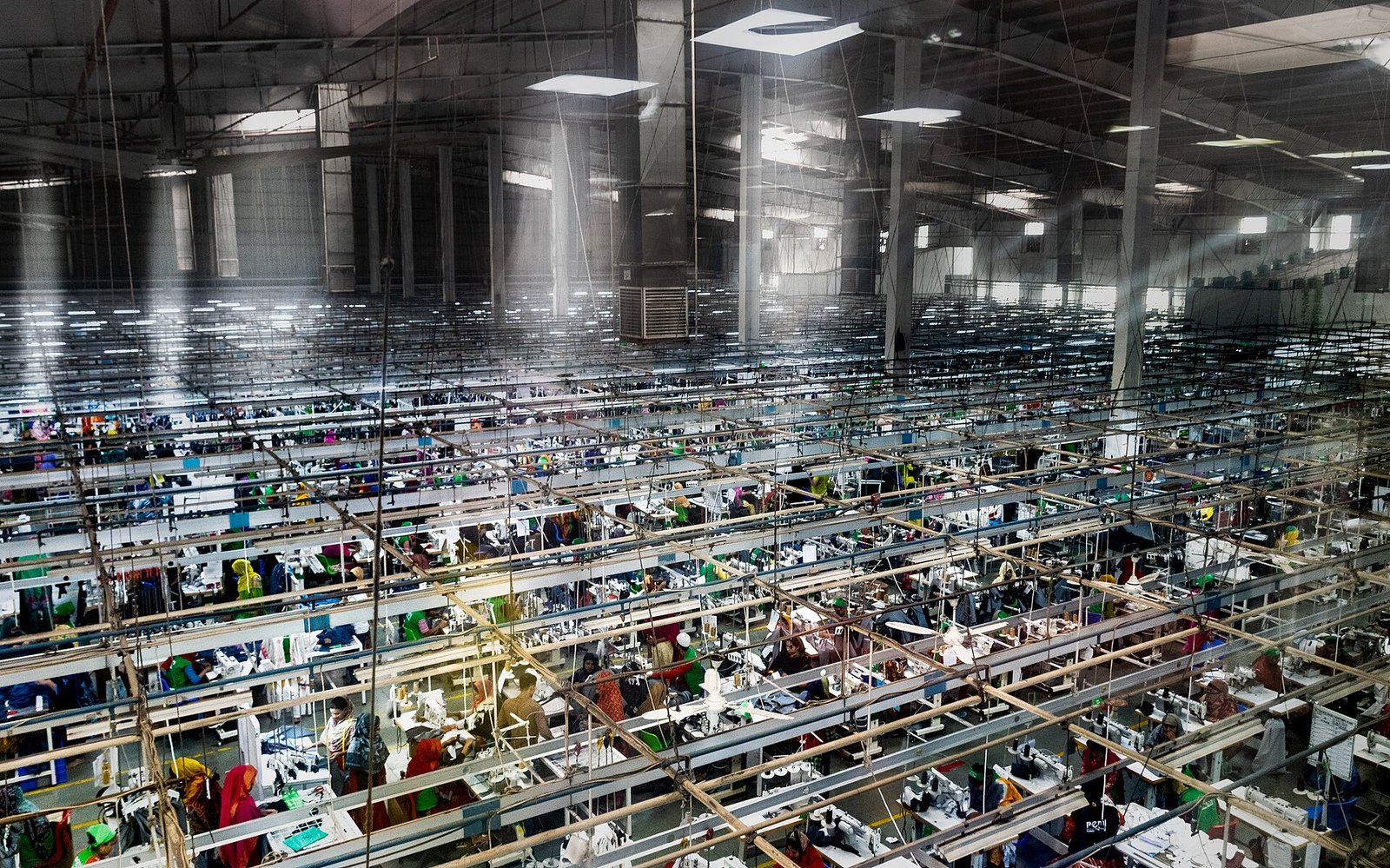
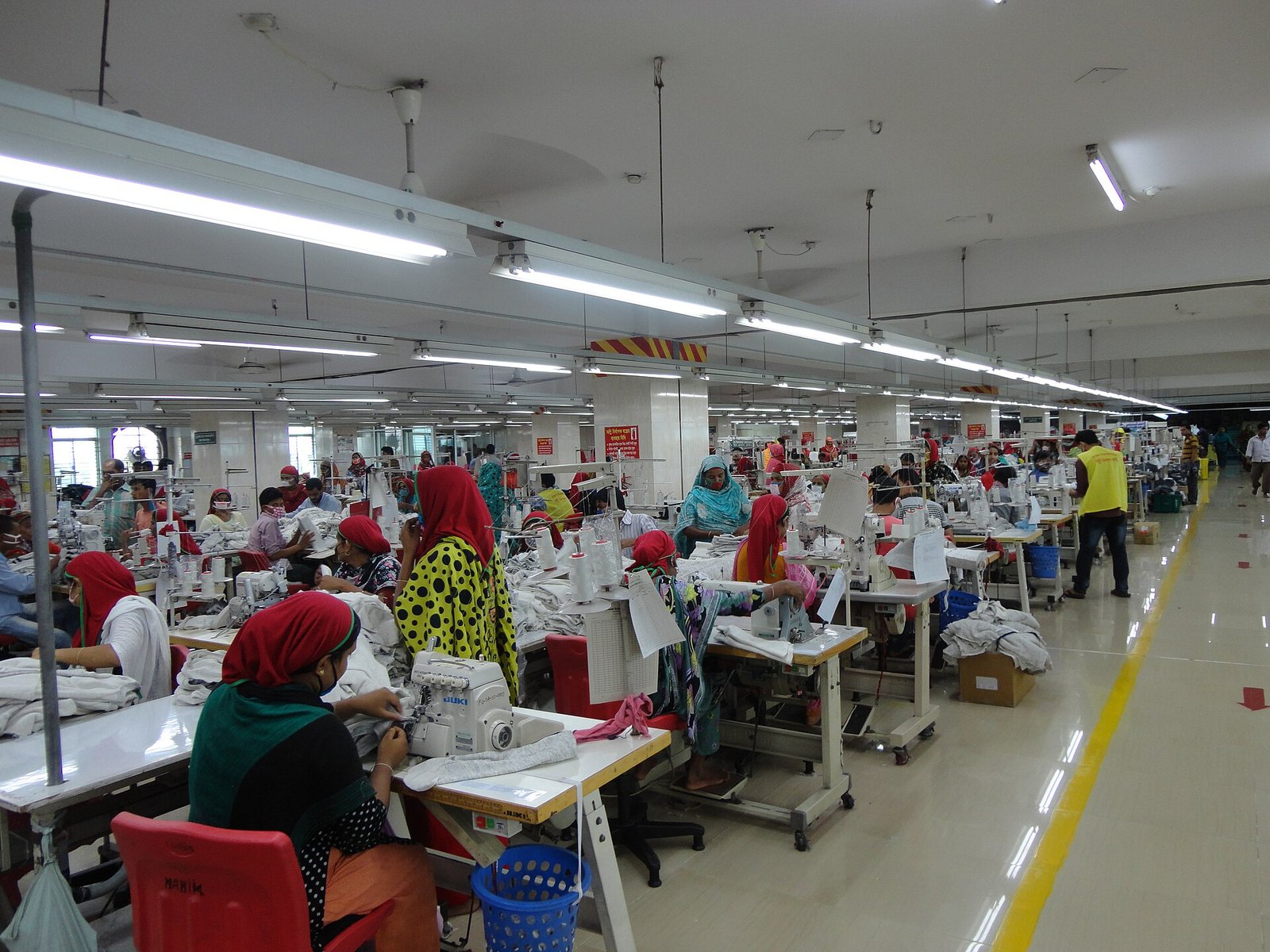
Chattogram is the country's second garment hub. Hundreds of factories operate in the city's industrial belts, from Nasirabad and Bayazid to Kalurghat, Patenga and the Dhaka-Chattogram highway corridor, alongside the units inside the Chattogram and Karnaphuli export processing zones. Proximity to the port makes the city attractive to exporters, but buyers expect the same compliance standards wherever a factory sits.
Two legal regimes apply. Factories outside the zones answer to the Bangladesh Labour Act 2006, the Labour Rules 2015 and the Department of Inspection for Factories and Establishments (DIFE). Factories inside BEPZA zones follow the separate EPZ Labour Act 2019. On top of both sit buyer codes of conduct, safety programmes and, increasingly, European supply chain due diligence laws.
This page sets out the legal framework for RMG factories in and around Chattogram, the main compliance areas, how to handle inspections and audits, the risks that most often cause trouble and how TRW & Co helps manufacturers, buyers and investors.
The legal framework for garment factories
Bangladesh Labour Act 2006 and Labour Rules 2015
The Bangladesh Labour Act 2006 is the core statute for mainland factories. It covers appointment and service conditions, working hours, overtime, leave, maternity benefit, wages, health and safety, welfare facilities, compensation for injury, trade unions and collective bargaining, participation committees, and Labour Court jurisdiction. The Labour Rules 2015 add the detailed procedures, registers and forms.
The Act was amended by ordinance in November 2025 and by an Act of Parliament passed on 9 April 2026. Reported changes include lower union registration thresholds based on fixed membership numbers, a cap of three unions per establishment, broader unfair labour practice rules, lay-off compensation after shorter service, new anti-discrimination provisions and stronger duties on workplace harassment. Several changes depend on rules still being finalised, so an RMG compliance lawyer in Chittagong should work from the gazetted text.
Minimum wages and annual increments
The minimum wage for garment workers is set by government notification on the recommendation of the Minimum Wage Board. The current entry-level wage of Tk 12,500 a month was set in December 2023, as The Financial Express reported in August 2026. From December 2024 the government raised the annual increment for RMG workers to 9 per cent by gazette. Unions are pressing for a new wage board, and the timing of the next revision is disputed, so watch for a fresh notification.
Safety, fire and building laws
Safety duties come from several statutes at once: the Labour Act's health and safety chapters, the Fire Prevention and Extinguishing Act 2003 administered by the Fire Service and Civil Defence, the building code and Chattogram Development Authority approvals for structures, the Boilers Act for steam boilers, and the environmental clearance regime under the Environment Conservation Act 1995 and the 2023 Rules. After the 2013 Rana Plaza collapse, a national initiative and buyer-led programmes inspected thousands of factories. Today the RMG Sustainability Council implements the brands' and unions' Bangladesh Safety Agreement for covered factories.
Regulators in Chattogram
DIFE inspects mainland factories and issues factory licences through its Chattogram office; see our factory licence page. The Department of Labour's divisional office handles trade union registration and industrial relations. BEPZA supervises zone factories. The Department of Environment, Fire Service, CDA and Chattogram City Corporation each control their own permits.
The main compliance areas and who checks them
Buyer audits and legal inspections overlap but are not identical. A factory can pass one and fail the other. The table maps the main areas to their legal source and the bodies that look at them.
| Area | Main legal source | Who checks |
|---|---|---|
| Factory licence and plan approval | Labour Act and Labour Rules | DIFE |
| Wages, overtime, leave and benefits | Labour Act; minimum wage notification | DIFE, buyers, Labour Court |
| Fire safety and fire licence | Fire Prevention and Extinguishing Act 2003 | Fire Service and Civil Defence; RSC for covered factories |
| Building and electrical safety | Building approvals and building code | CDA, DIFE; RSC for covered factories |
| Unions, participation and safety committees | Labour Act as amended in 2025 and 2026 | Department of Labour, DIFE |
| Environmental clearance and effluent | Environment Conservation Act 1995 and Rules 2023 | Department of Environment |
| Harassment and anti-discrimination | Labour Act amendments; High Court guidelines | Complaint committees, DIFE, buyers |
Wages, hours and records
Wage and hour issues remain the most common source of disputes and buyer findings. Factories must pay at least the notified minimum, pay overtime at the statutory rate, keep accurate attendance and wage records, and pay on time. Late payment before festivals is a recurring flashpoint. An RMG compliance lawyer in Chittagong will usually begin with a records review, because most problems show up in the registers before they show up on the floor.
Representation and grievance
The 2025 and 2026 reforms make union registration easier and widen protection against anti-union discrimination, with powers for the labour authorities to order compensation. Factories should review how they respond to union formation, participation committee elections and collective demands. Grievance handling under section 33 of the Labour Act, with its 30-day stages, should be built into HR procedures; our trade union team advises on both sides.
Health, safety and statutory committees
The Labour Act requires safety arrangements that go well beyond fire extinguishers: safe exits and stairways, machine guarding, ventilation, drinking water, toilets, first aid, and, in larger establishments, safety committees and participation committees with elected worker representatives. The 2025 and 2026 amendments add a worker's right to refuse dangerous work without retaliation. Committees that exist only on paper are a common legal and audit finding. Minutes, elections and follow-up on raised issues are what inspectors and buyers look for.
Fire safety in particular deserves separate attention in Chattogram, where many factories occupy converted or multi-use buildings. The 2022 fire and explosions at a container depot in Sitakunda showed how quickly a chemical or storage hazard can turn into a mass-casualty event. Factories that store chemicals, dyes or flammable materials should check storage rules, the fire licence conditions and emergency plans, and should rehearse evacuation regularly.
Harassment, discrimination and young workers
The amended Labour Act prohibits direct and indirect discrimination on grounds such as gender, religion, disability and political opinion, and strengthens duties on workplace harassment, including complaint committees. The High Court Division's earlier guidelines on sexual harassment continue to inform practice. Age verification also matters: the Act restricts the employment of children and adolescents, and buyers treat any finding of underage work as a zero-tolerance issue. Keep age evidence on file for every worker and check it at recruitment, not at audit.
Choosing the right compliance approach
Factories typically choose between relying on in-house compliance teams, buying third-party audit services, or commissioning a legally privileged review. In-house teams know the floor but may lack legal depth; third-party audits satisfy buyers but are not designed to protect the factory in a dispute. An RMG compliance lawyer in Chittagong can structure a review under legal privilege where litigation or regulatory action is possible, and then hand practical corrections to the in-house team.
Handling inspections, audits and incidents
Whether the visitor is a DIFE inspector, an RSC engineer, a buyer's auditor or the fire service, the same discipline applies: know your obligations, keep your records, and respond in writing within the deadline.
- Prepare a standing inspection file. Factory licence, fire licence, building approvals, ECC, boiler certificates, worker register, wage and attendance records, committee minutes and training logs, kept current and in one place.
- Receive the visit properly. Give access, assign a responsible manager, note who attended and what was inspected, and avoid informal admissions about matters not yet checked.
- Obtain the findings in writing. Ask for the inspection report, notice or corrective action plan, and note every deadline.
- Take advice on serious findings. Allegations involving unpaid wages, child labour, forced labour, structural risk or union interference have legal as well as commercial consequences.
- Respond with evidence. Submit a written response showing what was corrected, with documents, photographs and engineering reports, or a realistic remediation plan.
- Manage buyers in parallel. Share accurate information with buyers under any confidentiality terms in the supply agreement, and keep the legal and audit responses consistent.
- Close the loop. Obtain written confirmation of closure and update the inspection file, so the next visit starts from a clean record.
After a fire, collapse, serious injury or death, preserve CCTV, attendance and maintenance records immediately, notify the authorities as the law requires, and take legal advice before giving statements. Criminal, labour and insurance consequences can follow the same incident, and early statements are hard to correct.
Documents every factory should hold
- Factory licence and plan approval from DIFE, trade licence, and BGMEA or BKMEA membership where applicable.
- Fire licence, building approvals, structural and electrical assessments, and boiler registration.
- Environmental clearance certificate and effluent treatment records.
- Appointment letters, identity cards, service books and the worker register.
- Attendance, wage, overtime, leave and maternity benefit records with payment evidence.
- Minutes of participation, safety and harassment complaint committees, and union correspondence.
- Grievance, disciplinary and termination files, with dues calculations.
- Contracts with subcontractors and labour suppliers, with compliance warranties.
Risks and common mistakes
Treating buyer audits as legal compliance
A clean social audit is valuable, but it does not prove the factory meets Bangladeshi law, and a legal notice does not disappear because a buyer is satisfied. Audits sample records and use their own standards; DIFE and the courts apply the statute. Factories that manage only to audit protocols sometimes miss legal requirements such as current licences, statutory committees or correct dues calculations. Build compliance on the law first and map buyer requirements onto it.
Unauthorised subcontracting
When orders peak, factories subcontract to smaller units that may not meet legal or buyer standards. Many supply agreements prohibit unauthorised subcontracting, and a fire or labour incident at a subcontractor can lead to buyer termination and liability claims against the main supplier. If subcontracting is necessary, disclose it, check the subcontractor's licences and safety, and put written compliance terms in place.
Mishandling union formation
Transferring, dismissing or pressuring workers who are organising is unlawful and is now subject to stronger enforcement after the 2025 and 2026 amendments. It also triggers buyer complaints and international scrutiny. Management should take advice as soon as it learns of a union application, keep normal discipline separate from union activity, and document legitimate reasons for any action affecting union officers or members.
Wage arrears before closure or festivals
Cash-flow pressure leads some factories to delay wages or festival bonuses. In Chattogram, as elsewhere, unpaid wages quickly lead to protests, government intervention, Labour Court claims and buyer suspensions. Where a factory cannot pay, it needs a lawful plan: engagement with workers and the authorities, prioritised payments and, if closure is unavoidable, a proper calculation of dues. Our termination team handles closures and retrenchments.
Expired licences and approvals
Factory, fire and environmental approvals have renewal cycles, and expansions or new floors may need fresh approvals before use. Running new lines in unapproved space or on an expired licence is a common finding and can block export documentation or bank facilities. Keep a renewal calendar and check approvals before any change in layout, machinery or building use.
Buyers ask whether a factory is compliant. Regulators and courts ask whether it is lawful. A well-run factory in Chattogram can answer both questions from the same set of records.
Buyers, investors and European due diligence
Most Chattogram garment output goes to Europe and North America. Brands and retailers there face growing legal duties to identify and address human rights and environmental risks in their supply chains, including Germany's supply chain due diligence law and the European Union's due diligence framework, whose scope and timetable have been revised. Those duties flow down to suppliers through contracts, questionnaires and audits.
An RMG compliance lawyer in Chittagong can help suppliers review supplier codes and contract terms before signing, respond to due diligence requests, and handle remediation or responsible exit discussions. For foreign investors buying a garment factory, compliance due diligence should be a condition of the deal, alongside customs bond and EPZ issues; see our foreign investment page.
TRW & Co's offices in Dhaka, Singapore, Dubai and London support buyers' and investors' legal teams, while the Chattogram office works directly with factory management and local authorities.
How TRW & Co helps as your RMG compliance lawyer in Chittagong
We advise manufacturers, buying houses, brands and investors, and our Bangladesh advocates appear in the Chattogram Labour Courts and the High Court Division where disputes arise.
Legal compliance review
We review licences, approvals, HR policies and records against the Labour Act, Labour Rules and current wage notifications, and give a prioritised gap list rather than a generic report.
Inspections and notices
We prepare inspection files, attend on serious visits, and draft responses to DIFE, fire service and environment notices, with remediation evidence and realistic timelines.
Industrial relations
We advise on union formation, participation committees, collective demands and settlements under the amended Labour Act, aiming to resolve disputes before they reach court.
Incidents and investigations
After accidents, fires or allegations, we coordinate evidence preservation, statements, insurer notification and responses to authorities, buyers and workers' representatives.
Buyer contracts and due diligence
We review supplier agreements, codes of conduct and due diligence requests, and negotiate realistic remediation obligations and fair termination terms.
Disputes and litigation
We defend and bring cases in the Chattogram Labour Courts and handle appeals and writs, with the Labour Court and workplace injury teams.
Zone factories should also see our EPZ labour law page. For the full list of services, visit our practices or the Chattogram office hub.
Checklist for factory owners and compliance heads
An RMG compliance lawyer in Chittagong would expect a well-run factory to answer yes to each of these.
- Factory, fire, environmental and building approvals are current and match the actual layout.
- Wages meet the current minimum and annual increments, and are paid on time with records.
- Overtime, leave and maternity benefits follow the amended Labour Act.
- Participation, safety and harassment complaint committees are formed and minuted.
- Union activity is handled lawfully, with advice taken before any action affecting organisers.
- Grievance and disciplinary procedures follow section 33 and the Labour Rules.
- Subcontractors are disclosed, licensed and bound by written compliance terms.
- An incident response plan covers evidence, notifications and legal advice.
- Buyer contracts and codes have been reviewed for liability and termination risk.
- Someone tracks legal change, including rules under the 2026 amendment and the next wage revision.
Our article on RMG compliance requirements explains buyer audits and legal duties in more detail. To speak to an RMG compliance lawyer in Chittagong, contact our office at Room 4022, Annex 2, District and Sessions Judge Court Building, Court Hill (Porir Pahar), Kotwali, Chattogram 4000, email info@trw.co or call +880 1779 127165.
Why local advice matters in Chattogram
Garment compliance is national law, but enforcement is local. The DIFE Chattogram office, the city's two Labour Courts, the Fire Service, the Department of Environment's Chattogram offices, CDA and BEPZA's zone offices each have their own practices and timelines. An RMG compliance lawyer in Chittagong who works with these offices regularly can anticipate what they will ask for.
The port adds its own pressure. Shipments miss vessels when export documentation is held up, and buyer penalties for late delivery can exceed the cost of a compliance fix. Keeping licences, bond and customs documentation aligned is part of RMG compliance in a port city, and our customs team supports factories on that side.
Frequently asked questions
01What is the current minimum wage for garment workers?
The entry-level minimum wage for garment workers is Tk 12,500 a month, set in December 2023. From December 2024 the government raised the annual increment for RMG workers to 9 per cent by gazette. Unions are calling for a new wage board in 2026, and there is disagreement about when the next revision is due, so check for any new notification before setting pay. Higher grades have their own minimums under the wage notification.
02What changed for garment factories under the 2026 Labour Act amendment?
Parliament passed the Labour (Amendment) Bill on 9 April 2026, confirming changes first made by ordinance in November 2025. Reported changes include union registration based on fixed membership numbers starting at 20, up to three unions per establishment, wider unfair labour practice rules, authority for the labour Director General to order compensation, lay-off compensation after shorter service, and anti-discrimination provisions. Some details depend on rules, so check the gazetted text.
03Do factories in CEPZ follow the same rules?
No. Factories inside BEPZA export processing zones, including the Chattogram EPZ and the Karnaphuli EPZ, follow the Bangladesh EPZ Labour Act 2019, with workers' welfare associations instead of trade unions and disputes in the EPZ Labour Court. The 2025 and 2026 Labour Act amendments did not change the EPZ Act. Buyer standards apply equally in and outside the zones.
04Is RSC inspection a legal requirement?
RSC inspections arise from the Bangladesh Safety Agreement between brands and unions, so they bind factories that supply signatory brands through those commercial relationships rather than as a statute. The legal safety duties come from the Labour Act, fire and building laws, enforced by DIFE, the Fire Service and CDA. In practice covered factories must satisfy both, and RSC findings often overlap with legal requirements.
05What should we do if a buyer suspends orders over a compliance finding?
Read the supply agreement and code of conduct to see what the buyer may require and what notice or remediation period applies. Respond in writing with a factual account and a credible corrective plan, and avoid admissions about matters still under investigation. If the finding also involves a legal breach, address the authorities as well. We review the contract, help prepare the remediation response and negotiate with the buyer.
06Can workers complain directly to DIFE?
Yes. DIFE accepts complaints about wages, hours, safety and other conditions, including through its toll-free 16357 labour helpline, and can inspect in response. Workers can also pursue individual claims in the Labour Court after the section 33 grievance procedure. Factories should have an internal grievance route that workers trust, because issues resolved internally rarely become inspections or court cases.
07Do you act for buyers and investors as well as factories?
Yes, subject to conflict checks. We advise brands, buying houses and investors on supplier compliance, due diligence before acquisitions, contract terms and remediation programmes, and we advise factory owners on compliance, inspections and disputes. Our offices in Singapore, Dubai and London help coordinate with overseas legal and sourcing teams.
Sources and official materials
- Bangladesh Labour Act 2006 — Core statute for mainland factories
- Department of Inspection for Factories and Establishments — Factory licensing, inspection and the 16357 helpline
- The Financial Express: Garment unions push for urgent minimum wage revision (Aug 2026) — Tk 12,500 minimum wage set in December 2023; wage board debate
- TBS: Govt issues gazette on 9% yearly wage increment for RMG workers — Annual increment raised to 9 per cent
- International Accord: Bangladesh — Bangladesh Safety Agreement and RMG Sustainability Council
- UNB: JS passes labour bill (9 April 2026) — Key changes in the 2026 Labour Act amendment
- Divisional Labour Office, Chattogram — Trade union registration and industrial relations
General information only, current as at 2 November 2026. It is not legal advice and does not create an advocate–client relationship. It reflects the law of Bangladesh unless stated otherwise, and the law, court practice and official fees change frequently. Check current official sources and take advice on the facts of your matter.