TRW & Co · Civil Litigation, Arbitration & Writs
Writ Petition Lawyer in Chittagong (Chattogram): High Court Challenges to Public Authorities
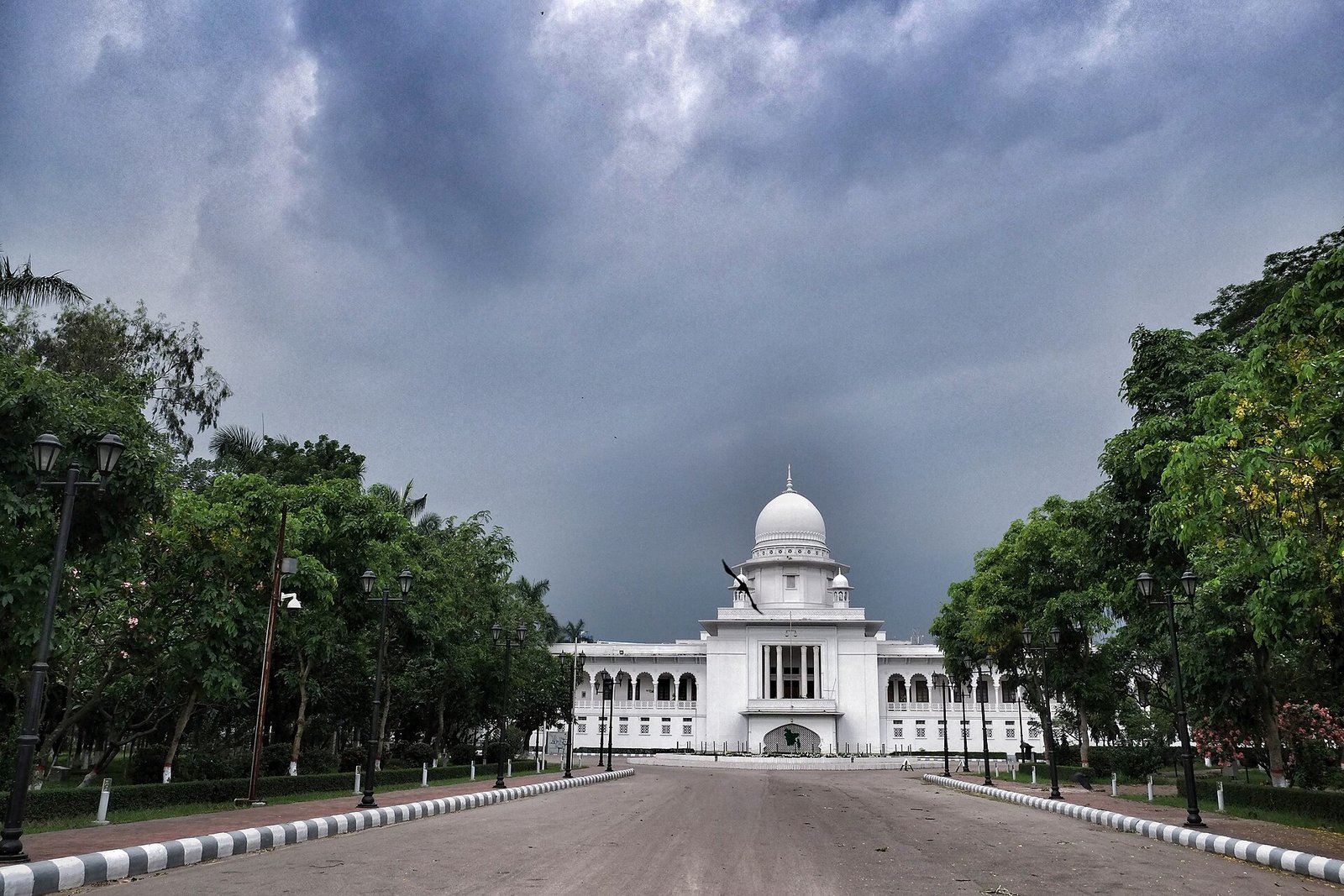
A writ petition lawyer in Chittagong challenges unlawful decisions of public authorities, from port tariffs and customs holds to CDA approvals and land acquisition, under Article 102 of the Constitution. There is still no High Court bench in Chattogram, so writs are prepared locally and moved in Dhaka, where speed, certified documents and choosing writ over other remedies decide the outcome.
Key pointA writ asks whether the authority acted lawfully, not who is right on the facts; petitions that are really private disputes, or that bypass an equally efficacious statutory appeal, are the ones most often dismissed.
At a glance
Article 102 jurisdiction
The High Court Division can enforce fundamental rights and issue prohibition, mandamus, certiorari, habeas corpus and quo warranto against public bodies.
Heard in Dhaka
Article 100 fixes the Supreme Court's seat in the capital; permanent benches outside Dhaka were struck down in 1989 and none currently sits in Chattogram.
Reform agreed, not enacted
Political parties agreed in July 2025 to amend Article 100 for permanent High Court benches in divisional cities; a constitutional amendment is still needed.
Port writs in practice
On 9 November 2025 the High Court Division suspended a Chittagong Port Authority tariff circular for one month and issued a rule on its legality.
Alternative remedy rule
Writs under Article 102(2) need no other equally efficacious remedy, so customs, VAT and tax appeals usually come first unless jurisdiction is lacking.
Swipe or scroll →
What a writ petition is, and why Chattogram cases go to Dhaka
A writ petition lawyer in Chittagong challenges the decisions, actions and failures of public authorities before the High Court Division of the Supreme Court. A writ is the constitutional remedy when a ministry, regulator, port authority, development authority, city corporation, customs or tax office, or a court or tribunal acts without lawful authority, ignores the law, refuses to decide, or infringes a fundamental right.
Chattogram generates a steady flow of these cases. The Chittagong Port Authority sets tariffs and allocates berths and yards. The Custom House and NBR field offices assess duty and VAT. The Chattogram Development Authority approves plans and allots plots. The City Corporation licenses trade and levies holding tax. The Deputy Commissioner acquires land for roads, the port and economic zones. Each of these bodies can be challenged by writ when it oversteps.
The practical difficulty is geography. The High Court Division sits in Dhaka, and despite repeated proposals for a bench in Chattogram, writ petitions from the city are still filed and heard there. A Chattogram client therefore needs advocates who can prepare the case locally and move it in Dhaka without losing time.

The constitutional framework: Article 102
The writ jurisdiction comes from Article 102 of the Constitution of the People's Republic of Bangladesh. Article 44 guarantees the right to move the High Court Division to enforce fundamental rights, and Article 102 gives the High Court Division the power to make the necessary orders. Bangladeshi lawyers still use the traditional English names for the orders, although the Constitution describes them by function.
| Provision | Traditional name | What it does | Typical Chattogram use |
|---|---|---|---|
| Article 102(1) | Enforcement of fundamental rights | Directions or orders to enforce rights in Part III of the Constitution | Discrimination, arbitrary deprivation of property or livelihood |
| Article 102(2)(a)(i) | Prohibition and mandamus | Stops a public body acting unlawfully, or directs it to do what the law requires | Forcing a decision on a pending CDA or port application; stopping an unlawful demand |
| Article 102(2)(a)(ii) | Certiorari | Declares an act or proceeding to have been done without lawful authority and of no legal effect | Quashing an unlawful tariff circular, licence cancellation or assessment |
| Article 102(2)(b)(i) | Habeas corpus | Requires a detained person to be brought before the court to test the lawfulness of detention | Unlawful detention by police or other agencies |
| Article 102(2)(b)(ii) | Quo warranto | Requires a person holding public office to show by what authority they hold it | Challenges to appointments to public bodies |
The orders under Article 102(2) are available only where no other equally efficacious remedy is provided by law, and only on the application of a person aggrieved, except for habeas corpus and quo warranto, which any person may seek. Article 102(5) defines "person" to include statutory public authorities and courts and tribunals, which is what allows challenges to bodies such as the port authority and CDA. Appeals from the High Court Division go to the Appellate Division under Article 103.
Limits on the writ jurisdiction
Some matters are excluded or channelled elsewhere. Service disputes of public employees generally belong before the Administrative Tribunals, and the Constitution restricts orders in relation to certain protected laws. Purely private contractual disputes, even with a public body, are usually for the civil courts unless a public law element is involved. A writ petition lawyer in Chittagong will check these limits before drafting, because a petition dismissed as not maintainable wastes urgency.
Is there a High Court bench in Chattogram?
Not at present, as far as the latest reports show. Article 100 of the Constitution fixes the permanent seat of the Supreme Court in the capital, while allowing the Chief Justice, with the President's approval, to appoint other places for sessions of the High Court Division. In 1988 the Eighth Amendment created permanent benches outside Dhaka, including in Chattogram, but the Appellate Division struck that amendment down in 1989 in the Anwar Hossain Chowdhury case, holding that it undermined the unity of the High Court Division.
The idea has returned since. Successive governments promised a circuit bench in Chattogram. In February 2025 the Judiciary Reform Commission recommended permanent benches in divisional cities, and in July 2025 political parties agreed before the National Consensus Commission to amend Article 100 for that purpose, as The Daily Star has analysed. Implementation needs a constitutional amendment and careful design. Our article on a High Court bench in Chattogram tracks developments.
Until a bench actually sits in Chattogram, plan for Dhaka. Urgent writs need someone ready to swear the affidavit, file in the Supreme Court and move the bench with the right jurisdiction the same week. Documents should be certified and organised in Chattogram before travel, not gathered afterwards.
What a writ petition lawyer in Chittagong challenges most often
The subjects below account for much of the public law work that comes from Chattogram. In each, the question is whether the authority acted within its legal powers, followed a fair procedure and gave reasons.
Port authority decisions
Tariff changes, berth and yard allocations, licensing of operators, and auction or detention decisions by the Chittagong Port Authority are all open to challenge where they lack legal basis. On 9 November 2025, for example, the High Court Division suspended a CPA tariff collection circular for one month and issued a rule asking why it should not be declared unlawful; press reports said the Appellate Division lifted the stay in December 2025. See our port practice.
Customs, VAT and tax
Customs, VAT and income tax laws provide their own appeal routes, often with deposit requirements, so a writ is usually available only where the authority acted wholly without jurisdiction, breached natural justice or where the statutory remedy is not equally efficacious. Writs are common against goods held without lawful order, demands made without notice and refusals to release goods; see our customs practice.
CDA, City Corporation and land
Refusals or delays in plan approval, cancellation of plot allotments, demolition notices, holding tax demands and trade licence decisions can be challenged. Land acquisition for roads, the port, Mirsarai and other projects produces writs over notice, compensation and the purpose of acquisition; see our land acquisition and CDA plot pages.
Banks, regulators and investigators
Writs are brought against unlawful auction notices under the Artha Rin Adalat Ain, credit information bureau classifications, regulatory licence decisions and investigative notices that exceed legal powers, including some Anti-Corruption Commission actions. Environmental clearance refusals and the conduct of zone authorities also come before the court.
Liberty and public interest
Habeas corpus petitions test the lawfulness of detention, and can be brought by a relative or any person on the detainee's behalf. Since the 1990s the Appellate Division has read "person aggrieved" broadly enough to allow public interest litigation, so organisations and citizens bring writs on environmental harm, hill cutting, river encroachment and public health in and around Chattogram. A writ petition lawyer in Chittagong acting in a public interest matter must still show a genuine public law wrong and a responsible respondent, and should expect the court to scrutinise the petitioner's motives and evidence closely.
Whatever the subject, a writ petition lawyer in Chittagong should start from the source of the authority's power, because that defines what it may lawfully do.
Key decisions: writ, suit or statutory appeal?
A writ is powerful but not always the right tool. The court will ask whether another equally efficacious remedy exists, and whether the dispute is really one of public law.
Writ petition
Best where a public body acted without lawful authority, ignored mandatory procedure, failed to decide, or infringed a fundamental right. Interim stays can be obtained quickly.
Statutory appeal
Where a statute provides an appeal, as for customs, VAT and tax decisions, the court usually expects it to be used first, unless the decision is a nullity or the remedy is illusory.
Civil suit
Better for private rights, disputed facts needing oral evidence, title disputes and contractual claims. A civil court can grant an injunction and damages.
Representation first
A written demand for justice to the authority, setting out the law and asking it to act, is often the necessary foundation for a mandamus and sometimes resolves the matter without litigation.
The High Court Division does not decide who owns a plot or how much a container is worth. It decides whether the authority acted within the law. Frame the case that way.
The writ process step by step
- Assessment and demand. Review the decision and the law that authorises it; send a demand for justice where appropriate and give a short time to respond.
- Drafting. Prepare the petition setting out facts, grounds and the orders sought, with certified copies of the impugned decision and supporting documents as annexures.
- Affidavit and filing. The petitioner or an authorised representative swears the affidavit, and the petition is filed in the Supreme Court in Dhaka.
- Motion hearing. The petition is moved before a bench with jurisdiction over the subject. If satisfied, the bench issues a rule nisi calling on the respondents to show cause, and may grant an interim order such as a stay or status quo.
- Service and opposition. The rule is served on the respondents. The government is represented by the Attorney General's office, and respondents may file an affidavit-in-opposition.
- Interim challenges. Respondents sometimes seek a stay of the High Court Division's interim order from the Appellate Division, which must then be defended.
- Final hearing. The bench hears both sides and makes the rule absolute, granting the relief, or discharges it.
- Compliance and appeal. The authority must comply with a final order; non-compliance can be pursued through contempt. Either side may seek leave to appeal to the Appellate Division.
Our article on how to file a writ petition explains each step in more detail.
Documents and evidence to assemble
- The decision, notice, circular or letter challenged, with the date it was received.
- All applications, representations and replies exchanged with the authority, with proof of delivery.
- The statute, rules, circulars or policy under which the authority acted, where available.
- Licences, approvals, allotment letters, title documents or contracts that establish your right or interest.
- Evidence of the harm: lost business, detained goods, demolition threats, financial impact.
- For a company: board resolution authorising the petition and the deponent.
- For a petitioner abroad: a properly executed power of attorney for the representative who will swear the affidavit.
Writs are decided on affidavit evidence, not oral testimony. The documents annexed to the petition are, in practice, the whole case. A writ petition lawyer in Chittagong will insist on certified copies and a clear chronology before filing.
Risks and common mistakes
Delay (laches)
There is no fixed limitation period for writs, but unexplained delay can defeat a petition. The court asks whether the petitioner acted promptly once aware of the decision, and whether others have changed position in the meantime, for example by buying an allotted plot or completing a project. Waiting months while negotiating informally is a common mistake. If you intend to challenge a decision, send a demand for justice quickly and file soon after it is refused or ignored, explaining any delay candidly in the petition.
Bypassing a statutory remedy
Where a statute provides an appeal or review, as in customs, VAT, tax and many licensing regimes, the court usually expects that route to be used. A writ filed instead may be summarily rejected as not maintainable, and meanwhile the time for the statutory appeal can expire. Writs remain possible where the decision is without jurisdiction, made in breach of natural justice, or where the statutory remedy is not equally efficacious, but that has to be shown, not assumed. Check both routes before choosing.
Turning a private dispute into a writ
Disputes about who owns land, whether goods were defective or how much is owed under a contract usually involve disputed facts that need oral evidence. The writ court generally will not resolve those. Petitions that are really private disputes dressed as public law are often dismissed, sometimes with costs. If the core of the dispute is a private right, a civil suit, commercial court claim or arbitration may be the correct forum, possibly with a writ against the public body's specific unlawful act.
Weak or uncertified annexures
Because writs are decided on the papers, missing or uncertified documents can be fatal. Photocopies of unclear origin, untranslated documents and gaps in the chronology invite the respondents to contest facts the petitioner cannot prove. Obtain certified copies of decisions, keep receipts for every representation, and translate key documents properly before filing. A short, accurate petition with strong annexures persuades more than a long one with weak support.
Relying on an interim order as the final answer
A stay obtained at the motion hearing is temporary. The authority may seek to vacate it, the Appellate Division may stay it, and the rule must still be heard and made absolute. Some petitioners stop pursuing the case once they have a stay, and the rule is later discharged for want of prosecution, reviving the original decision. Keep the case moving to final hearing, and plan commercially for the possibility that the interim order ends.
Cross-border, foreign investor and NRB angles
Foreign investors in the economic zones, shipping lines and terminal operators, and non-resident Bangladeshis with property or businesses in Chattogram regularly need writs. Typical issues include licence and permission decisions by zone authorities and the Invest Bangladesh Authority, which succeeded BIDA under the Invest Bangladesh Act 2026, land acquisition affecting family property, and port or customs decisions affecting cargo.
A petitioner abroad does not need to travel. A representative holding a properly attested power of attorney can swear the affidavit and instruct counsel; see our NRB practice. Foreign companies need board authority and properly authenticated documents. TRW & Co's offices in Dhaka, Singapore, Dubai and London help coordinate instructions, documents and parallel proceedings, such as treaty, arbitration or regulatory steps, so that the Bangladeshi writ fits the wider strategy.
How TRW & Co helps
TRW & Co's Bangladesh advocates appear before the High Court Division and the Chattogram courts. As a writ petition lawyer in Chittagong, we prepare cases locally, with the client and the documents, and move them in Dhaka.
Assessment and strategy
We review the decision, the governing law and the alternatives, and advise whether a writ, statutory appeal, civil suit or negotiated representation is the right first step.
Urgent writs and stays
We prepare and move writs at short notice where goods, buildings, licences or liberty are at stake, seeking interim stays or status quo orders.
Regulatory and port matters
We challenge decisions of the port authority, customs, NBR field offices, zone authorities and regulators where they exceed legal powers or ignore due process.
Land and development
We bring writs on CDA approvals and allotments, City Corporation demands and land acquisition, working with our civil litigation team where private rights are also involved.
See all our practices and the Chattogram office overview.
Checklist for decision-makers
- What exactly is the decision, act or failure you want to challenge, and when did you learn of it?
- Which law gives the authority its power, and did it follow the required procedure?
- Is there a statutory appeal, and is it equally efficacious?
- Is the core issue public law, or a private dispute better suited to a civil court?
- Have you sent a demand for justice, and kept proof?
- Are certified copies of all key documents ready?
- Who will swear the affidavit, and is a power of attorney or board resolution needed?
- What interim order do you need, and what happens commercially if it is refused?
A writ petition lawyer in Chittagong can usually tell from the decision and the core documents whether a writ is viable. Contact us through our contact page, at info@trw.co or on +880 1779 127165. Our office is at Room 4022, Annex 2, District and Sessions Judge Court Building, Court Hill (Porir Pahar), Kotwali, Chattogram 4000.
Frequently asked questions
01Can I file a writ petition in Chattogram?
Not in a court in Chattogram. Writ petitions are filed in and heard by the High Court Division of the Supreme Court in Dhaka. Article 100 of the Constitution fixes the Supreme Court's permanent seat in the capital. Political parties agreed in 2025 to amend it to allow permanent benches in divisional cities, but that requires a constitutional amendment. In practice, the case is prepared in Chattogram and moved in Dhaka by advocates of the Supreme Court.
02What can a writ petition challenge?
A writ can challenge acts, decisions and failures of the government, statutory public authorities, and courts and tribunals, where they act without lawful authority, breach mandatory procedure or natural justice, fail to decide, or infringe fundamental rights. In Chattogram that commonly includes decisions of the port authority, Custom House, NBR offices, CDA, the City Corporation, the Deputy Commissioner in land acquisition, zone authorities and regulators. Private disputes between individuals or companies are usually not suitable.
03How quickly can the High Court stop a decision?
If the petition is ready and the bench is satisfied at the motion hearing, it can issue a rule nisi and grant an interim order, such as a stay, on the same day. The time needed depends mainly on preparing the petition, obtaining certified documents, swearing the affidavit and getting the matter listed. Interim orders are often for a limited period and can be challenged by the respondents, including before the Appellate Division.
04Is there a time limit for filing a writ?
There is no fixed limitation period in the Constitution, but the High Court Division can refuse relief where the petitioner delayed without good reason, especially if others have acted on the decision in the meantime. Courts look at when the petitioner learned of the decision and what they did next. Sending a prompt demand for justice and filing soon after it is refused or ignored is the safest course.
05Do I need to appeal to customs or tax authorities before filing a writ?
Usually, yes. Customs, VAT and income tax laws provide their own appeal routes, and the High Court Division generally requires those to be used because they are equally efficacious remedies. A writ may still be maintainable where the authority acted wholly without jurisdiction, breached natural justice, or where the statutory remedy is not genuinely available. The choice needs to be made quickly, because statutory appeal deadlines continue to run.
06What happens after the High Court issues a rule?
The rule is served on the respondents, who may file an affidavit-in-opposition. The government is represented by the Attorney General's office. The matter is then heard on the papers, and the bench either makes the rule absolute, granting the relief, or discharges it. Either side may seek leave to appeal to the Appellate Division. A final order must be complied with, and non-compliance can be pursued through contempt.
07Can a non-resident Bangladeshi or foreign company file a writ?
Yes, if they are aggrieved by the decision. A non-resident Bangladeshi can act through a representative holding a properly attested power of attorney, who swears the affidavit. A foreign company needs a board resolution and authenticated documents authorising its representative. The petitioner does not need to be in Bangladesh for the hearing, although instructions must be available quickly when the bench raises questions.
Sources and official materials
- Constitution of the People's Republic of Bangladesh — Articles 44, 100, 102 and 103
- Supreme Court of Bangladesh — High Court Division writ jurisdiction, cause lists and judgments
- Decentralising the High Court: between consensus and constitutional constraints — The Daily Star on permanent benches and Article 100
- HC stays Chittagong Port Authority's tariff hike — Writ suspending a CPA tariff circular, November 2025
- Chittagong Port Authority — Port authority whose decisions are often challenged
- Parties agree on permanent High Court benches outside Dhaka — bdnews24 on the July 2025 consensus on Article 100
General information only, current as at 2 November 2026. It is not legal advice and does not create an advocate–client relationship. It reflects the law of Bangladesh unless stated otherwise, and the law, court practice and official fees change frequently. Check current official sources and take advice on the facts of your matter.