
TRW & Co · Employment, Labour & RMG Compliance
Trade Union Lawyer in Chittagong (Chattogram)
A trade union lawyer in Chittagong guides employers, unions and workers through registration, collective bargaining, unfair labour practice complaints and industrial disputes under the Bangladesh Labour Act 2006. The April 2026 amendment changed membership thresholds, capped unions per establishment and gave the Director General of Labour new powers, so practices that were routine last year can now trigger orders and compensation.
Key pointSection 186 of the Labour Act freezes applicants' conditions of service while a registration application is pending, so a transfer or dismissal in that window is the quickest way for an employer to turn a union application into an unfair labour practice case.
At a glance
2026 amendment in force
Parliament passed the Labour (Amendment) Bill on 9 April 2026, converting the November 2025 ordinance on union registration and unfair labour practices into law.
Fixed membership thresholds
Registration now needs a fixed number of members, from 20 in establishments of up to 300 workers to 400 where more than 3,000 work.
Three-union cap
No more than three registered trade unions may exist at the same time in one establishment or group of establishments under the amended Act.
One union at the port
In February 2026 the High Court Division held that section 185A contemplates a single registered union for Chittagong Port workers and applied a first-in-time rule.
EPZs use welfare associations
Workers in CEPZ and KEPZ organise through workers' welfare associations under the EPZ Labour Act 2019, with disputes in the EPZ Labour Court.
Swipe or scroll →
What trade union and industrial relations law covers in Chattogram
A trade union lawyer in Chittagong advises employers, unions and workers on how unions are formed and registered, how collective bargaining works, what counts as an unfair labour practice, and how industrial disputes, strikes and lockouts are handled. In Bangladesh almost all of this is set by Chapter XIII of the Bangladesh Labour Act 2006 and, inside the export processing zones, by a separate statute.
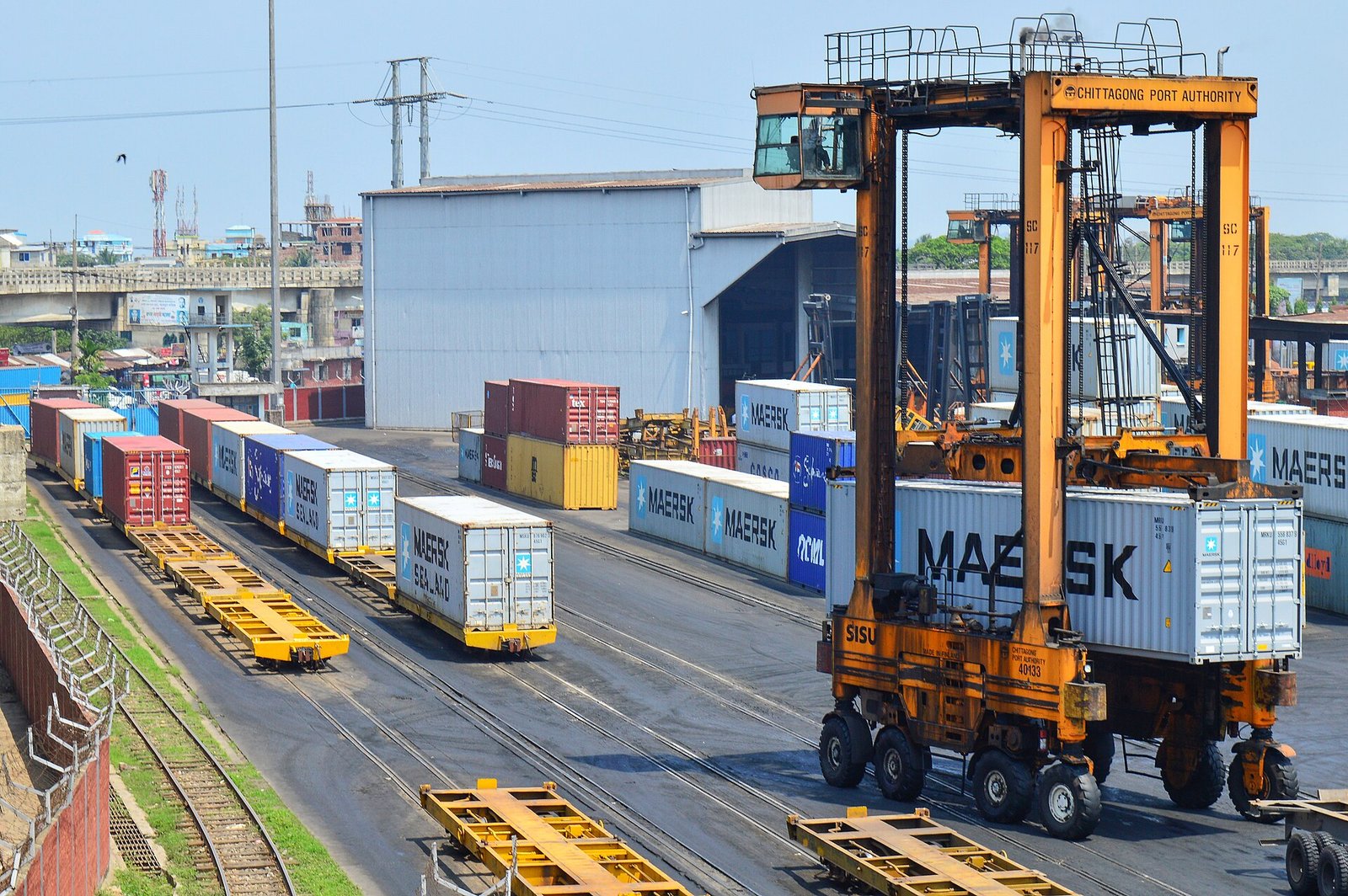
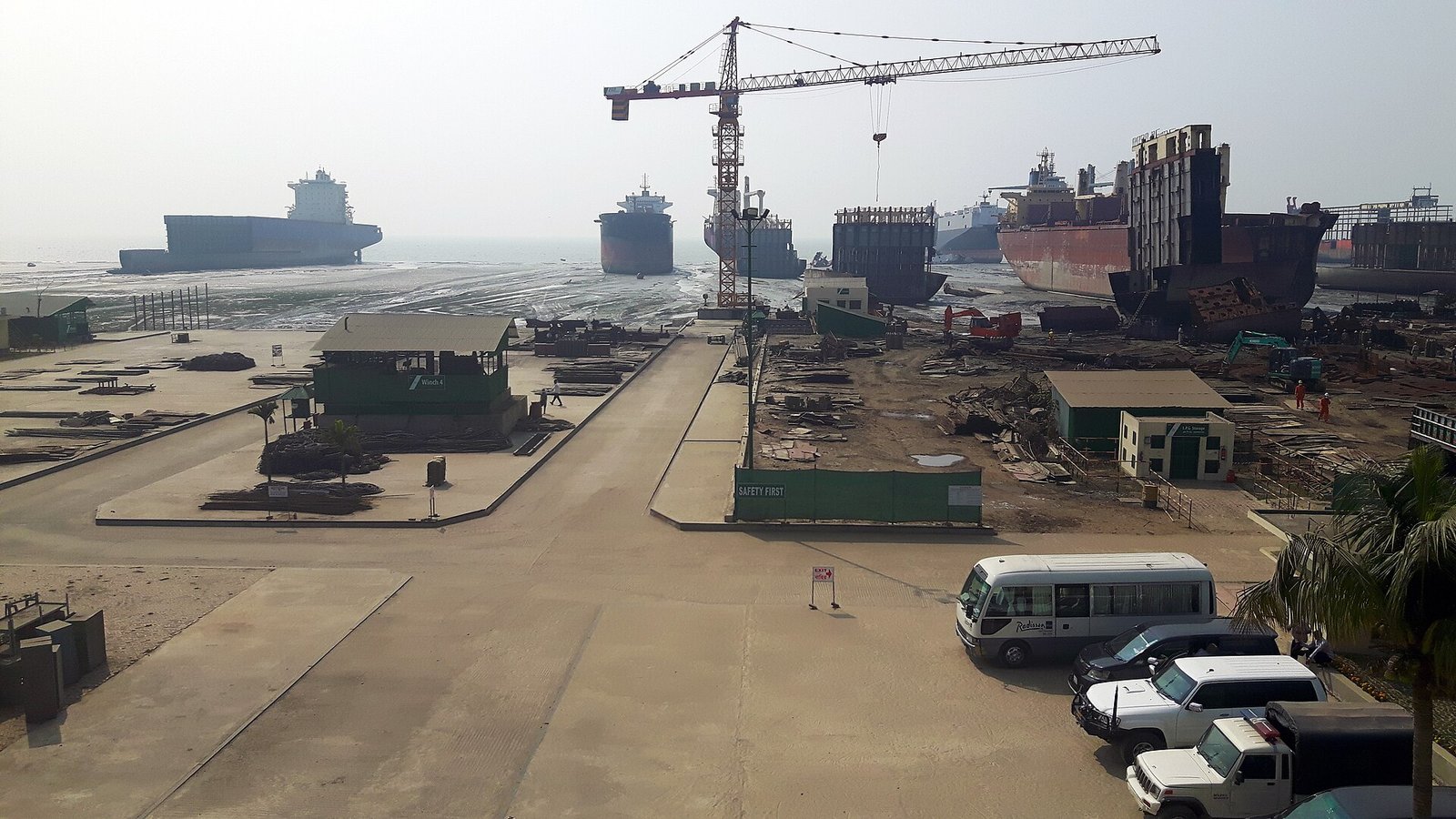
Chattogram is where these rules are tested most often. The port and its terminal operators, shipping agents, off-dock depots, steel and cement plants, garment and textile factories, the ship recycling yards at Sitakunda and the export zones at South Halishahar and Anowara all employ large, organised workforces. Union activity, rival unions and disputes over wages or lay-offs can stop a production line or a berth within hours.
The subject becomes a legal question earlier than most managers expect. It starts when workers submit an application to register a union, when a charter of demands arrives, when an officer of a union faces discipline or transfer, or when a dispute spills into a work stoppage. Each of these moments has its own statutory steps, and getting them wrong exposes an employer to unfair labour practice complaints and a union to cancellation of its registration.
The legal framework: Labour Act 2006, the 2026 amendment and the regulators
Chapter XIII of the Labour Act
The Bangladesh Labour Act 2006 gives workers and employers the right to form unions (section 176) and sets out how applications for registration are made and assessed (sections 177 to 179 and 182). It restricts the transfer of a union's president and certain officers (section 187), lists unfair labour practices by employers and by workers (sections 195 and 196), and provides for collective bargaining agents, check-off of subscriptions and participation committees (sections 202 to 208).
Section 186 is one that employers often overlook: while an application for registration is pending, the conditions of service of the workers concerned must remain unchanged. A transfer, lay-off or dismissal of a leading applicant in that period is the classic route to an unfair labour practice complaint.
What the 2026 amendment changed
Parliament passed the Bangladesh Labour (Amendment) Bill 2026 on 9 April 2026, converting the interim government's November 2025 ordinance into law with changes. As reported at passage, the key changes for industrial relations are:
- registration now turns on fixed membership numbers rather than a percentage of the workforce, starting at 20 members for an establishment of up to 300 workers and rising in bands to 400 members where there are more than 3,000 workers;
- no more than three registered unions may exist at any one time in an establishment or group of establishments;
- the list of employer unfair labour practices now expressly includes blacklisting, employer-controlled unions and financial support intended to influence union activity;
- retaliation against a worker who complains about an unfair labour practice is treated as anti-union discrimination; and
- the Director General of Labour can order an employer to stop such practices and order compensation to affected workers.
Several details depend on rules and forms that are still being updated, so a trade union lawyer in Chittagong will check the gazetted text before advising on a specific threshold or deadline.
Who regulates industrial relations in Chattogram
- Department of Labour: the Divisional Labour Office, Chattogram receives and processes applications for registration from establishments in the division, conducts collective bargaining agent elections and appoints conciliators.
- Director General of Labour: holds the new powers over unfair labour practices and anti-union discrimination.
- Labour Courts: Chattogram's First and Second Labour Courts hear complaints, appeals against refusal or cancellation of registration where the Act provides, and prosecutions. Appeals go to the Labour Appellate Tribunal.
- DIFE: the Department of Inspection for Factories and Establishments inspects working conditions, and its findings often feature in disputes.
- BEPZA: inside the Chattogram and Karnaphuli EPZs, industrial relations run under the EPZ Labour Act 2019 rather than Chapter XIII.
Two Chattogram special cases: the port and the export zones
Unions at Chattogram Port
The Labour Act contains a provision written for the ports. Section 185A deals with trade unions at the Chittagong Port Authority and the Mongla Port Authority, and provides for a single union structure for port workers. In a judgment delivered on 18 February 2026 in Writ Petition No. 4447 of 2025, heard together with Writ Petition No. 8826 of 2023, the High Court Division held that there should be only one registered trade union in that setting, applied a first-in-time principle between two rival applicants, and directed the authorities to register the earlier applicant in accordance with law. The full judgment is published by the Supreme Court.
The practical lesson for port users, terminal operators and contractors is that representation questions at the port are not decided by the general Chapter XIII rules alone. Before recognising or negotiating with any body that claims to speak for port workers, check its registration and the effect of section 185A. Our Chittagong Port practice regularly deals with the commercial side of the same disputes.
Workers' welfare associations in the EPZs
Workers in BEPZA zones do not form trade unions under the Labour Act. The EPZ Labour Act 2019 provides for one workers' welfare association per industrial unit, which acts as the collective bargaining agent, with registration approved by BEPZA and disputes heard in the EPZ Labour Court. The 2026 amendment to the Labour Act did not change this. Employers and workers in CEPZ and KEPZ should read our EPZ labour page rather than relying on mainland rules.
Union registration and the collective bargaining agent
Registration is the point at which most disputes begin, because it fixes who may bargain and which protections apply. A trade union lawyer in Chittagong can act on either side: for workers preparing an application, or for an employer checking whether an application meets the Act.
| Stage | What the law requires | Common flashpoint |
|---|---|---|
| Application for registration | Constitution, list of members and officers, and other particulars set out in sections 177 and 178, filed with the Department of Labour | Disputed signatures, members who are not workers of that establishment, incomplete constitution |
| Verification | Membership is checked against the minimum numbers now set by the 2026 amendment, using worker lists or digital records | Employer worker lists that do not match payroll; mass resignations after filing |
| Pending application | Section 186 freezes conditions of service of the workers concerned without permission | Transfers or dismissals of applicants that look like retaliation |
| Decision | Registration certificate, or a reasoned refusal open to challenge | Refusals on technical grounds; challenges by rival unions |
| Collective bargaining agent | Where there is more than one union, the CBA is determined by secret ballot conducted by the labour authorities under section 202 | Election timing, voter lists and campaigning on site |
| Ongoing compliance | Registers, returns, annual general meeting, check-off under section 204 | Late returns leading to cancellation proceedings |
Once a CBA is in place, it negotiates with the employer, represents workers in proceedings and may give notice of a strike in accordance with the Act. Participation committees under sections 205 to 208, made up of employer and worker representatives, deal with day-to-day matters such as productivity, safety and welfare. Treating the participation committee as a formality is a missed opportunity, because issues resolved there rarely become disputes.
The most expensive industrial disputes in Chattogram rarely start with a strike. They start with a transfer letter, a missed meeting or a dismissal timed badly against a pending registration.
Industrial disputes, conciliation, strikes and lockouts
Chapter XIV of the Act sets out a staged procedure for collective disputes. Either party may raise a dispute by writing to the other, after which the parties must meet and negotiate within a short statutory window. If bilateral negotiation fails, the matter goes to a conciliator appointed by the government, and if conciliation fails the parties may refer the dispute to an arbitrator or the dispute may proceed towards a strike, a lockout or an application to the Labour Court.
A strike is lawful only if the CBA has followed that procedure, including a secret ballot of its members conducted under the supervision of the conciliator and the required notice. The government may prohibit a strike or lockout that continues for a prolonged period or that causes serious hardship or harms the national interest, and may prohibit one at any stage in a public utility service, referring the dispute to the Labour Court. Illegal strikes and illegal lockouts carry penalties under the Act.
- Prepare before the demand. Map who represents your workforce, check registration status and the CBA, and review recent grievances and inspection findings.
- Receive and acknowledge the charter. Respond in writing, propose a meeting within the statutory time and keep minutes of every session.
- Negotiate with a mandate. Agree internally what can be offered on wages, allowances, leave and job security, and cost each option before the meeting.
- Conciliation. If talks fail, either side may refer the dispute to the conciliator. Attend with documents and a clear written position; many disputes settle at this stage.
- Arbitration or Labour Court. If conciliation fails, consider agreed arbitration, which gives a binding award, or an application to the Labour Court.
- Strike or lockout notice. If a notice is served, check the ballot, timing and form immediately. A defective notice may make the action illegal.
- Record and implement the settlement. Put the agreement in writing, sign it with the CBA and send copies to the labour authorities so that it binds as the Act intends.
A trade union lawyer in Chittagong can attend negotiations, prepare conciliation submissions, test the validity of a strike notice and, if necessary, apply to the Labour Court or seek urgent relief.
Unfair labour practices and anti-union discrimination
Unfair labour practice complaints are now the main legal risk for Chattogram employers facing union activity. The 2026 amendment widened the list and gave the Director General of Labour direct powers to order cessation and compensation, which means an employer can face an administrative order as well as a prosecution in the Labour Court.
Transferring or disciplining union officers
Section 187 restricts transfers of a union's president and certain officers, and section 186 protects applicants while registration is pending. Discipline is still possible for genuine misconduct, but the employer must follow the section 24 procedure scrupulously: a written charge, time to reply, a hearing and an inquiry. Timing matters. A dismissal issued days after an application for registration will be presumed retaliatory unless the records show a misconduct process that began earlier and was conducted fairly. Take advice before acting against any office-bearer.
Encouraging a favoured union
Supporting one union against another, funding a "management union" or pressuring workers to join or leave a union are unfair labour practices, and the 2026 amendment names employer-controlled unions and financial support expressly. In practice the risk arises from informal conduct: supervisors campaigning, offering overtime to members of one union, or giving office space selectively. Train line managers on what they may and may not say, and keep a record of even-handed treatment of all registered unions.
Blacklisting and reference practices
Sharing lists of union members with other factories or recruitment agents, or refusing to hire people because of past union activity, is now expressly an unfair labour practice. Chattogram's industrial clusters are close-knit, and informal "do not hire" lists can surface in complaints. Review recruitment and reference policies, limit access to personnel data and make sure decisions are based on documented, job-related criteria. The Personal Data Protection Act 2026, passed in April 2026, adds a further reason to control how employee information is shared.
Unfair practices by workers and unions
Section 196 also lists unfair labour practices by workers and unions, such as intimidating workers to join a union, obstructing work or taking part in an illegal strike. Unions can lose registration for serious breaches, and individuals can face disciplinary action and prosecution. For union officers, the practical protection is to keep proper records, follow the constitution, hold the required meetings and file returns on time, so that the registration cannot be attacked on procedural grounds.
Responding to a Director General order
An order from the Director General of Labour under the new powers should be treated as urgent. Read the order for its legal basis, the facts relied on and any deadline, preserve the relevant records and respond in writing. Comply with any cessation direction while you challenge it, because non-compliance is a separate breach. Where the order is wrong in law or made without a proper hearing, there may be a remedy in the Labour Court or, exceptionally, by writ in the High Court Division.
Freeze discretionary changes for applicants as soon as you learn of a registration application: transfers, shift changes, disciplinary steps and terminations. Then take advice on any action that genuinely cannot wait. Section 186 and the new anti-discrimination powers make timing as important as justification.
Documents and evidence to keep ready
Most union disputes are decided on documents. Whether you are an employer or a union, assemble the following before the first meeting with the labour authorities:
- the union's constitution, application, registration certificate and the latest returns filed with the Department of Labour;
- payroll, attendance and worker lists for the establishment on the date of the application, which determine whether the membership threshold is met;
- appointment letters, service books and ID cards showing who is a "worker" and who is managerial or supervisory staff outside the Act;
- minutes of participation committee meetings, bargaining sessions and any earlier settlements;
- disciplinary files for any union officer, including the dates when each step began;
- correspondence with the Divisional Labour Office, the conciliator and DIFE; and
- CCTV, gate records and photographs if a work stoppage or obstruction is alleged.
Our Labour Court team uses these records to test or defend unfair labour practice complaints, and our RMG compliance practice often needs the same files for buyer audits on freedom of association.
Buyers, foreign owners and the cross-border angle
Freedom of association is now a supply-chain issue. International brands sourcing from Chattogram assess union rights in audits, and European and US trade policy has focused on Bangladesh's labour law reforms. A complaint about anti-union conduct can lead to order suspensions before any Bangladeshi authority has acted.
Foreign-owned employers face particular scrutiny because head offices in Singapore, London or the Gulf must report on supply-chain human rights. A trade union lawyer in Chittagong can prepare a factual account that satisfies both the Bangladeshi authorities and the buyer, while avoiding admissions that would harm the employer in later proceedings. TRW & Co's offices in Singapore, Dubai and London help coordinate with regional management, buyers' compliance teams and overseas counsel.
Unions and labour federations working with international partners also need advice on how support and affiliation are handled under the Act, and on how to document grievances so that they can be pursued effectively both in Bangladesh and through buyer grievance channels.
How our trade union lawyer in Chittagong helps employers, unions and workers
We act for employers, unions and individual workers, subject to conflict checks. As a trade union lawyer in Chittagong, our role is to make sure the statutory procedure is followed and that disputes are resolved with the least disruption.
Registration advice
We review applications, constitutions and membership lists against the 2026 thresholds, and advise employers on lawful responses while an application is pending.
Collective bargaining
We prepare bargaining strategy, cost the options, attend negotiations and draft settlements that are clear, workable and properly filed with the labour authorities.
Conciliation and arbitration
We prepare written submissions, appear before conciliators and arbitrators, and advise on whether arbitration or the Labour Court is the better forum.
Unfair labour practice cases
We defend or bring complaints in the Chattogram Labour Courts, respond to Director General orders and handle appeals and writ petitions on points of law.
Strike and lockout response
We test the validity of notices, advise on lawful steps during stoppages, and coordinate with the authorities, security and buyers.
Policies and training
We draft neutral-conduct policies, train supervisors on what they may say, and align participation committee practice with the Act and buyer codes.
Related work often runs alongside: general labour advice, termination and discipline, and the drafting of employment contracts and service rules. Our guide to trade unions and collective bargaining in Chattogram factories explains the basics for workers and managers. You can see all our services on our practices page or the Chattogram office hub.
Checklist for decision-makers
- Do we know which statute governs this workforce: the Labour Act, the EPZ Labour Act or the port provisions?
- Has any registration application been filed, and have we frozen changes to applicants' conditions of service?
- Do our worker lists, payroll and ID records match, so that membership can be verified accurately?
- Who is the collective bargaining agent, and when is the next election due?
- Have supervisors been briefed on unfair labour practices, including blacklisting and favouring one union?
- Is the participation committee constituted, meeting and keeping minutes?
- Do we have a written plan for receiving a charter of demands and a strike notice?
- Are buyer audit commitments on freedom of association consistent with our actual practice?
- Have we taken advice from a trade union lawyer in Chittagong before acting against any union officer?
To discuss a registration, a dispute or a complaint, contact our Chattogram office at Room 4022, Annex 2, District and Sessions Judge Court Building, Court Hill (Porir Pahar), Kotwali, Chattogram 4000, email info@trw.co or call +880 1779 127165. A trade union lawyer in Chittagong is most useful before positions harden, so early contact usually saves time and cost.
Frequently asked questions
01How many members does a union need to register in Bangladesh?
Under the 2026 amendment, registration depends on fixed membership numbers rather than a percentage of the workforce. As reported when Parliament passed the bill, the minimum is 20 members in an establishment of up to 300 workers, rising in bands to 400 members where more than 3,000 workers are employed. The intermediate bands and verification procedure should be checked against the gazetted Act and current forms before an application is filed, because rejected applications cost time.
02Can an employer dismiss workers who are trying to form a union?
Not because of their union activity. Section 186 of the Labour Act keeps applicants' conditions of service unchanged while a registration application is pending, and dismissing or transferring workers for union activity is an unfair labour practice. Genuine misconduct can still be dealt with, but only through the full section 24 procedure, and the employer must be able to show the process was unconnected to the union. Since 2026 the Director General of Labour can also order compensation.
03How many unions can there be in one factory?
The amended Act allows no more than three registered trade unions at any time in one establishment or group of establishments. Where there is more than one union, the collective bargaining agent is chosen by a secret ballot conducted by the labour authorities. Special rules apply at Chittagong Port, where the High Court Division held in February 2026 that the port provision contemplates a single registered union.
04When is a strike legal in Bangladesh?
A strike is legal only if the statutory dispute procedure has been followed: the dispute must be raised in writing, bilateral negotiation and conciliation must have failed, the collective bargaining agent must have obtained its members' consent by secret ballot under the conciliator's supervision, and proper notice must be given. The government can prohibit a prolonged strike, or one in a public utility service, and refer the dispute to the Labour Court. Strikes outside these rules are illegal and carry penalties.
05Do the trade union rules apply in CEPZ and KEPZ?
No. Enterprises in BEPZA export processing zones, including the Chattogram EPZ and the Karnaphuli EPZ, are governed by the Bangladesh EPZ Labour Act 2019. Workers there form workers' welfare associations, one per industrial unit, rather than trade unions, and disputes go to the EPZ Labour Court. The 2026 amendment to the national Labour Act did not change the EPZ regime, although harmonisation has been discussed.
06Can managers and supervisors join a trade union?
Trade union rights under the Labour Act belong to workers, defined by the work actually done rather than job titles. Staff employed mainly in managerial or administrative roles generally fall outside that definition. Reports on the 2026 reforms indicate wider recognition of associations for some non-worker staff, so check the current text. In disputes, the employer's appointment letters and actual duties are key evidence of who counts as a worker.
07We received a charter of demands. What should we do first?
Acknowledge it in writing and check who has sent it: the registered collective bargaining agent, another union or an unregistered group. Then arrange a meeting within the time the Act requires and keep minutes. Before negotiating, agree an internal mandate and cost the options. Avoid unilateral changes to wages or conditions while talks continue. If talks fail, conciliation follows, and many disputes settle there with good preparation.
08Do you act for unions and workers as well as employers?
Yes, subject to conflict checks. We advise unions on registration, constitutions, returns and collective bargaining, and represent workers in unfair labour practice complaints and Labour Court cases. We also act for employers on recognition, negotiations, disputes and compliance. We never act on both sides of the same dispute. Workers with limited means may also be eligible for government legal aid.
Sources and official materials
- Bangladesh Labour Act 2006 — Chapters XIII and XIV on trade unions, industrial disputes, strikes and lockouts
- UNB: JS passes labour bill (9 April 2026) — Registration thresholds, three-union cap and Director General powers
- High Court Division: Writ Petition No. 4447 of 2025 (judgment 18 February 2026) — Trade union registration at Chittagong Port under section 185A
- Divisional Labour Office, Chattogram — Department of Labour office for union registration and industrial relations
- Department of Inspection for Factories and Establishments — Labour inspection and workplace compliance
- Bangladesh Export Processing Zones Authority — Regulator for welfare associations in CEPZ and KEPZ
General information only, current as at 2 November 2026. It is not legal advice and does not create an advocate–client relationship. It reflects the law of Bangladesh unless stated otherwise, and the law, court practice and official fees change frequently. Check current official sources and take advice on the facts of your matter.



