
TRW & Co · Investment, Economic Zones & Projects
Karnaphuli EPZ Company Setup: KEPZ and Korean EPZ Lawyers in Chattogram

Karnaphuli EPZ company setup combines a BEPZA permission, a lease in the North Patenga zone, an RJSC company, a documented capital inflow and the clearances needed to build and hire. The zone sits beside Chattogram port and the airport. Its abbreviation, KEPZ, is also used for the private Korean EPZ in Anwara, which works differently.
Key point"KEPZ" can mean the BEPZA-run Karnaphuli EPZ in North Patenga or the private Korean EPZ in Anwara, which operates under a different Act. Naming the wrong zone in a lease, bank file or buyer contract causes avoidable delay.
At a glance
Second EPZ in the port city
BEPZA records that Karnaphuli EPZ opened in 2006 in North Patenga on the former Chittagong Steel Mill site, with about 209 acres and 258 industrial plots.
Permission, then lease
Section 12 of the BEPZA Act 1980 requires BEPZA permission to set up in a zone; section 13 then allows BEPZA to lease land or building space.
Published rent band
BEPZA lists Karnaphuli EPZ land at US$2.50 per square metre per year and standard factory space at US$3.00 per square metre per month.
Lease deposits
BEPZA lists a US$500 registration fee, plus a security deposit of one year's rent for land or four months' rent for factory space.
Korean EPZ is private
The Korean EPZ in Anwara is a private zone declared under the Bangladesh Private Export Processing Zones Act 1996, not a BEPZA zone.
Swipe or scroll →
What Karnaphuli EPZ company setup involves
Karnaphuli EPZ company setup means establishing an export-oriented manufacturing enterprise in the Karnaphuli Export Processing Zone in North Patenga, Chattogram, run by the Bangladesh Export Processing Zones Authority (BEPZA). In practice it combines a BEPZA permission, a lease of an industrial plot or factory space, a company with matching objects and ownership, a documented capital inflow, building and environmental approvals, and the import, customs and work permits needed to start production.
According to BEPZA's page for the zone, Karnaphuli EPZ was developed on the former site of the Chittagong Steel Mill and opened in 2006. BEPZA lists about 209 acres and 258 industrial plots, cumulative investment of about US$790 million, cumulative exports of about US$14.3 billion and employment of around 77,600 workers. Its enterprises make garments and accessories, tents and camping goods, leather goods and bags, furniture, bicycles and shoes.
Its selling point is position. The zone sits close to both Chattogram port and Shah Amanat International Airport, which shortens lead times for imported materials and finished exports. This page explains the legal route, the published costs, the documents and the mistakes to avoid, and also covers the separate, privately developed Korean EPZ across the river in Anwara.
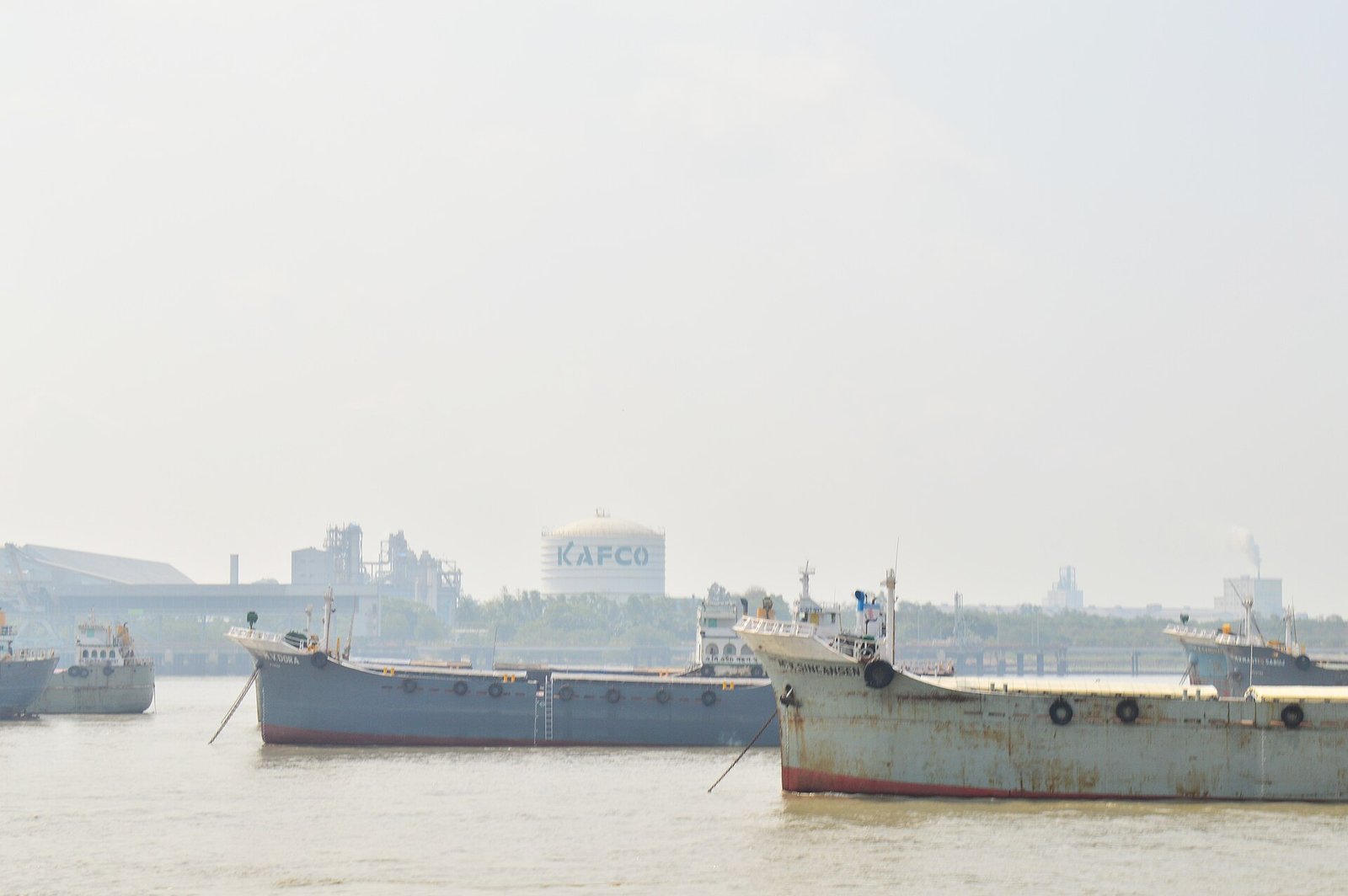
Karnaphuli EPZ or Korean EPZ: two zones, one abbreviation
"KEPZ" is used for two different places in Chattogram, and confusing them causes real problems in contracts and bank documents. The Karnaphuli EPZ in North Patenga is a public zone run by BEPZA. The Korean Export Processing Zone in Anwara, on the south bank of the Karnaphuli river, is a private EPZ developed by the Korean group Youngone under the Bangladesh Private Export Processing Zones Act 1996. Bangladesh Bank's foreign exchange guidelines, for example, use "KEPZ" for the private Korean zone.
| Zone | Operator and law | Location | What it means for a new investor |
|---|---|---|---|
| Karnaphuli EPZ | BEPZA; BEPZA Act 1980 | North Patenga, near the port and airport | Permission and lease from BEPZA; space depends on availability in a mature zone |
| Chattogram EPZ (CEPZ) | BEPZA; BEPZA Act 1980 | South Halishahar | Same BEPZA process and the same published rent band as Karnaphuli EPZ |
| BEPZA Economic Zone | BEPZA | Mirsharai, north of the city | A newer and larger BEPZA zone, at a higher published rent |
| Korean EPZ | Private developer; Private EPZ Act 1996 | Anwara, across the Karnaphuli | Space and terms come from the private developer; regulatory approvals follow the private EPZ regime |
Before you sign anything, confirm which zone the document refers to and use the full name. Our article on choosing between CEPZ, KEPZ, the Korean EPZ and BEPZA EZ compares them in more detail, and our CEPZ company setup page covers the older zone.
The legal basis for setting up in the Karnaphuli EPZ
The Karnaphuli EPZ operates under the Bangladesh Export Processing Zones Authority Act 1980 (Act No. XXXVI of 1980). Section 12 requires anyone wanting to set up an industry in a zone to apply to BEPZA in the prescribed form, and BEPZA grants permission if satisfied that the applicant meets the requirements. Section 13 lets BEPZA allot or lease land and building space to a permission holder on the terms it decides. Section 15 relieves goods imported into and exported from a zone of customs duty and similar charges, subject to rules.
Around the Act sit BEPZA's investment principles and procedures, the Customs (Export Processing Zones) Rules 1984, the Bangladesh EPZ Labour Act 2019 and Bangladesh Bank's foreign exchange instructions for zone enterprises. BEPZA gathers these in its Information for Investors compendium, which any Karnaphuli EPZ company setup team should keep to hand.
BEPZA was not part of the 2026 merger that created the Invest Bangladesh Authority from BIDA, BEZA and the Public Private Partnership Authority, as the authority's press release on the Invest Bangladesh Bill confirms. Karnaphuli EPZ investors therefore still deal with BEPZA for permission, leases, import and export permits and work permits. Our BEPZA lawyer page covers the authority's wider role.
The Korean EPZ's different footing
The Korean EPZ was declared under section 11 of the Bangladesh Private Export Processing Zones Act 1996 (Act No. XX of 1996). Bangladesh Bank applies its EPZ foreign exchange instructions to units in private EPZs, including the Korean zone, and customs and tax instruments refer to private EPZs alongside BEPZA zones. Oversight of private zones has changed over time, and the Invest Bangladesh Act 2026 now provides for free trade zones and declared industrial areas to be brought under an integrated framework, so we confirm the current approving authority for each Korean EPZ project before filing.
Early decisions in a Karnaphuli EPZ company setup
Ownership type
BEPZA's investor overview sets out three categories: Type A, wholly foreign owned; Type B, a joint venture between foreign and Bangladeshi investors with no limit on the equity split; and Type C, wholly Bangladeshi owned. The type affects how capital comes in, whether foreign currency accounts can be used and how profits and capital are repatriated. BEPZA's overview notes non-resident foreign currency deposit accounts for Type A enterprises and foreign currency accounts for Type B and C.
Plot, standard factory building or acquisition
You can lease a serviced plot and build, lease space in a BEPZA standard factory building, or buy an existing zone enterprise. Building gives a tailored plant but takes longer and adds construction and environmental approvals. Factory space is quicker but constrains layout, floor loading and effluent. Because Karnaphuli EPZ is a mature zone, acquiring an existing enterprise is sometimes the fastest route in, subject to BEPZA's approval of the transfer.
Corporate vehicle
Most investors use a Bangladeshi private limited company incorporated with the RJSC under the Companies Act 1994, owned by the foreign parent or the joint venture partners. BEPZA's list of documents for permission includes the memorandum and articles with a certificate of incorporation attested by the RJSC, so the corporate vehicle and its objects should be settled early. Our company registration page explains the RJSC side.
Export focus and domestic sales
Zone enterprises are export-oriented. BEPZA's overview lists limited permitted sales into the domestic tariff area, with conditions and exclusions, including for garments. If selling in Bangladesh is central to your plan, a mainland company or an economic zone may suit you better; our economic zones page covers that alternative.
Rent, deposits and published charges
BEPZA publishes its headline charges, which helps budgeting. The figures below come from BEPZA's investor overview and its How to Apply page; rents are revised from time to time, and the lease will state the figure that actually applies.
- Rent: Karnaphuli EPZ sits in the same band as Chattogram, Dhaka, Cumilla and Adamjee EPZs, at US$2.50 per square metre per year for land and US$3.00 per square metre per month for standard factory buildings.
- Project proposal form: BEPZA's prescribed project proposal form is priced at BDT 3,000.
- Lease execution: a registration fee of US$500 for both land and factory space; a security deposit of one year's rent for land or four months' rent for factory space; and stamp duty on land leases.
Beyond these, budget for construction or fit-out, utility connections, environmental and fire approvals, professional fees, and the time needed for machinery to arrive. The fiscal incentives BEPZA lists, such as a tax holiday and duty-free imports of machinery and raw materials, depend on the Income Tax Act 2023, customs law and NBR orders in force; our tax lawyer page covers how to claim them.
A zone lease is not a property purchase. It is a regulated relationship with BEPZA, and every deadline, change and transfer runs through the authority.
Karnaphuli EPZ company setup, step by step
- Feasibility and zone choice. Confirm space availability with the Karnaphuli EPZ zone office, compare the alternatives, and settle ownership type, product range and capacity.
- Project proposal. Complete BEPZA's prescribed project proposal with the investment, machinery, workforce, utilities, effluent and export markets, and assemble the supporting documents.
- Permission under section 12. File the application, answer BEPZA's queries and receive the permission, checking that its terms match your plan.
- Lease under section 13. Pay the deposits, sign the lease for the plot or factory space, and diary every construction, production and rent deadline.
- Company, bank and capital. Complete incorporation or amend objects, open accounts with a bank operating in the zone, remit equity through the banking channel and allot shares in line with Bangladesh Bank's rules.
- Construction and clearances. Obtain BEPZA building approval, environmental clearance and fire safety approvals before building or fitting out; see our environmental clearance page.
- Machinery, staff and start-up. Import machinery and materials under BEPZA permits, recruit under the EPZ Labour Act 2019, obtain work permits for expatriates and begin commercial production.
Documents BEPZA asks for
BEPZA's published list for permission includes a letter to the Executive Chairman, the project proposal, pro forma invoices for the machinery to be imported, the receipt for the proposal form, the memorandum and articles with an RJSC-attested certificate of incorporation, bank solvency certificates for the sponsors or directors, passport copies and a description of the manufacturing process. Foreign corporate documents usually need notarisation and attestation by the Bangladesh mission. A Karnaphuli EPZ company setup file that is consistent across every document moves faster.
Risks and common mistakes
Mixing up the two KEPZs
Contracts, bank applications and buyer documents sometimes say "KEPZ" without saying which zone is meant. The Karnaphuli EPZ is a BEPZA zone; the Korean EPZ is a private zone under a different Act with a different developer and lease terms. A bank that reads "KEPZ" as the private zone may apply the wrong checklist, and a lease or supply contract with an ambiguous reference invites argument later. Use the full name of the zone in every document, and align the address with the permission and lease.
Planning around space that is not available
Karnaphuli EPZ is a mature zone, and plots and factory floors are taken up as existing enterprises expand. Investors who build a business case before confirming availability can lose months. Confirm availability with the zone office at the start and keep alternatives in view, including CEPZ, BEPZA Economic Zone in Mirsharai, the Korean EPZ and the purchase of an existing enterprise.
Permission, company and capital out of step
If the company's objects, ownership or capital differ from what BEPZA approved, the company may need to amend documents, re-file with the RJSC and correct bank records before it can import machinery. These mismatches are among the most common causes of delay in a Karnaphuli EPZ company setup. Settle the project profile first and then keep the permission, lease, company documents and remittances aligned.
Missing lease deadlines
Leases set deadlines for construction and starting production. Delays in financing, design or machinery delivery can push a project past them, and BEPZA can issue notices or, in serious cases, cancel an allotment. Track deadlines monthly and seek any extension in writing, with reasons and a revised schedule, before the deadline passes rather than after BEPZA raises it.
Buying a zone enterprise without due diligence
An existing Karnaphuli EPZ company can bring hidden liabilities: unreconciled bonded imports, unpaid rent, worker dues, environmental issues and foreign exchange irregularities. Run full due diligence, make BEPZA approval a condition of completion, and take warranties and indemnities from the seller. Our due diligence page sets out what to check.
Keep one master schedule linking the BEPZA permission, lease deadlines, RJSC filings, capital inflows, environmental clearance and machinery shipments. Most delay in a Karnaphuli EPZ company setup comes from one workstream waiting for another that nobody was tracking.
Running the enterprise: labour, customs and compliance
Workers in the Karnaphuli EPZ are covered by the Bangladesh EPZ Labour Act 2019, not the general Labour Act 2006, with BEPZA in a supervisory role and disputes going to the EPZ labour courts. Appointment letters, service rules and grievance procedures should be written for that Act from the first hire; see our EPZ labour page. Expatriate staff need a BEPZA work permit before they start; our work permit page covers the process.
Day to day, BEPZA issues import and export permits and customs clearance takes place at the factory, so stores and shipping records must reconcile imports, consumption, wastage and exports. Exports are declared through the bank with proceeds repatriated under Bangladesh Bank's rules. Each year the company must also hold its AGM, file returns with the RJSC, file tax returns and renew permits and licences before they expire.
Later changes need the same discipline as the original set-up. Adding a product line, increasing capacity, taking more space or admitting a new shareholder usually needs BEPZA's approval and may require an amended environmental clearance, so settle the permission terms first and then align the lease, company documents and capital.
Foreign parents, NRB investors and buyers
Most Karnaphuli EPZ enterprises answer to someone abroad: a parent in China, Korea, Japan, Europe or the United States, a joint venture partner, or a brand buyer with its own compliance code. BEPZA's page lists investors from China, the UK, the Netherlands, Malaysia, South Korea, Japan, the USA, Sri Lanka, India and Canada, among others. Non-resident Bangladeshis in the UK, the Gulf and Singapore also invest, and BEPZA's zone principles treat Bangladeshis ordinarily resident abroad as foreign investors for Type A purposes.
TRW & Co's offices in Dhaka, Singapore, Dubai and London help align the Bangladeshi steps with the foreign ones, from parent resolutions and attestation to intra-group agreements, and dispute clauses that can be enforced in Bangladesh. Our foreign investment page covers the wider rules.
How TRW & Co supports your Karnaphuli EPZ company setup
We work from our Chattogram office at Court Hill, a short drive from North Patenga, with our Dhaka team handling matters at BEPZA's head office and central regulators.
Zone choice and structure
We compare the Karnaphuli EPZ, CEPZ, BEPZA Economic Zone and the Korean EPZ for your project, and advise on ownership type, corporate form and funding.
Permission and lease
We prepare the BEPZA project proposal and application, deal with queries, and review and negotiate the permission and lease terms before you sign.
Company and capital
We incorporate or restructure the company with the RJSC, coordinate the bank, capital inflows and share allotment, and keep filings aligned with the permission.
Approvals and permits
We coordinate building approval, environmental clearance, fire safety, import permits and work permits so that start-up is not held up by a missing document.
Acquisitions and exits
We run due diligence on zone enterprises, document share sales and lease transfers, and obtain BEPZA approval as a condition of completion.
Disputes and compliance
We handle labour, customs and contract disputes and annual compliance, and our advocates appear in the Chattogram courts and the High Court Division where needed.
Checklist for a Karnaphuli EPZ company setup
- Have we confirmed which zone we mean, the BEPZA Karnaphuli EPZ or the private Korean EPZ, in every document?
- Has the zone office confirmed plot or factory space availability?
- Is our ownership type settled, and does our funding plan meet its foreign exchange conditions?
- Do the project proposal, permission, lease and company objects describe the same business?
- Have we budgeted for the published rent, registration fee, security deposit and stamp duty?
- Are building approval, environmental clearance and fire safety scheduled before construction?
- Are HR documents written for the EPZ Labour Act 2019, and work permits in place before expatriates start?
- If buying an existing enterprise, is BEPZA approval a condition of completion?
To start your Karnaphuli EPZ company setup, contact our Chattogram office at info@trw.co or +880 1779 127165, or visit Room 4022, Annex 2, District and Sessions Judge Court Building, Court Hill (Porir Pahar), Kotwali, Chattogram 4000. See also our article on BEPZA investment steps and the full list of our practices.
Frequently asked questions
01Is KEPZ the Karnaphuli EPZ or the Korean EPZ?
Both names are abbreviated to KEPZ, which is a common source of confusion. The Karnaphuli EPZ in North Patenga is a public zone run by BEPZA under the BEPZA Act 1980. The Korean Export Processing Zone in Anwara is a private zone developed by the Korean group Youngone under the Bangladesh Private Export Processing Zones Act 1996, and Bangladesh Bank's foreign exchange guidelines use KEPZ for it. Always use the full name of the zone in leases, bank documents and contracts.
02How long does Karnaphuli EPZ company setup take?
It depends mainly on whether suitable space is available, whether you lease factory space or build on a plot, how complete your documents are, and how quickly capital and machinery arrive. Leasing ready factory space is usually much quicker than building, and acquiring an existing enterprise can be quicker still if BEPZA approves the transfer. We give a project-specific timeline after reviewing your plan, rather than a generic figure.
03What does it cost to lease space in the Karnaphuli EPZ?
BEPZA publishes rents of US$2.50 per square metre per year for land and US$3.00 per square metre per month for standard factory buildings in the Karnaphuli EPZ band. At lease execution BEPZA lists a US$500 registration fee and a security deposit of one year's rent for land or four months' rent for factory space, with stamp duty on land leases. Rents are revised from time to time, so the lease governs. Construction, utilities, approvals and professional fees are extra.
04Do we need to register with Invest Bangladesh as well as BEPZA?
For a project inside the Karnaphuli EPZ, BEPZA is the permitting authority. BEPZA was not merged into the Invest Bangladesh Authority in 2026, and Bangladesh Bank's guidelines direct EPZ enterprises to register with the zone authority. You will still need RJSC incorporation, tax registration and other approvals, but not normally a separate Invest Bangladesh registration for the zone enterprise itself.
05How is setting up in the Korean EPZ different?
The Korean EPZ is a private zone, so space, rent and lease terms are agreed with the private developer rather than BEPZA. It was declared under the Bangladesh Private Export Processing Zones Act 1996, and Bangladesh Bank applies its EPZ foreign exchange instructions to units in private EPZs. Because oversight of private zones has changed over time and the Invest Bangladesh Act 2026 provides for integrating declared zones, we confirm the current approving authority and the developer's title and terms before you commit.
06Can a non-resident Bangladeshi set up a Type A enterprise in the Karnaphuli EPZ?
BEPZA's zone principles treat Bangladeshi nationals ordinarily resident abroad as foreign investors for Type A purposes, so an NRB investing foreign currency earned abroad may qualify for Type A with its foreign exchange advantages. The investor must show residence abroad and fund the project in foreign currency through banking channels. We review residence evidence and the source of funds case by case.
07Can TRW & Co manage the setup while we are abroad?
Yes. Most zone investors begin remotely. We prepare and file documents, liaise with BEPZA, the RJSC and the bank, and coordinate notarisation and attestation abroad through our Singapore, Dubai and London offices. Directors may need to attend for certain banking formalities, and we plan any visit to Chattogram so that it covers several steps at once.
Sources and official materials
- BEPZA: Karnaphuli EPZ — Location, year, area, plots, investment, exports, employment
- BEPZA: At a glance — Investment types, services, incentives, rent schedule, documents
- BEPZA: How to Apply — Proposal form, registration fee, security deposit, stamp duty
- BEPZA: Information for Investors — BEPZA Act 1980, private EPZ references, Bangladesh Bank zone rules
- Invest Bangladesh: press release on the Invest Bangladesh Bill 2026 — Agencies merged; BEPZA not included
- The Daily Star: Private EPZs may come under new regulator (2015) — Background on the Private EPZ Act 1996 and the Korean EPZ
General information only, current as at 2 November 2026. It is not legal advice and does not create an advocate–client relationship. It reflects the law of Bangladesh unless stated otherwise, and the law, court practice and official fees change frequently. Check current official sources and take advice on the facts of your matter.



