
TRW & Co · Shipping, port and admiralty
Sitakunda Ship Breaking Yard Permits, Safety and Environment
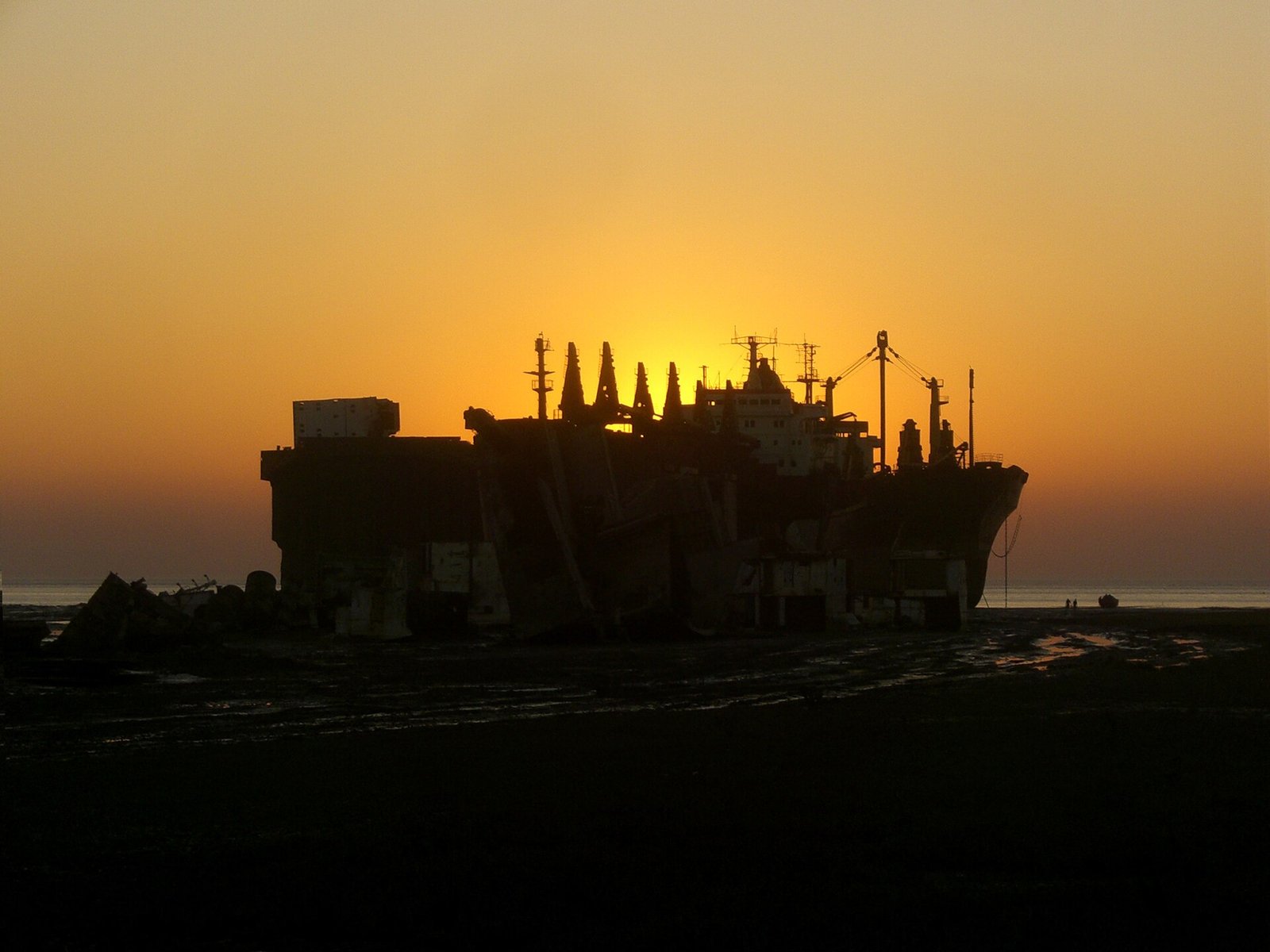
The first ship breaking yard permit Bangladesh requires is government permission for a yard inside a declared zone; each ship then needs a Board NOC, Department of Environment clearance, an approved recycling plan and beaching clearance. This guide covers Sitakunda yard approvals, DASRs under the Hong Kong Convention, hazardous materials, worker safety and liability after accidents.
Key pointPermits are a continuing status, not a one-off: after the August 2026 gas leak at a Sitakunda yard, the Board suspended operations there, and a ministry probe recommended action under the 2011 Rules after finding basic safety lapses.
At a glance
Yards only in zones
Under section 5 of the 2018 Act, a yard may be set up only inside a declared ship recycling zone and with government permission.
NOC for every ship
A no-objection certificate from the Ship Recycling Board is required before any ship is imported or acquired locally for recycling.
Per-ship environmental clearance
Since the April 2023 environmental rules, yards have needed separate Department of Environment clearance before dismantling each ship, according to press reports.
DASR under the Convention
The Hong Kong Convention took effect on 26 June 2025; the IMO list of June 2026 shows 17 authorised Sitakunda yards.
Life insurance for workers
Section 20 requires yard owners to insure the lives of all workers, and allows extra compensation beyond the Labour Act after accidents.
Swipe or scroll →
The short answer: which ship breaking yard permit Bangladesh requires
The first ship breaking yard permit Bangladesh requires is government permission to set up a yard inside a declared ship recycling zone. After that, each ship needs its own approvals: a no-objection certificate (NOC) from the Bangladesh Ship Recycling Board before it is imported, a Department of Environment clearance, an approved ship recycling plan and a Board clearance after inspection before it is beached and cut. Since the Hong Kong Convention took effect, the yard also needs a Document of Authorization to conduct Ship Recycling (DASR).
These approvals sit under the Bangladesh Ship Recycling Act 2018, the Hong Kong Convention, environmental law and labour law. Almost every yard is on the Sitakunda coast north of Chattogram, so the Board, the Department of Environment's Chattogram offices, labour inspectors and the Chattogram Custom House are the authorities a yard deals with every week.
This article focuses on permits, safety and environmental compliance for yards. For the wider legal framework and buyer contracts, see our guide to ship recycling law in Bangladesh, and for advice on a live matter, our ship recycling lawyers in Chittagong.
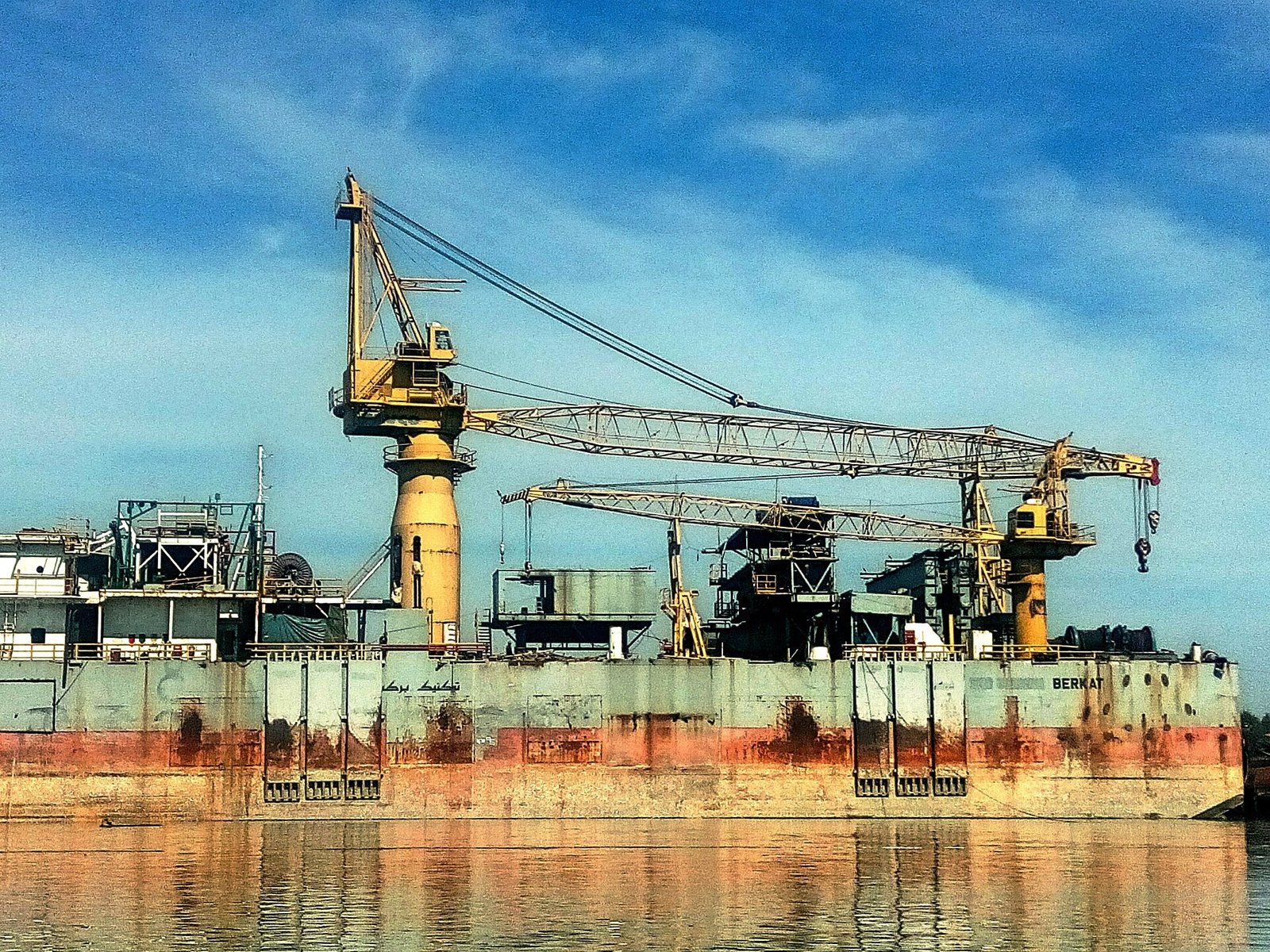
Who regulates ship breaking yards
The Bangladesh Ship Recycling Act 2018 (Act No. 8 of 2018) made the Bangladesh Ship Recycling Board the sector regulator under the Ministry of Industries. The Board issues NOCs, inspects ships, clears them for beaching and cutting, approves plans and, since 2025, issues DASRs under the Hong Kong Convention.
Other regulators remain involved. The Department of Environment issues environmental clearances under the Bangladesh Environment Conservation Act 1995 and the Environment Conservation Rules 2023. The Department of Inspection for Factories and Establishments enforces the Bangladesh Labour Act 2006. The Chattogram Custom House assesses duty on the imported ship, and the port and anchorage authorities control the vessel's arrival. The Ship Breaking and Recycling Rules 2011 continue to be applied alongside the Act, as an official probe report in 2026 showed. Each regulator controls a different ship breaking yard permit Bangladesh law requires, and there is no single window that combines them, so a yard must manage several files at once.
Ship Recycling Board
Sector regulator: NOCs, inspection, beaching and cutting clearance, plan approval, DASRs, and suspension of yards after accidents.
Department of Environment
Environmental clearance for the yard and, since 2023, separate clearance before each ship is dismantled.
Labour inspectors
Enforce the Labour Act 2006 on safety, working hours, compensation and accident reporting in yards.
Chattogram Custom House
Assesses duty on the ship as imported goods and handles bills of entry and release.
Yard-level permits
Under section 5 of the Act, a person may set up a yard only in a declared zone and with government permission, and no yard may be built outside a zone. Yards that existed before the Act had to obtain permission within the time the government set; without it, a yard cannot operate and its property is liable to confiscation. The conditions, procedure and fees for permission are set by the government.
Holding the basic yard permission is not enough to receive ships under the Hong Kong Convention. The yard must have an approved Ship Recycling Facility Plan and a DASR from the Board. The IMO list of authorised facilities as of 5 June 2026 shows 17 Bangladeshi yards, all in Sitakunda, with DASRs issued by the Board. Each ship breaking yard permit Bangladesh grants at this level is conditional: the Board can suspend operations, and the Act lets it suspend or cancel permission after a conviction.
Yards also need the ordinary business permits: a trade licence, factory licensing and registration under labour law, fire safety compliance, and environmental clearance for the facility itself. Land matters, including leases inside the zone, should be checked during any acquisition through our due diligence team.
Transfers, leases and renewals
A ship breaking yard permit Bangladesh grants is tied to the yard and its operator. When a yard is sold, leased or taken over by a new company, the buyer should confirm with the Board and the Department of Environment whether permissions transfer or must be applied for afresh, and should not assume that the seller's DASR covers the new operator. Renewal dates for environmental clearance, trade and factory licences should be listed in the transaction documents, and the seller should warrant that no suspension, show cause notice or prosecution is pending.
Permits for each ship
Every ship is a new project. Section 6 of the Act requires a Board NOC before a ship is imported or acquired locally for recycling, inspection by a Board officer after arrival, and a Board clearance before beaching, cutting and related work. The Board may also set a period within which a ship must be cut, with fines for failing to finish on time.
Environmental clearance is ship-specific too. In April 2023 the government's new environmental rules moved ship breaking yards back into the red category, which meant that yards needed a separate Department of Environment clearance before dismantling each ship, the Financial Express reported. The industry said this added weeks to every project and has pressed for reclassification, so check the current position before relying on any timetable.
| Approval | Issued by | Stage | Main risk |
|---|---|---|---|
| Yard permission in a declared zone | Government, under section 5 | Setting up or acquiring a yard | Operating without it is an offence |
| DASR and facility plan | Ship Recycling Board | Before receiving Convention ships | Suspension after accidents or breaches |
| Environmental clearance (yard) | Department of Environment | Yard operation and renewal | Conditions on waste and discharges |
| No-objection certificate | Ship Recycling Board | Before import or local purchase | Delay against the sale contract |
| Environmental clearance (ship) | Department of Environment | Before dismantling each ship | Waste information and timing |
| Inspection and beaching clearance | Ship Recycling Board | On arrival | Gas-free and hazardous materials issues |
| Customs release | Chattogram Custom House | Import of the ship | Valuation and duty disputes |
Hazardous materials and environmental clearance
End-of-life ships carry asbestos, PCBs, heavy metals, oils, sludge and residues, and gas in tanks and compartments. Under the Hong Kong Convention each ship should arrive with an Inventory of Hazardous Materials, and the yard recycles it under a ship-specific Ship Recycling Plan. According to the International Maritime Organization, the Convention entered into force on 26 June 2025.
The courts have treated environmental clearance as a precondition, not a formality. In November 2019 the High Court Division held, on a writ by the Bangladesh Environmental Lawyers Association, that ships cannot be imported and scrapped without environmental clearance, The Business Standard reported. Any ship breaking yard permit Bangladesh issues should therefore be read with the clearance conditions on waste handling, storage and disposal.
Section 17 of the Act required the government to build a Treatment, Storage and Disposal Facility within three years of the Act and made its use compulsory. The facility has been reported as delayed, so yards should document how each waste stream is handled in the meantime. Our environmental clearance lawyers advise on conditions, renewals and enforcement notices. In practice, the environmental conditions travel with every ship breaking yard permit Bangladesh authorities issue, and a breach of one can put the others at risk.
Worker safety and accident liability
The Act adds sector-specific duties to the Labour Act 2006. Section 20 requires yard owners to take out life insurance for all workers employed in the yard, and allows owners to pay compensation for death or serious injury in addition to the compensation set by the Labour Act. The Board keeps a database of trained workers and yards are expected to hire from it.
The risks are real. On 14 August 2026 hydrogen sulphide leaked during cutting on a ballast tank of the LNG carrier Rasi at a Sitakunda yard; nine workers died at the scene, and the Board ordered a temporary suspension of operations while agencies investigated, Baird Maritime reported. The Financial Express reported that a Ministry of Industries probe later put the death toll at ten, found that workers lacked gas masks or breathing apparatus and that no safety manager, ambulance or rescue team was present, and recommended action against the yard owner under the 2011 Rules.
An accident like this exposes a yard to Board suspension, criminal investigation, labour inspection, compensation claims from families and pressure from banks and buyers. Under section 35, owners, directors, managers and other officers are treated as responsible for a company's offence unless they prove lack of knowledge or that they did their best to prevent it. Our workplace accident lawyers act on compensation and inquiries.
The first days after an accident
When an accident happens, the yard should stop work in the affected area, call emergency services, preserve the scene and records, and notify the Board, labour inspectors and police as required. Families will need help with compensation claims, and the insurer must be told under the workers' life policy. No ship breaking yard permit Bangladesh issues survives a pattern of unreported accidents, so prompt and honest reporting protects the yard's licence as well as its people. Statements to investigators should be given with legal advice, because criminal and regulatory proceedings may follow.
Treat the permit-to-work, gas-free certification, rescue equipment and on-site medical cover for each compartment as part of the permit file, not a separate safety file. After an accident, the Board, inspectors and investigators will ask for exactly those records, and a yard that cannot produce them faces suspension whatever approvals it holds.
From purchase to cutting: the permit sequence
- Confirm the yard's status. Check yard permission, DASR, facility plan and environmental clearance, and that they cover the size and type of ship.
- Agree the purchase with approval conditions. Make delivery and payment subject to the NOC and clearances, with a long-stop date and an accurate Inventory of Hazardous Materials.
- Apply for the NOC. File with the Board, with the ship's documents and inventory, before the ship is imported.
- Obtain environmental clearance for the ship. Apply to the Department of Environment with information on wastes and how they will be handled.
- Clear customs and arrival formalities. Open the letter of credit, file the bill of entry and settle duty with the Chattogram Custom House.
- Inspection and beaching clearance. The Board inspects the ship; beaching and cutting start only after its clearance and gas-free certification.
- Cut under the plan and report. Follow the Ship Recycling Plan, safety rules and waste conditions within any cutting period the Board sets.
An illustrative scenario
This scenario is illustrative only and does not describe any real case.
A Sitakunda yard with a current DASR agrees to buy a tanker. The NOC is issued, but the Department of Environment asks for more information about tank residues before granting ship-specific clearance. The cash buyer pushes for beaching on the agreed date.
The yard's lawyers point to the clause making beaching subject to all clearances, provide the residue survey and the waste plan to the Department, and keep the bank informed. Clearance follows with conditions on sludge removal. Because the yard records each step, it can show the Board, the bank and the buyer that it acted lawfully throughout.
Risks and common mistakes
Importing before the NOC
Importing or acquiring a ship for recycling without a Board NOC is an offence under section 26 of the Act, punishable as enacted with imprisonment of up to two years or a fine of between Tk 10 lakh and Tk 30 lakh, or both, with doubled penalties for repeat offences. Commercial pressure to secure a ship quickly is not a defence. Build the NOC into the contract and file early.
Treating the DASR as permanent
A DASR depends on the yard continuing to meet its approved facility plan. After the August 2026 accident the Board suspended operations at the yard concerned, and the Act allows suspension or cancellation of permission after a conviction. Keep internal audits, training records and equipment logs current so the yard can show continuing compliance.
Relying on an inaccurate hazardous materials inventory
If undisclosed asbestos, PCBs or gas pockets are found, the yard faces safety risks, Department of Environment enforcement and unplanned costs. Contracts should give warranties, inspection rights and price adjustment, and the yard should verify the inventory with its own survey before beaching.
Ignoring directors' personal exposure
Under section 35, owners, directors, managers and other officers are deemed to have committed a company's offence unless they prove it happened without their knowledge or that they tried to prevent it. Offences under the Act are tried by a first class judicial magistrate or metropolitan magistrate. Directors should see safety and permit reports regularly and keep evidence of the steps they take.
Foreign owners, investors and what to do next
Foreign shipowners and cash buyers increasingly ask for proof that a yard is authorised for the ship and date proposed. Investors buying into a yard need to check every ship breaking yard permit Bangladesh law requires, land rights in the zone, accident history and pending proceedings. BIDA has been succeeded by the Invest Bangladesh Authority under the Invest Bangladesh Act 2026, which is relevant for foreign investment registration. TRW & Co's offices in Dhaka, Singapore, Dubai and London coordinate with foreign counsel, while our Chattogram team handles permits and proceedings locally.
- Keep one approvals calendar for each ship: NOC, clearances, inspection and cutting period.
- Check that the yard permission, DASR and environmental clearance are current before signing a purchase.
- Verify the hazardous materials inventory independently.
- Keep permit-to-work, gas-free and rescue records with the permit file.
- Insure workers as the Act requires and plan for compensation after an accident.
- Brief directors on their personal exposure under section 35.
For advice, contact our Chattogram office at Room 4022, Annex 2, District and Sessions Judge Court Building, Court Hill (Porir Pahar), Kotwali, Chattogram 4000, by email at info@trw.co or on +880 1779 127165. See also our shipping practice and our law firm in Chattogram.
Frequently asked questions
01What permits does a ship breaking yard need in Bangladesh?
At yard level: government permission to set up a yard inside a declared zone under the Ship Recycling Act 2018, environmental clearance, an approved Ship Recycling Facility Plan and a DASR from the Ship Recycling Board under the Hong Kong Convention, plus ordinary trade, factory and labour registrations. For each ship: a Board NOC before import, Department of Environment clearance before dismantling, an approved ship recycling plan, and Board clearance after inspection before beaching and cutting.
02What is the NOC for ship recycling?
The no-objection certificate is issued by the Bangladesh Ship Recycling Board under section 6 of the Ship Recycling Act 2018. It must be obtained before a ship is imported or acquired locally for recycling. Importing without it is an offence, punishable as enacted with up to two years' imprisonment or a fine of between Tk 10 lakh and Tk 30 lakh, or both. Sale contracts should make delivery subject to the NOC and set a long-stop date.
03Does each ship need Department of Environment clearance?
Yes, under the current approach. Press reports in 2023 explained that the new environmental rules placed ship breaking in the red category, requiring a separate Department of Environment clearance before each ship is dismantled. The High Court Division held in 2019 that ships cannot be imported and scrapped without environmental clearance. The industry has pressed for reclassification, so check the current rules before relying on a timetable.
04Who is liable when a worker dies in a ship breaking yard?
The yard owner faces liability on several fronts: compensation under the Labour Act 2006, the life insurance the Ship Recycling Act requires for all workers, possible extra compensation under section 20, Board action including suspension, and criminal investigation. Owners, directors and managers can be treated as responsible for a company's offence under section 35 unless they prove lack of knowledge or that they tried to prevent it.
05Can the Ship Recycling Board shut down a yard?
The Board can suspend operations, as it did at a Sitakunda yard after the fatal gas leak of August 2026. Under section 32 of the Act, the Board may suspend or cancel a yard's permission where a person is convicted of an offence under the Act, and the court may confiscate the yard, ship and materials. Under section 33 the Board can also seize the yard, ship and materials when an offence is committed or attempted.
06What is a DASR and do all Bangladeshi yards have one?
A DASR is the Document of Authorization to conduct Ship Recycling, which a yard needs under the Hong Kong Convention. In Bangladesh it is issued by the Ship Recycling Board to yards with an approved facility plan. The IMO list as of 5 June 2026 included 17 Bangladeshi yards, all in Sitakunda. Not every yard holds one, so owners and buyers should check before agreeing a sale.
Sources and official materials
- Bangladesh Ship Recycling Act 2018 (Act No. 8 of 2018) — Full Bangla text: zones, NOC, clearance, insurance, offences
- Bangladesh Ship Recycling Board — Sector regulator for NOCs, clearances and DASRs
- IMO: Recycling of ships and the Hong Kong Convention — Convention requirements and entry into force
- IMO list of authorised ship recycling facilities (5 June 2026) — Bangladeshi yards holding DASRs
- Shipbreaking yards now get red environmental status (Financial Express, May 2023) — Per-ship environmental clearance
- Probe recommends action against Sitakunda shipyard owner (Financial Express, August 2026) — Findings after the MT Rasi gas leak
- Toxic leak leaves nine dead at Bangladesh shipbreaking yard (Baird Maritime, August 2026) — Board suspension of yard operations
- Ships for scrap cannot be imported without environmental clearance (TBS, November 2019) — High Court Division judgment on the BELA writ
General information only, current as at 2 November 2026. It is not legal advice and does not create an advocate–client relationship. It reflects the law of Bangladesh unless stated otherwise, and the law, court practice and official fees change frequently. Check current official sources and take advice on the facts of your matter.



