
TRW & Co · Shipping and admiralty
Maritime Claims and Liens Under the Admiralty Court Act 2000
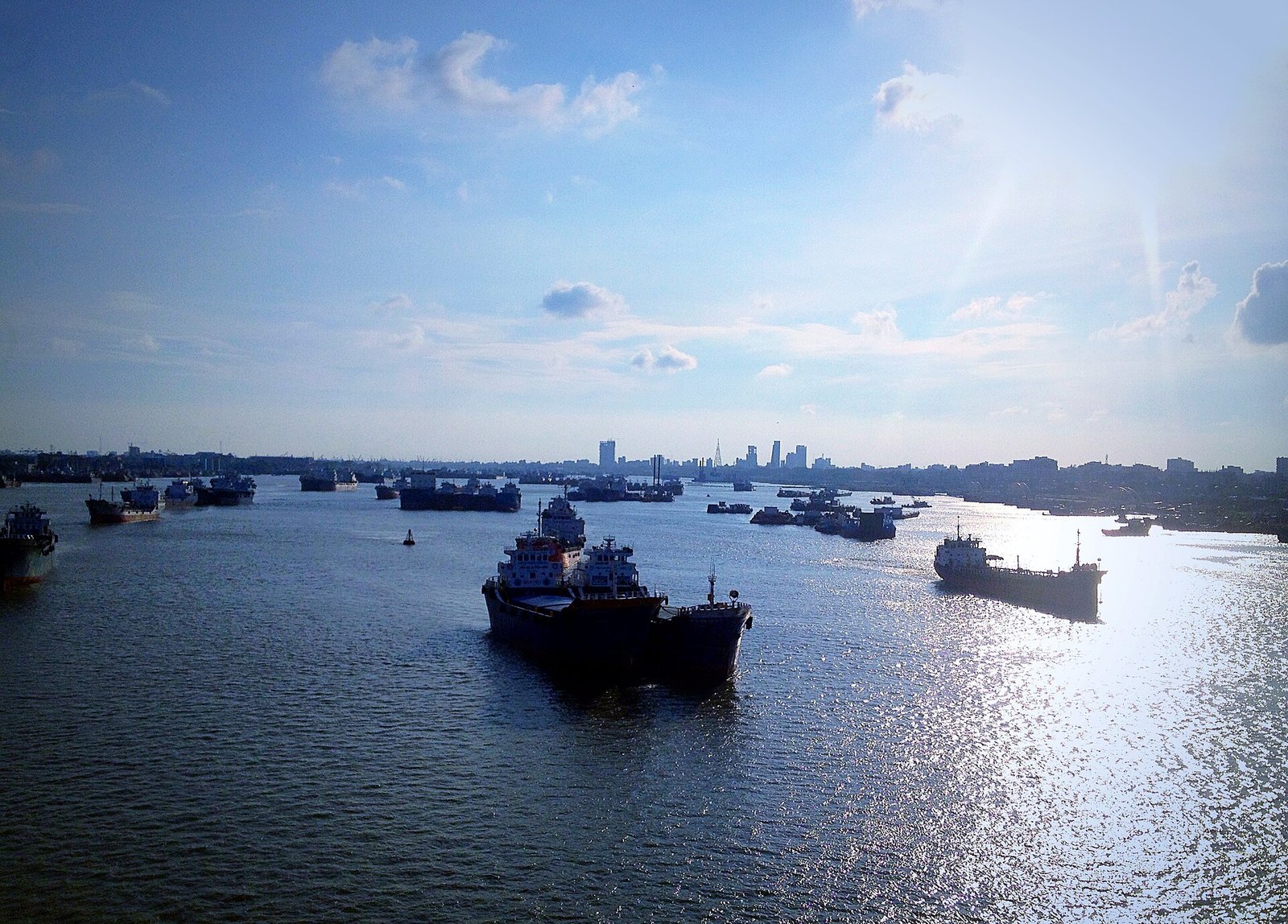
A maritime lien Bangladesh courts recognise follows the ship even after a sale, but only a few claims carry one: wages, salvage, collision damage, bottomry and master's disbursements. Bunkers, repairs and cargo claims depend on who owns the ship when you sue. This guide explains the Admiralty Court Act 2000 structure, sister-ship arrest, mortgages, priorities and time bars.
Key pointIn August 2026 the High Court Division recalled an arrest at Chattogram and discharged the owner's bank guarantee because the ship was sold seventeen days before the suit was filed. Statutory claimants must file before a sale completes.
At a glance
Few true liens
Crew and master's wages, salvage, damage done by a ship, bottomry and master's disbursements carry maritime liens; the categories are not extended by analogy.
Two-date ownership test
Statutory claims need the person liable to own or operate the ship when the claim arose and to own all its shares when suit is filed.
Sale before suit fatal
If the ship is sold before filing, a statutory claimant cannot proceed against her in rem, as the High Court Division held in August 2026.
Sister ships strictly
A sister ship can be arrested only if the person liable beneficially owns all its shares; common management of separate companies is not enough.
Banks can use admiralty
Lenders secured on a vessel can sue in the admiralty jurisdiction for sale of the mortgaged ship, as a February 2026 decree confirmed.
Swipe or scroll →
The short answer: what a maritime lien Bangladesh courts recognise does
A maritime lien Bangladesh courts recognise is a claim that attaches to the ship itself and follows her even after she is sold. Only a few claims carry one: crew and master's wages, salvage, damage done by a ship (such as collision), bottomry and master's disbursements. Most other maritime claims, such as bunkers, repairs, supplies or cargo claims, give only a statutory right to proceed against the ship, and that right depends on who owns her when the suit is filed.
The difference decides cases. In August 2026 the High Court Division rejected a plaint, recalled an arrest at Chattogram and discharged the owner's bank guarantee, because the claim was a statutory one and the ship had been sold before the suit was filed. A lien claimant would have kept the ship in reach.
This guide explains the claims the Admiralty Court Act 2000 covers, which of them are liens, the ownership test for the rest, sister-ship arrest, mortgages, priorities and time bars.

The legal framework
Admiralty jurisdiction belongs to the High Court Division of the Supreme Court of Bangladesh, which sits in Dhaka, under the Admiralty Court Act 2000 and the Admiralty Rules 1912. Section 3(2) lists the maritime claims the court can hear. They include claims to possession or ownership of a ship, mortgages and charges, damage done by or to a ship, loss of or damage to goods carried, claims under charterparties and carriage contracts, salvage, towage, necessaries, repairs, services and equipment, crew wages, and others.
Section 4 sets out how those claims can be pursued against a ship in rem. The High Court Division explained the structure in Admiralty Suit No. 28 of 2026, decided on 30 August 2026:
- Section 4(3) covers claims that give rise to a maritime lien or other charge on the ship. A lien is proprietary and may follow the ship despite a later private sale.
- Section 4(4) covers statutory claims. Two cumulative conditions apply: the person liable in personam must have been the owner or charterer of, or in possession or control of, the ship when the cause of action arose; and that same person must be the beneficial owner of all the shares in the ship (or a sister ship) when the action is brought.
Bangladesh is not a party to the 1999 Arrest Convention, and the court draws heavily on English admiralty law and Commonwealth authority when interpreting the Act.
Which claims create a maritime lien in Bangladesh
The categories of maritime lien Bangladesh judges accept are narrow and fixed. In the 2026 decision the court listed the traditional categories as seamen's wages, salvage, damage done by a ship, bottomry and master's wages and disbursements, and held that they are not to be enlarged by analogy. A claim for underwater hull cleaning and propeller polishing was a statutory claim for services or repairs, not a lien.
| Claim | Type | Survives a private sale before suit? | Example at Chattogram |
|---|---|---|---|
| Crew and master's wages | Maritime lien | Generally yes | Unpaid crew on a vessel abandoned at outer anchorage |
| Salvage | Maritime lien | Generally yes | Refloating a grounded ship in the Karnaphuli channel |
| Damage done by a ship | Maritime lien | Generally yes | Collision damage to another vessel or a jetty |
| Master's disbursements, bottomry | Maritime lien | Generally yes | Rare in modern practice |
| Bunkers, supplies, necessaries | Statutory claim | No | Unpaid fuel or provisions |
| Repairs, services, cleaning | Statutory claim | No | Unpaid dry dock or diving invoices |
| Cargo loss or damage | Statutory claim | No | Short delivery at Chattogram |
| Registered ship mortgage | Registered charge | Yes, as a registered security | Bank financing the purchase of a vessel |
A maritime lien Bangladesh claimants hold arises when the event happens, before any suit, but it is enforced only by an action in rem and arrest. The lien gives a remedy against the ship, not a debt against a new owner personally.
Crew wages: the lien that matters most at Chattogram
The maritime lien Bangladesh crews rely on most is the wage lien. When an owner runs out of money, ships are sometimes left at anchorage with crew unpaid and short of provisions. Crew members, or those who have paid their wages, can arrest the ship and rank high in priority on a judicial sale. Our seafarer claims practice acts in these cases, which often run alongside repatriation and welfare arrangements with the port and flag state.
Statutory claims and the ownership test
For claims without a maritime lien, Bangladesh law makes timing and ownership everything. The second condition of section 4(4) asks who beneficially owned all the shares in the ship on the day the suit was filed.
Beneficial ownership means proprietary ownership
In HRC Shipping Ltd v MV X-Press Manaslu (58 DLR 185), cited in the 2026 decision, the High Court Division held that "beneficially owned as respects all the shares" means proprietary ownership, not possession or operational control under a charter. Registration is, in the ordinary run of things, virtually conclusive of ownership, though the court may look behind a transfer alleged to be a sham.
A sale before suit defeats the claim in rem
In Admiralty Suit No. 28 of 2026 the services were provided in July 2025. The ship was sold under a memorandum of agreement, delivered on 22 May 2026 and re-registered under a new flag days later. The suit was filed on 8 June 2026. Because the person liable no longer owned the ship when the suit began, section 4(4) was not satisfied. The court rejected the plaint, recalled the arrest and discharged the bank guarantee, leaving the claimant to pursue the former owner personally.
The reverse also matters. Once a statutory action in rem has been commenced, a later sale of the ship does not defeat it, as the English decision in The Monica S, discussed by the court, makes clear. The race is therefore to file before the ship changes hands.
A private sale does not wipe out maritime liens, but a judicial sale by the Admiralty Court ordinarily passes the ship free of prior encumbrances. Buyers of second-hand tonnage arriving at Chattogram should check for unpaid crew, salvage or collision claims, and suppliers with statutory claims should file before a sale completes, not after.
Sister-ship arrest
Section 4(4) allows a statutory claim to be brought against "another ship" beneficially owned by the person liable, as a sister ship. This matters when the ship that incurred the debt never returns to Bangladesh but another vessel in the same ownership does.
The test is strict. The person liable must beneficially own all the shares in the sister ship when the action is brought. Common management or common control of separate single-ship companies is not enough; the 2026 decision cited the English Court of Appeal in The Evpo Agnic on this point. Claimants need registry evidence of the sister ship's owner, not just a shared manager or brand.
Our guide to the ship arrest procedure in Bangladesh explains how arrest is obtained.
Ship mortgages and bank claims
Banks that finance vessels register a mortgage with the Mercantile Marine Department and often a charge with the RJSC. Mortgage claims fall within section 3(2) of the Act, and the High Court Division has held that a bank's suit to recover money advanced on a vessel is maintainable in admiralty jurisdiction, despite the Money Loan Court's general jurisdiction over bank recoveries. That view, from First Security Islami Bank Ltd v MV Javed (69 DLR 408), was applied in Admiralty Suit No. 29 of 2017, decreed on 26 February 2026, where a state-owned bank recovered its dues from the sale proceeds of a mortgaged ship.
For lenders, admiralty proceedings give access to arrest and judicial sale. For borrowers, it means a ship loan default can lead to arrest at Chattogram as well as a Money Loan Court action against other assets.
Priorities and time bars
Who is paid first after a judicial sale
When the court sells a ship, the proceeds are paid out in order of priority. Bangladesh admiralty law draws heavily on English practice, and under English principles the costs of arrest and sale come first, maritime liens generally rank ahead of registered mortgages, and mortgages generally rank ahead of statutory claims. Within liens, the order depends on the type of claim and its timing, and the court retains discretion. Where the fund is small, priority decides whether a claimant recovers anything.
Time limits
A maritime lien Bangladesh claimants hold can be lost through delay, and the underlying claim has its own limitation period:
- Collision: in Admiralty Suit No. 24 of 2021, decided in November 2025, the court applied a two-year period and held that time stops only when the plaint is presented for admission, not merely registered.
- Cargo: for shipments from Bangladeshi ports, the Carriage of Goods by Sea Act 1925 applies the Hague Rules one-year bar.
- Other claims: general limitation rules apply, but a statutory claimant's practical deadline is often the next sale of the ship.
How to assert a lien or claim at Chattogram
- Classify the claim. Decide whether it is a maritime lien Bangladesh law enforces under section 4(3) or a statutory claim under section 4(4).
- Prove ownership on both dates. For statutory claims, obtain registry evidence of the owner when the claim arose and now; check for pending sales.
- Calculate limitation. Identify the applicable period and present the plaint for admission well before it expires.
- Prepare authority documents. Foreign claimants need a power of attorney executed and authenticated in line with the Power of Attorney Act 2012 and Rules 2015.
- File and seek arrest. File a verified plaint in the High Court Division with an arrest application, and communicate the order to Chattogram port.
- Negotiate security. Most owners provide a bank guarantee to release the ship; the claim then proceeds against that security.
An illustrative scenario
This scenario is illustrative only and does not describe any real case. A Singapore bunker trader supplied fuel to a bulk carrier on the order of her owner. The invoice went unpaid. Three months later the trader heard that the ship was due at Chattogram and that a sale to new owners was being negotiated.
Its lawyers classified the claim as a statutory claim for necessaries, not a maritime lien. Bangladesh law therefore required the trader to sue while the debtor still owned all the shares. They obtained a registry extract showing the current owner, prepared a power of attorney that complied with the 2015 Rules, and filed the plaint and arrest application as soon as the ship arrived. The owner put up a bank guarantee, the ship sailed, and the sale went ahead with the claim secured. Had the trader waited until after delivery to the buyers, its claim in rem would have failed.
Risks and common mistakes
Treating every maritime claim as a lien
Suppliers, repairers and cargo interests often assume their claim follows the ship. It usually does not. If the ship is sold before suit, a statutory claim cannot be pursued in rem against her, as the 2026 decision shows. Classify the claim at the outset and, for statutory claims, file quickly once a sale is rumoured.
Defective powers of attorney from abroad
In Admiralty Suit No. 01 of 2017, decided in August 2025, a foreign bunker supplier's suit was dismissed, partly because it was filed in the wrong name and its evidence was thin, and partly because its power of attorney did not comply with the Power of Attorney Rules 2015: it was not stamped within three months of entry into Bangladesh or authenticated within two months, as the court found the Rules require. See the judgment. Get the formalities right before filing.
Relying on common management for sister-ship arrest
A fleet under one manager is not one owner. The court requires beneficial ownership of all shares by the person liable. Arresting a vessel owned by an affiliate risks rejection of the plaint and a wrongful arrest claim. Check the registry of the target ship first.
Buyers ignoring liens on second-hand ships
A maritime lien Bangladesh courts recognise survives a private sale. A buyer who takes delivery without checking for unpaid crew wages or collision claims may find the ship arrested for the previous owner's liabilities. Use the memorandum of agreement to require disclosure and indemnities, and inspect the crew wage position at delivery.
Cross-border angle and next steps
Most claimants at Chattogram are foreign: P&I clubs, bunker traders, salvors and cargo insurers. The admiralty bench sits in Dhaka, while the ship sits at Chattogram, so coordination between the two cities matters. TRW & Co's offices in Dhaka, Singapore, Dubai and London allow clients to instruct in their own time zone while our Bangladesh advocates appear before the admiralty bench. As of October 2026, BIDA has been succeeded by the Invest Bangladesh Authority under the Invest Bangladesh Act 2026, which matters to foreign-owned shipping businesses established in Bangladesh.
Foreign claimants should also plan how recoveries will be remitted, since payments abroad must follow Bangladesh Bank foreign exchange rules, and should consider whether an arbitration clause in the underlying contract affects where the merits are decided. Arrest can still be used to obtain security for a foreign arbitration.
Whether you hold a maritime lien Bangladesh courts will enforce, or a statutory claim racing a ship sale, act early. Our admiralty lawyers in Chittagong and ship arrest team advise claimants, owners and buyers. Contact our Chattogram office through the contact page, email info@trw.co or call +880 1779 127165, or visit our Chattogram law firm hub.
Frequently asked questions
01What is a maritime lien in Bangladesh?
A maritime lien is a claim that attaches to a ship from the moment the event occurs and follows her even after a private sale. Under section 4(3) of the Admiralty Court Act 2000 it can be enforced by an action in rem and arrest. The High Court Division treats the categories as fixed: crew and master's wages, salvage, damage done by a ship, bottomry and master's disbursements. Other maritime claims are statutory claims that depend on ownership.
02Can a bunker supplier arrest a ship in Bangladesh?
Yes, but only as a statutory claim under section 4(4) of the Admiralty Court Act 2000. The person liable for the bunkers must have been the owner or charterer of, or in control of, the ship when they were supplied, and must beneficially own all the shares in that ship, or a sister ship, when the suit is filed. If the ship has been sold before filing, the claim in rem fails.
03Does a maritime lien survive the sale of a ship?
A maritime lien generally survives a private sale and can be enforced against the ship in the hands of a new owner. A judicial sale ordered by the Admiralty Court is different: it ordinarily passes the ship free of prior encumbrances, and claimants are paid from the sale proceeds in order of priority. Buyers of second-hand ships should therefore check for unpaid wages, salvage and collision claims before taking delivery.
04Can I arrest a sister ship in Bangladesh?
Yes, for statutory claims, if the person liable in personam beneficially owns all the shares in the sister ship when the suit is filed. The High Court Division has held that beneficial ownership means proprietary ownership, not control under a charter, and that common management of separately owned ships is not enough. Check the sister ship's registered owner before applying.
05How long do I have to bring a maritime claim?
It depends on the claim. The High Court Division has applied a two-year period to collision claims, and held that time stops only when the plaint is presented for admission. Cargo claims on shipments from Bangladeshi ports face the Hague Rules one-year bar under the Carriage of Goods by Sea Act 1925. For statutory claims, the practical deadline is often the next sale of the ship.
06Who gets paid first when a ship is sold by the court?
Bangladesh admiralty law draws heavily on English practice, and under English principles the costs of arrest and sale are paid first. Maritime liens generally rank ahead of registered mortgages, and mortgages generally rank ahead of statutory claims, although the order within each group depends on the type and timing of the claims and the court has discretion. Claimants should file promptly and prove their claim category clearly.
Sources and official materials
- Admiralty Suit No. 28 of 2026, order of 30 August 2026 — Maritime liens versus statutory claims; section 4(4) ownership test
- Admiralty Suit No. 29 of 2017, judgment of 26 February 2026 — Bank mortgage claims in admiralty jurisdiction
- Admiralty Suit No. 24 of 2021, judgment of 27 November 2025 — Collision limitation and presentation of the plaint
- Admiralty Suit No. 01 of 2017, judgment of 27 August 2025 — Foreign powers of attorney in admiralty suits
- Admiralty Court Act 2000 — Maritime claims and actions in rem
- Chittagong Port Authority — Port authority for vessels at Chattogram
General information only, current as at 27 October 2026. It is not legal advice and does not create an advocate–client relationship. It reflects the law of Bangladesh unless stated otherwise, and the law, court practice and official fees change frequently. Check current official sources and take advice on the facts of your matter.



