
TRW & Co · Courts and civil disputes
Is There a High Court Bench in Chattogram?
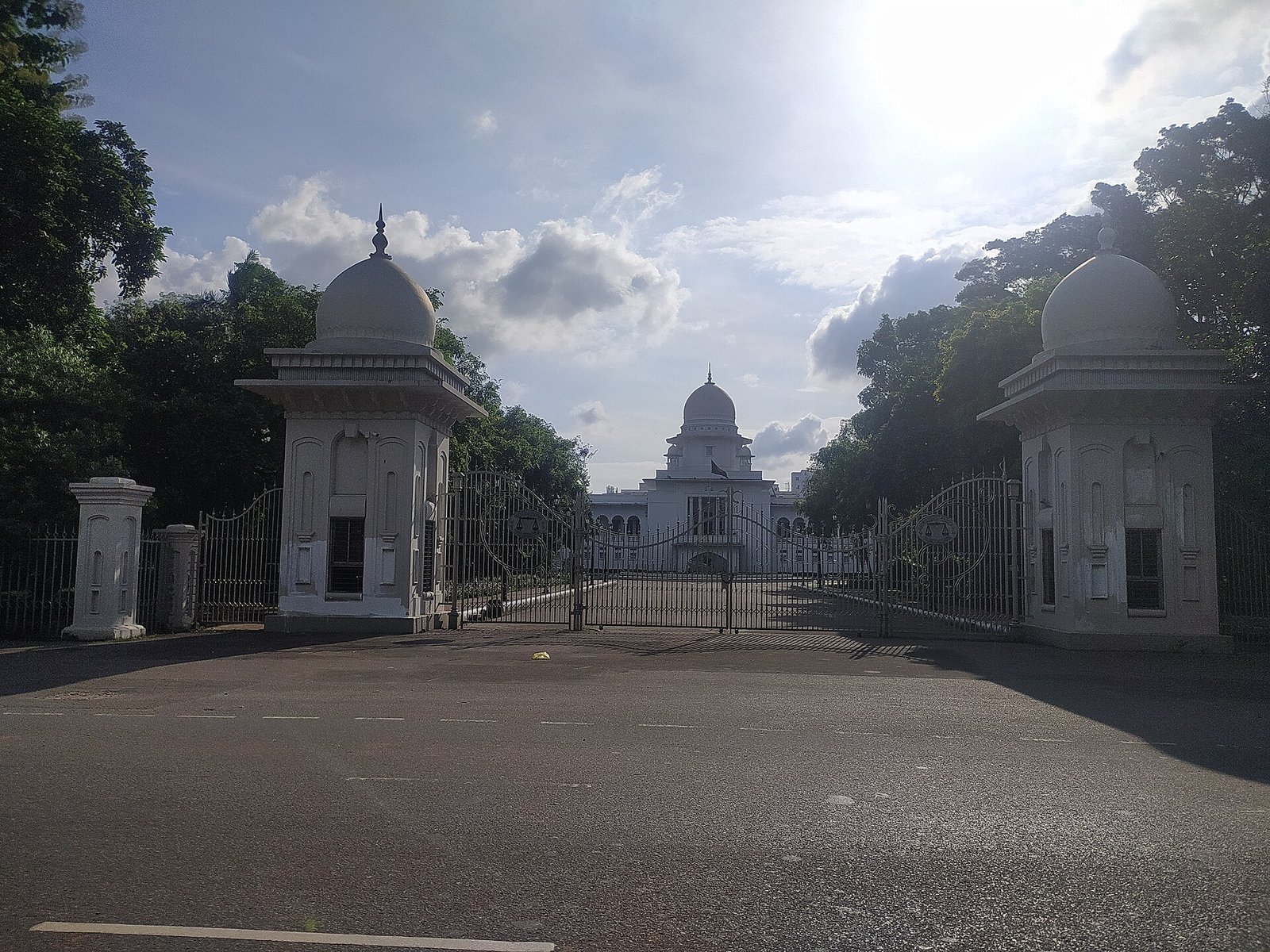
There is no Chittagong High Court circuit bench in operation as of October 2026. The High Court Division sits in Dhaka, so writs, admiralty suits, company matters and criminal appeals from Chattogram are filed there. Permanent divisional benches were approved in principle in 2025 and 2026, but still need a constitutional amendment. Here is the position and what to do now.
Key pointArticle 100 already allows temporary High Court sessions outside Dhaka with the President's approval; it is permanent benches that need a constitutional amendment. Until either happens, deadlines run as normal, so file in Dhaka rather than waiting.
At a glance
No bench yet
As of October 2026 we are not aware of any High Court Division bench sitting in Chattogram; all High Court matters are filed and heard in Dhaka.
Article 100 limits
The Constitution fixes the Supreme Court's permanent seat in the capital but allows sessions elsewhere where the Chief Justice appoints, with the President's approval.
1988 benches struck down
The Eighth Amendment created six permanent benches outside Dhaka, including Chattogram, but the Appellate Division struck that change down in 1989.
Reform agreed in principle
The 2025 Judiciary Reform Commission and the July Charter, approved at the 12 February 2026 referendum, support High Court benches in each division.
File in Dhaka now
Writs, admiralty, company and criminal appeal matters are prepared in Chattogram and filed in Dhaka; deadlines do not pause while reforms are pending.
Swipe or scroll →
The short answer
As of October 2026, there is no Chittagong High Court circuit bench in operation. The High Court Division of the Supreme Court sits in Dhaka, and writ petitions, admiralty suits, company matters, criminal appeals and bail applications from Chattogram (Chittagong) are filed and heard there. Proposals for permanent benches in the divisional cities have strong political backing, but they need a constitutional amendment that we are not aware has yet been enacted.
For Chattogram clients this has practical consequences. Matters that must go to the High Court Division are prepared in Chattogram, sworn and documented locally, and then filed and argued in Dhaka. Good coordination between the two cities saves time and avoids missed dates.
This article explains the constitutional position, the history of benches outside Dhaka, the reform proposals of 2025 and 2026, and how High Court work from Chattogram is handled today.
The constitutional basis: Article 100
Article 100 of the Constitution of Bangladesh provides that the permanent seat of the Supreme Court is in the capital. It also allows sessions of the High Court Division to be held at other places that the Chief Justice may appoint with the President's approval. As a Daily Star analysis in August 2025 explained, the current text permits temporary sessions outside Dhaka, but not permanent benches or seats.
That distinction matters. A Chittagong High Court circuit bench, meaning judges of the High Court Division sitting in Chattogram for set periods, could in principle be arranged under the existing Article 100. A permanent bench with its own territorial jurisdiction would require the Constitution to be amended.
| Feature | Circuit sessions under current Article 100 | Permanent divisional bench |
|---|---|---|
| Legal basis | Existing text: Chief Justice appoints a place with the President's approval | Requires amendment of Article 100 |
| Duration | Temporary sessions | Permanent seat |
| Jurisdiction | Same as the High Court Division; no separate territory | Defined regions, with transfer powers proposed for the Chief Justice |
| Status in Chattogram (October 2026) | Announced in the past but not established | Recommended and politically agreed; not yet enacted to our knowledge |
History: the 1988 benches and the 1989 judgment
The demand for a High Court presence in Chattogram is long-standing. Chattogram lawyers, including the District Bar Association, have argued that the port city's volume of commercial, maritime and criminal litigation justifies local access, and that travel to Dhaka adds cost and delay for ordinary litigants. Bangladesh has tried this before. The Constitution (Eighth Amendment) Act 1988, passed on 9 June 1988, amended Article 100 to establish six permanent benches of the High Court Division outside Dhaka, including one in Chattogram, alongside Barishal, Cumilla, Jashore, Rangpur and Sylhet.
In Anwar Hossain Chowdhury v Bangladesh, decided in 1989 and widely known as the Eighth Amendment case, the Appellate Division struck down that part of the amendment, applying the basic structure doctrine. The judgment remains a landmark of Bangladeshi constitutional law, and any new scheme for permanent benches must be designed with it in mind.
Promises of a circuit bench since then
The idea of a Chittagong High Court circuit bench has resurfaced repeatedly. In January 2022, the then law minister told a Chattogram District Lawyers Association programme that a circuit bench would be set up within the year, as The Business Standard reported. In September 2022, another minister said it would be formed within two months. Neither announcement led to a bench: in January 2025 all High Court Division benches still sat in the Supreme Court buildings in Dhaka.
The current position: reform proposals in 2025 and 2026
The question moved from local demand to national reform after 2024.
- Judiciary Reform Commission (January 2025). The commission recommended permanent High Court benches in every divisional city and proposed replacing Article 100, as The Daily Star reported. Each bench would hear cases from specified regions, with the Chief Justice able to transfer cases between benches.
- National Consensus Commission (July 2025). Political parties reached consensus on permanent High Court benches in the divisional headquarters, on the basis that Article 100 would be amended.
- Referendum (12 February 2026). Voters approved the July National Charter package, which includes establishing High Court benches in each division. The vote is a political mandate; the Constitution still has to be amended through the process the Charter sets out.
- Implementation. In March 2026, Prothom Alo reported that the Constitution Reform Council had not yet been convened and that writ petitions on the process were pending.
What to watch for
Three signals would show that a bench is close: publication of a constitutional amendment bill touching Article 100, a Supreme Court notification appointing a place for High Court sessions outside Dhaka, and practice directions on filing and transfer for the new benches. Until those appear, the Dhaka filing model remains the only route.
At the time of writing, we are not aware that an amendment creating a permanent bench or a Chittagong High Court circuit bench has been enacted or brought into operation. Check the Supreme Court website and current reporting before relying on this, because the position may change quickly once amendments are passed.
Do not delay a High Court filing in the hope that a Chattogram bench will open soon. Writ, appeal and revision deadlines run regardless of where the court sits, and a missed period may need a condonation application or may be fatal. Prepare and file in Dhaka now; if a local bench opens later, your lawyers can advise on whether the case can move.
What a Chittagong High Court circuit bench would change
A Chittagong High Court circuit bench, or a permanent bench, would not change the law that applies. It would change where cases are heard, how quickly urgent orders can be obtained, and what litigation costs. Chattogram's case mix makes those changes significant.
Port, shipping and trade
Chattogram handles most of Bangladesh's seaborne trade, so admiralty claims, customs writs and disputes with port and terminal operators arise here more than anywhere else. Ship arrest in particular is urgent: a vessel may sail within hours. A local bench able to hear admiralty applications could reduce the gap between instruction and order, although it would depend on how admiralty jurisdiction is allocated under any new scheme.
Criminal appeals and bail
Families of people in Chattogram Central Jail currently follow appeals and bail applications in Dhaka. A local bench would make attendance easier and could ease pressure on the Dhaka cause lists, which carry a very large backlog.
Design questions that remain open
The 2025 proposals leave important details to be settled: which districts each bench would cover, whether admiralty and company matters would be decentralised or kept in Dhaka, how cases would be transferred between benches, and how a new scheme would be reconciled with the reasoning in the Eighth Amendment case. Until the amendment text is published, any claim about how a Chittagong High Court circuit bench or permanent bench would operate is speculation.
How Chattogram clients access the High Court Division today
Most legal disputes in Chattogram start and end in the local courts: civil suits, criminal trials, family cases, the Money Loan Court and the Labour Court. The High Court Division becomes necessary in four main kinds of matter.
Writ petitions
Article 102 of the Constitution gives the High Court Division power to issue writs against public authorities, including the Chittagong Port Authority, Chattogram Custom House, the Chattogram Development Authority, land offices and regulators. Our guide to the writ petition process and the writ team explain how these are prepared.
Admiralty
Admiralty jurisdiction, including ship arrest, maritime liens and cargo claims in rem, belongs to the High Court Division under the Admiralty Court Act 2000. For a city built around the port, this means that even a vessel at Chattogram anchorage is arrested by an order made in Dhaka. See the ship arrest procedure and our admiralty litigation page.
Company matters
Applications under the Companies Act 1994, such as winding up, shareholder oppression remedies and rectification of the register, are heard by the High Court Division. Our page on shareholder and director disputes covers these.
Criminal appeals, bail and quashing
Appeals from sessions courts and tribunals, bail after refusal below, anticipatory bail and quashing applications under section 561A are also heard in Dhaka.
Civil appeals and revisions
Civil suits are tried in the Chattogram civil courts, and many first appeals are heard by the District Judge's courts in Chattogram. Appeals from higher-value decrees and civil revisions against orders of the district courts go to the High Court Division. Because limitation periods for these appeals run from the decree or order, the certified copy should be applied for on the day of judgment, and the Dhaka filing planned at once. Our civil suit guide explains where a case goes at each stage.
Handling a High Court matter from Chattogram, step by step
- Assess the forum. Confirm that the High Court Division is the right court, and that local remedies or appeals have been used where the law requires.
- Collect documents locally. Obtain certified copies of orders, notices, deeds or decisions from the Chattogram court or office concerned.
- Swear the affidavit. The petitioner or an authorised representative swears the supporting affidavit and signs the vakalatnama.
- File in Dhaka. The petition is filed in the Supreme Court and placed before the bench with the relevant jurisdiction.
- Motion hearing. The bench decides whether to issue a rule, grant interim relief or make an order such as bail or ship arrest.
- Communicate the order. The order is sent to the Chattogram court or authority and served on the other side.
- Final hearing and compliance. The matter proceeds to hearing, and compliance is monitored in Chattogram.
An illustrative scenario
This scenario is illustrative only; it uses generic parties and describes no real case.
A Chattogram importer receives a decision from a public authority cancelling a licence without a hearing. Its managing director assumes the challenge must be filed in Chattogram, or that it can wait for a Chittagong High Court circuit bench. Meanwhile, goods are held at the port and storage charges mount.
In practice, the importer's lawyers collect the decision and the correspondence in Chattogram, the director swears an affidavit, and a writ petition is filed in Dhaka the same week seeking a stay. If the bench issues a rule and an interim order, it is communicated to the authority in Chattogram. Nothing about the process required the client to travel to Dhaka.
Risks and common mistakes
Waiting for a local bench
The prospect of a Chittagong High Court circuit bench has been announced several times since 2022. Limitation and delay rules do not pause for reform. A writ filed after unexplained delay may be refused, and criminal appeals and civil appeals to the High Court Division have fixed periods. File now in Dhaka.
Choosing the wrong forum
Not every grievance against a public body belongs in the High Court Division. Where a statute provides an appeal or tribunal, such as customs, tax or land survey appeals, the High Court may expect that remedy to be used first. Equally, some matters, such as admiralty and company winding up, can only be brought in the High Court Division. Getting this right first time saves months.
Unattested foreign documents
Affidavits and powers of attorney signed abroad are frequently rejected or questioned because they were not notarised and legalised correctly. For urgent matters, such as a ship arrest or a stay application, this can cost days. Check the attestation chain before documents are couriered to Bangladesh, and keep scanned copies ready for the Dhaka filing team.
Poor coordination between cities
Missed dates often happen because no one in Chattogram is tracking the Dhaka cause list, or because an order made in Dhaka is not served on the Chattogram authority quickly. A clear allocation of responsibility between the Chattogram and Dhaka teams, with a single file, avoids this.
Foreign parties and NRB clients
Foreign shipowners, insurers, lenders and investors often assume that a dispute arising at Chattogram must be litigated there. In practice, the High Court Division matters they are most likely to face, such as ship arrest, release of a vessel, enforcement-related writs and company petitions, are heard in Dhaka. Affidavits sworn abroad must be properly attested, and powers of attorney given outside Bangladesh need notarisation and legalisation before they can be used.
Non-resident Bangladeshis with property or family disputes in Chattogram face the same split: most cases stay in the local courts, but writs against land offices or appeals from tribunals go to Dhaka. TRW & Co's offices in Singapore, Dubai and London can take instructions and coordinate document execution, while our Bangladesh advocates handle the Chattogram and Dhaka stages.
What to do next
- Identify whether your matter needs the High Court Division or a Chattogram court.
- Check the deadline for any appeal, revision or writ now; do not wait for reform.
- Gather certified copies of the decision or order you want to challenge.
- Arrange for the petitioner or an authorised officer to swear the affidavit.
- Follow official announcements on any Chittagong High Court circuit bench or permanent bench.
TRW & Co's Bangladesh advocates prepare High Court matters in Chattogram and file and argue them in Dhaka with our Dhaka office. Our guide to the Chattogram courts explains the local courts. Visit our Chattogram office at Room 4022, Annex 2, District and Sessions Judge Court Building, Court Hill (Porir Pahar), Kotwali, Chattogram 4000, or contact us at info@trw.co or +880 1779 127165.
Frequently asked questions
01Is there a High Court bench in Chittagong?
Not as of October 2026, to our knowledge. The High Court Division of the Supreme Court sits in Dhaka, and matters from Chattogram are filed and heard there. A permanent bench was created by the Eighth Amendment in 1988 but struck down in 1989, and later announcements of a circuit bench in 2022 did not lead to one. Reform proposals in 2025 and 2026 support benches in each division, but they require constitutional amendment.
02What is the difference between a circuit bench and a permanent bench?
A circuit bench means High Court Division judges holding sessions outside Dhaka for set periods, which Article 100 already allows where the Chief Justice appoints a place with the President's approval. A permanent bench has a permanent seat and usually defined territorial jurisdiction, which the current Article 100 does not permit. That is why the reform proposals of 2025 call for Article 100 to be amended or replaced.
03Did the July Charter referendum create High Court benches in divisions?
Not directly. The 12 February 2026 referendum approved the July National Charter package, which includes establishing High Court benches in each division. The vote is a political mandate, and the Constitution must still be amended through the process the Charter sets out. Check current official announcements before assuming a bench is operating in Chattogram.
04Do I have to travel to Dhaka for a High Court case?
Usually not. Your lawyers can collect documents in Chattogram, have the affidavit sworn and the vakalatnama signed locally, and then file and argue the matter in Dhaka. Clients rarely need to attend in person unless the court specifically requires it. Orders made in Dhaka are then communicated to the Chattogram court or authority concerned.
05Which cases from Chattogram must go to the High Court Division?
The main categories are writ petitions against public authorities under Article 102, admiralty suits including ship arrest under the Admiralty Court Act 2000, company matters such as winding up and shareholder oppression under the Companies Act 1994, and criminal appeals, revisions, bail after refusal and quashing applications. Most civil suits, criminal trials and family cases stay in the Chattogram courts.
06Should I wait for a Chattogram bench before filing?
No. Time limits for appeals and revisions, and the court's approach to delay in writ petitions, apply regardless of where the court sits. Waiting may cost you the remedy. File in Dhaka now; if a local bench is established later, your lawyers can advise whether a pending matter can or should be moved.
Sources and official materials
- Constitution of the People's Republic of Bangladesh — Article 100 (seat of the Supreme Court) and Article 102 (writs)
- Supreme Court of Bangladesh — High Court Division benches and cause lists
- The Daily Star: Decentralising the High Court (August 2025) — Article 100, the Eighth Amendment case and the 2025 consensus
- The Daily Star: HC benches in all divisional cities recommended (January 2025) — Judiciary Reform Commission proposals
- The Business Standard: Circuit bench in Chattogram by this year (January 2022) — Earlier circuit bench announcement
- Prothom Alo: Fresh tensions over Constitution Reform Council (March 2026) — Implementation status of the July Charter
General information only, current as at 2 November 2026. It is not legal advice and does not create an advocate–client relationship. It reflects the law of Bangladesh unless stated otherwise, and the law, court practice and official fees change frequently. Check current official sources and take advice on the facts of your matter.



