
TRW & Co · Shipping, Port & Admiralty
Admiralty Lawyer in Chittagong (Chattogram): Maritime Claims, Arrest and Judicial Sale
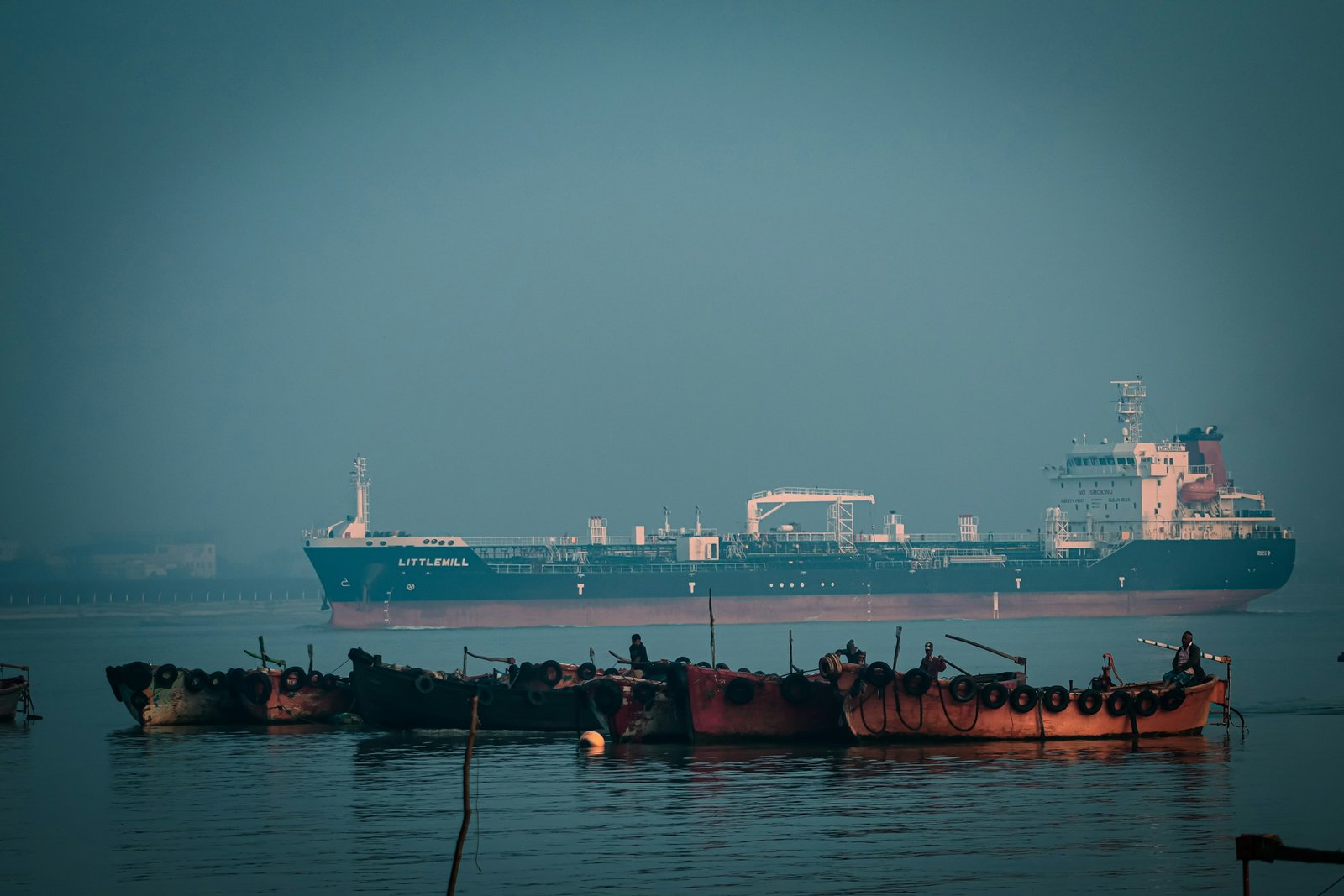
An admiralty lawyer in Chittagong brings and defends maritime claims against ships and their owners: arrest and release, collision, salvage, crew wages, mortgages, necessaries and judicial sale. Jurisdiction lies with the High Court Division under the Admiralty Court Act 2000, so claims arising at Chattogram port are filed in Dhaka and enforced at the quayside.
Key pointClassify the claim first: maritime liens such as crew wages survive a sale of the ship, but most ordinary maritime claims cannot be enforced by arrest if ownership changed before the suit was filed, and limitation periods are strictly applied.
At a glance
High Court Division jurisdiction
The Admiralty Court Act 2000 makes the High Court Division the admiralty court, so Chattogram claims are filed in Dhaka.
Statutory list of claims
Section 3 lists the maritime claims covered, from ownership and mortgages to cargo, salvage, necessaries, repairs and crew wages.
No arrest convention
Bangladesh is not party to the 1999 Arrest Convention; the courts apply the 2000 Act, the Admiralty Rules 1912 and English admiralty principles.
Bank guarantee for release
Release has traditionally required a bank guarantee from a local scheduled bank rather than a P&I club letter of undertaking.
Strict time limits
In November 2025 the High Court Division rejected a collision claim as time-barred under a two-year limitation period.
Swipe or scroll →
What an admiralty lawyer in Chittagong handles
An admiralty lawyer in Chittagong brings and defends maritime claims in the special jurisdiction that Bangladeshi law reserves for ships, cargo and the sea: actions against vessels themselves (in rem), claims against their owners (in personam), ship arrest and release, collision, salvage, crew wages, ship mortgages, necessaries and the judicial sale of ships. The work is fast, technical and international, and it usually begins with a ship lying at Chittagong port or its outer anchorage.
Chittagong is the country's principal seaport and the centre of its shipping community: shipowners and operators, agents, freight forwarders, bunker and stores suppliers, ship repairers, P&I correspondents, surveyors and the ship-recycling yards along the Sitakunda coast. When money is owed to or by a ship, or a ship causes damage, Chattogram is usually where the problem surfaces and where the evidence is.
Admiralty jurisdiction itself, however, is exercised by the High Court Division of the Supreme Court in Dhaka. An effective admiralty practice therefore needs people on the quayside in Chattogram and in the courtroom in Dhaka, working on the same file in real time.
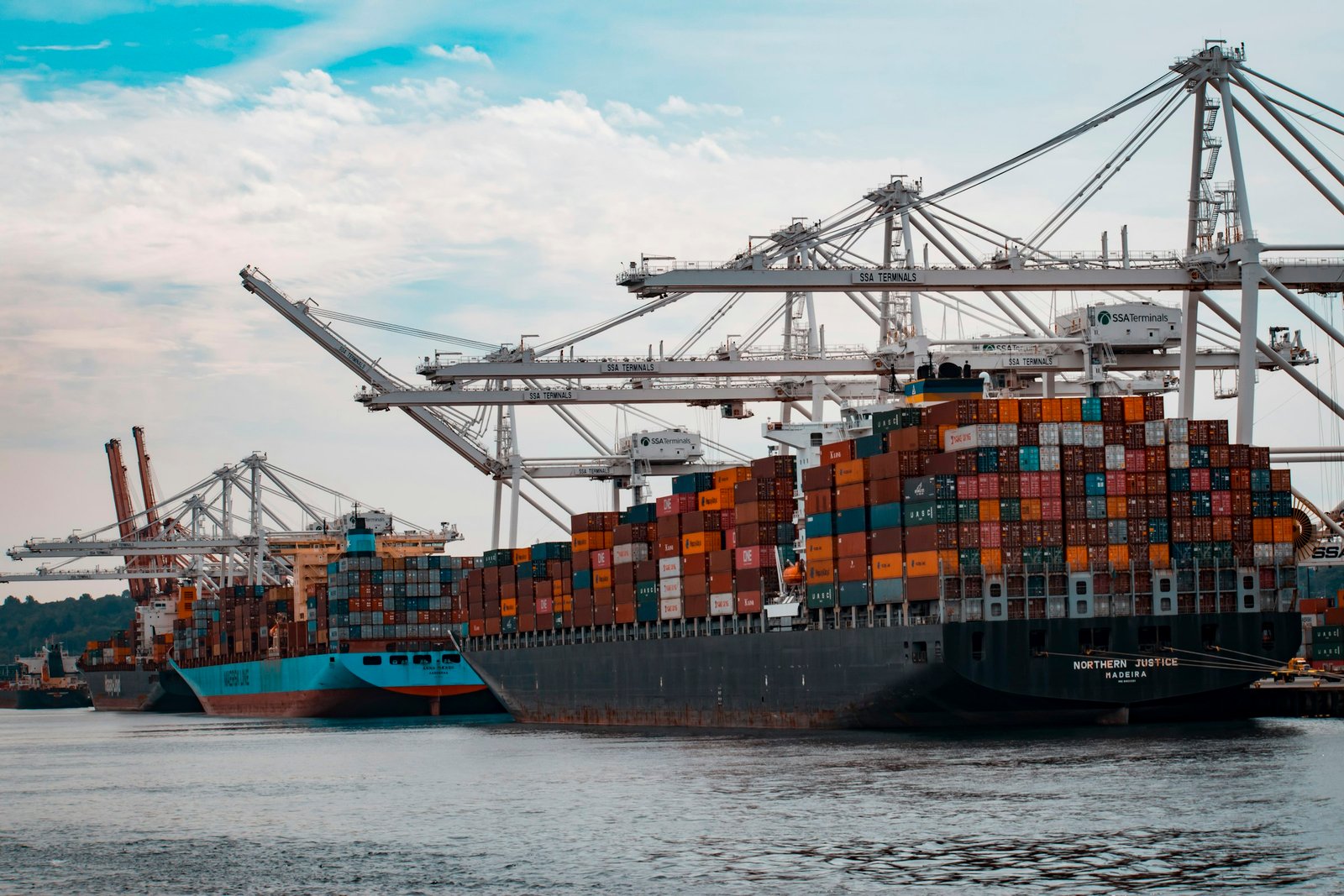
The legal framework for admiralty claims in Bangladesh
The Admiralty Court Act 2000 and the Admiralty Rules 1912
The Admiralty Court Act 2000 makes the High Court Division of the Supreme Court of Bangladesh the court of admiralty. Section 3 sets out the maritime claims within its jurisdiction, including claims to ownership and possession of a ship, disputes between co-owners, mortgages and charges, damage done by or to a ship, loss of or damage to cargo, salvage, towage and pilotage, supplies and necessaries, construction, repair and dock charges, crew wages, and forfeiture. The jurisdiction extends to ships whether Bangladeshi or foreign and wherever their owners live.
Section 4 governs how the jurisdiction is invoked, including actions in rem against the ship and, in the circumstances the section describes, against another ship beneficially owned by the person liable. The power to issue a warrant of arrest comes from section 4(4) read with rules 4 and 5 of the Admiralty Rules 1912, as the High Court Division confirmed in its 2025 ruling in the MT Gala admiralty suit. Under section 6, an admiralty suit is instituted by a plaint drawn up and verified under the Code of Civil Procedure 1908.
Other maritime statutes
- Bangladesh Merchant Shipping Ordinance 1983. Governs registration, ship mortgages, crew and safety. It recognises maritime liens for seamen's and masters' wages and contains provisions on limitation of shipowners' liability. A replacement merchant shipping law has been in draft for several years.
- Maritime Conventions Act 1911. Still applied by the courts to collision and salvage, including its two-year limitation period for collision claims.
- Carriage of Goods by Sea Act 1925. Gives effect to the Hague Rules for outbound shipments, including the one-year time bar for cargo claims.
- Arbitration Act 2001. Governs arbitration seated in Bangladesh and the recognition and enforcement of foreign awards, important because most charterparty disputes are referred to arbitration abroad.
- English law principles. Bangladesh has no marine insurance statute and is not party to the 1999 International Convention on Arrest of Ships; the courts draw on English admiralty law, maritime liens and the Marine Insurance Act 1906 where domestic law is silent.
Port and shipping authorities
The Chittagong Port Authority controls berthing, pilotage and the movement of vessels within port limits, and has its own powers to detain ships for damage to port property. The Department of Shipping and the Mercantile Marine Department, under the Ministry of Shipping, handle registration, safety and crew matters. Customs and port clearance are withheld once an arrest order is communicated.
Who brings admiralty claims in Chattogram
The nature of the claim decides almost everything: whether the ship can be arrested at all, whether a sale of the ship defeats the claim, which time limit applies and how the claim ranks against others. An admiralty lawyer in Chittagong will classify the claim before taking any other step.
| Claim | Typical claimant | Survives sale of the ship? | Key point |
|---|---|---|---|
| Crew and master's wages | Seafarers, manning agents | Yes, as a statutory maritime lien | High priority; often urgent for welfare reasons |
| Collision damage | Owners, P&I clubs, port | Yes, following English law on liens | Two-year limitation applied by the High Court Division |
| Salvage | Salvors, tug operators | Yes, following English law on liens | Reward depends on values saved and risk |
| Ship mortgage | Financing banks | Yes, as registered security | Can lead to judicial sale |
| Cargo loss or damage | Consignees, insurers | Generally no | Hague Rules one-year time bar |
| Necessaries, bunkers, repairs | Suppliers, shipyards | Generally no | Check whether owner or charterer ordered them |
| Charterparty claims | Owners, charterers | Generally no | Usually referred to arbitration |
Arrest is the most visible admiralty remedy; our ship arrest page explains it in detail. Cargo interests should also see our cargo claims page, and crew should see our page on seafarer claims.
Actions in rem and in personam
An action in rem is brought against the ship herself, named in the suit as the defendant, with her owners and parties interested. It allows a claimant to obtain security against an asset physically within the jurisdiction even if the owner is a single-ship company abroad. An action in personam proceeds against the owner or another liable party directly. A foreign owner who provides security to release an arrested ship generally submits to the court's jurisdiction, so the case then continues in personam as well.
Cargo on board cannot generally be arrested on its own; it is reached only together with the vessel. Bangladesh also has no general freezing order equivalent to a Mareva injunction for maritime claims, although the court can grant injunctions in suitable cases, for example to prevent a vessel being removed or scrapped while a claim is pending.
Judicial sale and priorities
Where an owner abandons an arrested ship or fails to provide security, the court can order her sale. Sales before judgment are exceptional and reserved for cases where the ship is deteriorating or her upkeep is eating into the value available to claimants. Sales after judgment are conducted by public auction under the court's supervision, advertised in national newspapers, and confirmed by the court, which can order a fresh auction if the bids are too low. The costs of the sale come first out of the proceeds.
When several claimants compete for a limited fund, the court applies English law principles of priority, with costs of the arrest and sale, maritime liens and registered mortgages generally ranking ahead of ordinary maritime claims. An admiralty lawyer in Chittagong acting for a smaller claimant, such as a supplier or repairer, should consider early whether there will be enough value left to make the claim worthwhile, and whether to intervene in another claimant's suit rather than starting a new one.
Ships bound for the recycling yards
Chattogram's coast at Sitakunda is home to the country's ship-recycling industry, and ships sold for demolition often arrive with unpaid crew, suppliers or financiers behind them. Once a vessel is beached and cut, the asset that secures an admiralty claim disappears. Claimants must therefore act before beaching, and an admiralty lawyer in Chittagong may seek an injunction preventing scrapping while the claim is decided. Our ship recycling team advises yards and buyers on the regulatory side.
In admiralty, the ship is both the defendant and the security. Once she sails, a claim against a foreign single-ship company can become very hard to enforce.
How an admiralty suit runs, step by step
- Classify the claim and check time. Confirm that the claim falls within section 3 of the Admiralty Court Act 2000, whether it is a maritime lien, and which limitation period applies. A late claim fails even if the ship is arrested.
- Identify the ship and her owners. Verify the vessel by IMO number, confirm registered and beneficial ownership at the relevant date, and track her position and schedule at Chattogram.
- Prepare the plaint and affidavit. Draft the plaint, verified under the Code of Civil Procedure, and the affidavit supporting a warrant of arrest under the Admiralty Rules, with authenticated documents and translations where needed.
- File in the High Court Division. The suit is filed and the arrest application moved before the admiralty bench in Dhaka. Court fees are assessed on the value of the claim.
- Serve and communicate the arrest. The warrant is served on the ship and the order communicated to the port and customs so that she cannot obtain clearance to sail.
- Negotiate security and release. The owner or its P&I club negotiates security, traditionally a bank guarantee from a Bangladeshi scheduled bank, and the court orders release.
- Proceed to trial, settlement or sale. The claim proceeds against the security. If no security is given and the claim succeeds, the court can order the ship's sale by public auction and distribute the proceeds by priority.
Bangladeshi practice has traditionally treated a bank guarantee from a local scheduled bank as the standard release security, rather than a P&I club letter of undertaking. Owners and clubs should line up guarantee arrangements, including any counter-guarantee from a foreign bank, the moment an arrest is threatened at Chattogram.
Recent High Court Division decisions
Two recent decisions illustrate how the court approaches admiralty cases. In the MT Gala suit, a claim of about USD 53.5 million for non-delivery of crude oil, the tanker was released in 2022 on a bank guarantee of USD 10 million, with the court ordering the claimant's counter-guarantee for interest as a condition of release. In a ruling of 11 March 2025, the court confirmed its arrest power and applied the English Evangelismos test: damages for wrongful arrest require bad faith or gross negligence, not merely an unsuccessful claim.
In Admiralty Suit No. 24 of 2021, decided on 27 November 2025, the court rejected a collision claim as time-barred under a two-year limitation period. The lesson is simple: arrest does not rescue a late claim, and limitation should be checked on the first day.
An admiralty lawyer in Chittagong should read these decisions alongside the long line of earlier Bangladeshi authority applying English admiralty principles, and test any novel point against both.
Documents and evidence
- Ship particulars: IMO number, flag, registry extract, class and P&I entry
- Ownership evidence at the date the claim arose and at the date of suit
- The contract or event behind the claim: bills of lading, charterparty, supply orders, repair contracts, crew agreements, salvage agreement or collision reports
- Invoices, statements of account, delivery receipts and bunker delivery notes
- Survey reports, port logs, VTS records, photographs and expert evidence
- Correspondence showing demand and any admission of liability
- Powers of attorney and authenticated corporate documents for foreign claimants
Risks and common mistakes
Arresting the wrong ship or suing the wrong owner
Ordinary maritime claims, such as for necessaries, generally cannot be enforced against a ship that changed hands before the suit was filed. Claims ordered by a charterer may not bind the owner at all. Sister-ship arrest depends on beneficial ownership by the person liable, which must be proved rather than assumed. Getting ownership wrong risks dismissal, costs and, where bad faith or gross negligence is shown, wrongful arrest damages. Thorough ownership checks before filing are essential.
Missing the limitation period
Different maritime claims carry different time limits: one year for cargo claims under the Hague Rules, two years for collision claims as applied by the High Court Division, and the general Limitation Act periods for many others. Admiralty claims are often discovered late, after the ship has left and correspondence has dragged on. Claimants should diarise the earliest possible deadline as soon as an incident occurs, and seek a written time extension from the other side where negotiations continue.
Ignoring an arbitration clause
Charterparties and many bills of lading incorporate arbitration, often in London or Singapore. An admiralty suit may still be used to obtain security by arrest, but the merits may have to be decided in arbitration. Pleading the merits fully in Dhaka without considering the arbitration clause can cause procedural problems and duplicate costs. Our arbitration team coordinates security in Bangladesh with proceedings abroad, and with enforcement of the eventual award.
Treating release security as an afterthought
Owners sometimes assume a P&I club letter will secure release as it would in other ports. In Bangladesh, release has traditionally required a bank guarantee, and arranging one through a local scheduled bank takes time, especially where a foreign counter-guarantee is needed. Every idle day at Chattogram carries charter, port and cargo costs. Owners should engage local counsel and banks immediately, negotiate the amount of security on the merits, and avoid paying an inflated claim simply to sail.
Overlooking regulatory and port issues
An admiralty claim can run alongside regulatory action by the port authority, customs or the Department of Shipping: detention for damage to port property, pollution investigations, crew welfare inquiries or customs holds on cargo. These can affect the ship's ability to sail even after the court orders release. A coordinated plan that addresses each authority, alongside our port and customs teams, avoids surprises at the last moment.
Cross-border and international angles
Almost every admiralty case at Chattogram is international. Owners are often single-ship companies in Singapore, the Marshall Islands, Liberia or Panama; P&I clubs sit in London, Oslo or Singapore; cargo interests and their insurers may be anywhere. An admiralty lawyer in Chittagong must deal with foreign documents, authentication, currency questions and the interplay between Bangladeshi proceedings and arbitration or litigation abroad.
Recovered funds must leave Bangladesh in line with Bangladesh Bank's foreign exchange rules, which should be planned into any settlement. TRW & Co's offices in Dhaka, Singapore, Dubai and London help coordinate these matters: Dhaka handles the High Court Division, while Singapore, Dubai and London sit close to many of the owners, clubs, insurers and arbitral seats involved.
How an admiralty lawyer in Chittagong at TRW & Co helps
Our Chattogram office at Room 4022, Annex 2, District and Sessions Judge Court Building, Court Hill (Porir Pahar), Kotwali, Chattogram 4000, works with our Dhaka team on admiralty matters before the High Court Division and with the port, customs and shipping authorities in Chattogram.
Claimant actions
We assess claims, check ownership and limitation, prepare plaints and affidavits, and move arrest applications for cargo interests, suppliers, repairers, crew, salvors and mortgagee banks.
Owner and P&I defence
We act for owners and clubs to challenge arrests, negotiate the amount and form of security, secure release quickly and defend the merits or pursue wrongful arrest where justified.
Judicial sale and priorities
Where a ship is sold by the court, we advise claimants on ranking and distribution, and buyers on acquiring the vessel free of earlier claims.
Arbitration and enforcement
We coordinate security in Bangladesh with arbitration in London or Singapore, and enforce foreign awards and settlements against assets in Bangladesh.
We do not promise outcomes or response times that depend on court listings. To discuss an urgent matter, visit our contact page, read about our wider shipping practice, or see all our practices and the Chattogram office overview. Our articles on maritime liens and claims and releasing an arrested ship give further background.
Checklist for owners, claimants and insurers
- Does the claim fall within section 3 of the Admiralty Court Act 2000, and is it a maritime lien?
- Who owned the ship when the claim arose, and who owns her now?
- What is the earliest limitation date, and has any extension been agreed in writing?
- Is there an arbitration or jurisdiction clause that governs the merits?
- Where is the ship now, and when is she due to sail from Chattogram?
- For owners: is a Bangladeshi bank guarantee, with any needed counter-guarantee, ready to go?
- Are port, customs and Department of Shipping issues being handled alongside the court case?
- How will any recovery be remitted in line with foreign exchange rules?
Admiralty matters move in hours, not weeks. If a ship connected with your claim is at or approaching Chattogram, speak to an admiralty lawyer in Chittagong before she sails.
Frequently asked questions
01Which court hears admiralty cases for ships at Chittagong port?
The High Court Division of the Supreme Court of Bangladesh, sitting in Dhaka, is the court of admiralty under the Admiralty Court Act 2000. There is no separate admiralty court in Chattogram, so suits concerning ships at Chittagong port are filed in Dhaka and arrest orders are then communicated to the port and customs in Chattogram. That is why admiralty practice needs coordinated teams in both cities working on the same timetable.
02What claims can be brought in admiralty in Bangladesh?
Section 3 of the Admiralty Court Act 2000 lists them. They include claims to ownership or possession of a ship, disputes between co-owners, mortgages and charges, damage done by or to a ship, cargo loss or damage, salvage, towage and pilotage, necessaries and supplies, construction, repair and dock charges, crew and master wages, and forfeiture. Whether a particular claim qualifies, and whether it allows arrest, depends on its exact nature and the facts.
03Can I arrest a ship that has been sold since my claim arose?
It depends on the type of claim. Maritime liens, such as crew wages, salvage and collision damage, follow the ship and can generally be enforced against her even after a sale. Ordinary maritime claims, such as for necessaries or most cargo claims, generally cannot be enforced by arrest if ownership changed before the suit was filed. Sister-ship arrest is possible in some cases where the ship is beneficially owned by the person liable.
04How is an arrested ship released?
The owner provides security acceptable to the court, usually a bank guarantee from a Bangladeshi scheduled bank, in the amount the court fixes by reference to the claim, interest and costs. The court then orders release and the claim continues against the security. Owners can argue for a lower amount if the claim is inflated. In the MT Gala suit, a tanker facing a claim of about USD 53.5 million was released in 2022 on a USD 10 million guarantee.
05Can an owner claim damages for wrongful arrest?
Yes, but the threshold is high. In its March 2025 ruling in the MT Gala suit, the High Court Division applied the English Evangelismos test: damages for wrongful arrest require the arresting party to have acted in bad faith or with gross negligence. An arrest that simply fails on the merits does not, by itself, give rise to damages. Owners should still document all losses caused by detention in case the test is met.
06How long do I have to bring an admiralty claim?
It depends on the claim. Cargo claims under the Hague Rules are subject to a one-year time bar from delivery. Collision claims are subject to a two-year period, which the High Court Division applied in rejecting a claim in November 2025. Many other maritime claims fall under the general Limitation Act 1908. Because the deadlines vary and are strictly applied, the limitation position should be checked as soon as an incident occurs.
07Does an arbitration clause prevent an admiralty suit?
Not necessarily. Claimants may use an admiralty suit and arrest in Bangladesh to obtain security, while the merits are decided in arbitration under the charterparty or bill of lading, often in London or Singapore. How the Bangladeshi proceedings interact with the arbitration must be planned carefully. Foreign arbitral awards can be enforced in Bangladesh under the Arbitration Act 2001, including against the security obtained here.
Sources and official materials
- Supreme Court of Bangladesh — High Court Division admiralty jurisdiction
- Admiralty Suit No. 08 of 2022 (MT Gala), order of 11 March 2025 — Arrest power, release security and wrongful arrest test
- Admiralty Suit No. 24 of 2021, judgment of 27 November 2025 — Collision claim rejected as time-barred
- Code of Civil Procedure 1908 — Plaints and procedure in admiralty suits
- Chittagong Port Authority — Port operations and vessel movements
- Ministry of Shipping — Shipping regulation, registration and the Department of Shipping
- Bangladesh Bank — Foreign exchange rules for remitting recoveries
General information only, current as at 2 November 2026. It is not legal advice and does not create an advocate–client relationship. It reflects the law of Bangladesh unless stated otherwise, and the law, court practice and official fees change frequently. Check current official sources and take advice on the facts of your matter.



