
TRW & Co · Banking, Finance & Debt Recovery
Debt Recovery Lawyer in Chittagong (Chattogram)
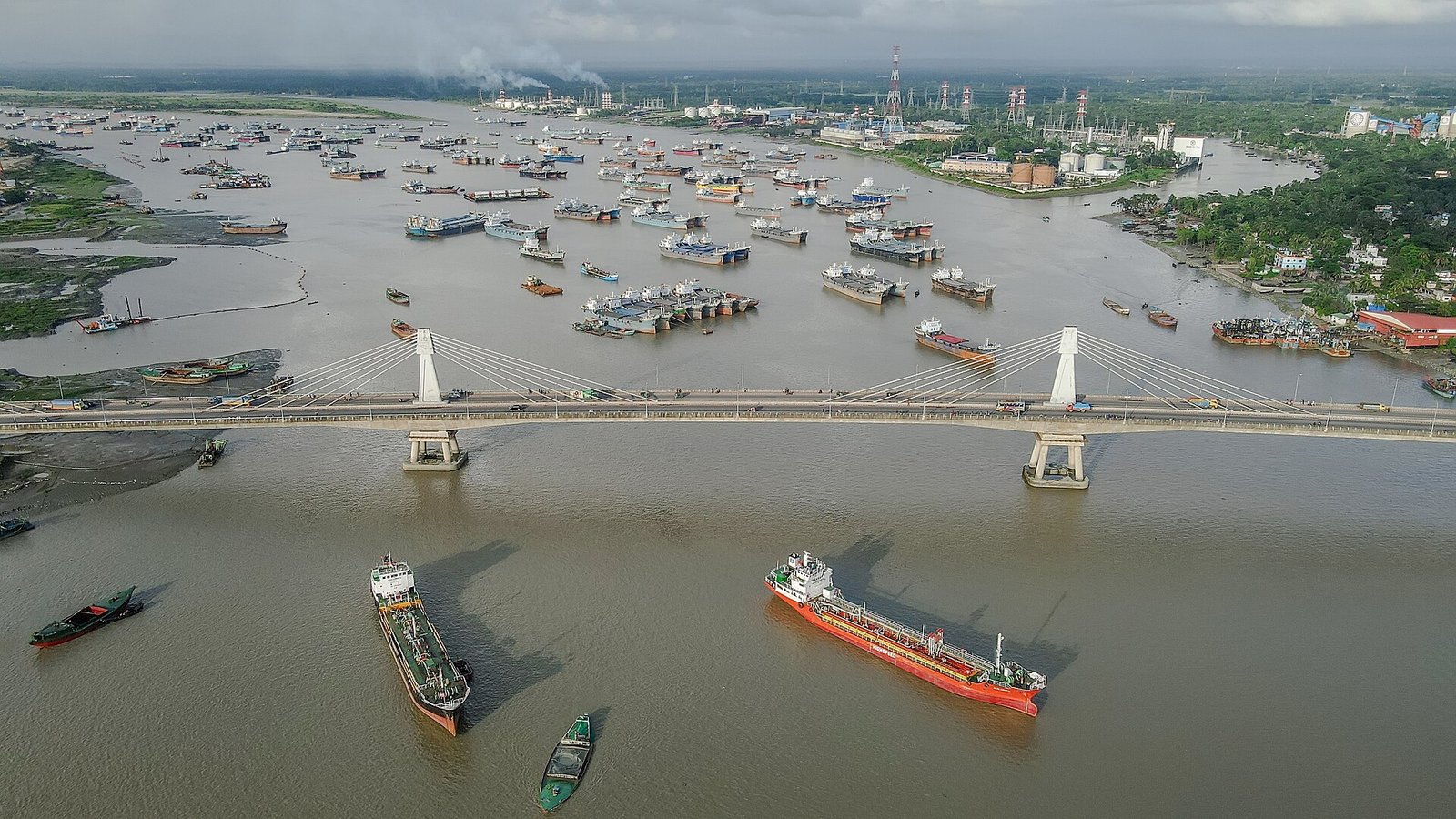
A debt recovery lawyer in Chittagong helps banks, suppliers, foreign exporters and individuals turn unpaid debts into cash. In Chattogram that means choosing between the Money Loan Court, a civil money suit, a cheque complaint, arbitration or insolvency proceedings, then tracing assets and executing the decree. The right route depends on who you are, what evidence you hold and what the debtor owns.
Key pointRecovery is decided at execution, not at judgment: trace the debtor's land, accounts and shares before you file, and protect any cheque deadline before you negotiate.
At a glance
Banks use special courts
Banks and financial institutions sue in the Artha Rin Adalat under the 2003 Act; ordinary trade creditors must use civil courts or other routes.
Appeals cost borrowers
A borrower appealing a Money Loan Court decree must deposit half the decretal amount, which strongly encourages settlement once a decree is passed.
Cheque deadlines are strict
Section 138 requires notice within 30 days of learning of dishonour, 30 days for payment, then a complaint within one further month.
Commercial courts are new
The Commercial Courts Act 2026, replacing a January 2026 Ordinance, created commercial courts in Chattogram and elsewhere; Money Loan Court cases are excluded.
Foreign awards are enforceable
Foreign arbitral awards are executed before the District Judge as if they were decrees, under section 45 of the Arbitration Act 2001.
Swipe or scroll →
What debt recovery covers in Chattogram
A debt recovery lawyer in Chittagong deals with one practical problem: money is owed, the debtor is not paying, and the creditor needs a route that ends in cash rather than paper. In Chattogram that route depends on who the creditor is, what the debt is evidenced by and what the debtor owns. A bank chasing a defaulted term loan, a steel supplier owed for invoices, a foreign seller with an unpaid shipment and a landlord owed arrears all use different laws and different courts.
The city's economy makes these disputes common. Chattogram is the country's main port and trading city, home to importers, commodity traders, indenting houses, shipbreakers, garment and textile exporters, and the banks that finance them. Credit runs on post-dated cheques, open-account invoices, letters of credit and mortgages over land in Nasirabad, Khulshi, Agrabad and the industrial belt from Sitakunda to Patiya. When a trading house fails, several creditors usually move at once.
This page explains the main recovery routes, how each works in the Chattogram courts and what a creditor should do in the first weeks. Banks and financial institutions should also read our pages on the Money Loan Court (Artha Rin Adalat) and loan settlement and rescheduling; borrowers facing a bank should see our guide to borrower defences in the Money Loan Court.

The legal framework for recovering debts in Bangladesh
Bangladesh has no single debt collection statute. A debt recovery lawyer in Chittagong chooses among several regimes, and the choice decides the court, the speed and the pressure that can be applied to the debtor.
Artha Rin Adalat Ain 2003 (bank and financial institution debts)
The Artha Rin Adalat Ain 2003 creates special Money Loan Courts for claims by banks and financial institutions. Ordinary trade creditors cannot use it. The Act includes mediation, restricts adjournments and makes appeals expensive: a borrower appealing a decree must deposit half of the decretal amount, and appeals go to the District Judge or the High Court Division depending on the size of the decree.
The Act also allows a lender holding a mortgage to sell the mortgaged property by public auction before suing, under section 12, subject to notice requirements. The High Court Division regularly hears writ petitions challenging such auction notices (see, for example, a recent writ over a section 12 auction notice), so lenders need their paperwork in order and borrowers need to act quickly.
Money suits under the Code of Civil Procedure 1908
Trade creditors, service providers, landlords and individuals usually file a money suit in the civil courts. The suit is valued on the amount claimed, which decides whether it goes to an Assistant Judge, Senior Assistant Judge or Joint District Judge. Interim relief, such as attachment before judgment, is available where the creditor can show the debtor is disposing of assets to defeat a decree.
Negotiable Instruments Act 1881 (dishonoured cheques)
A dishonoured cheque gives the payee a criminal complaint under section 138, separate from any civil claim. The payee must send a written demand within 30 days of learning of the dishonour; the drawer then has 30 days to pay; and the complaint must be filed within one month after that. An appeal against conviction requires a deposit of at least half the cheque amount. A 2026 amendment is reported in the press to have reallocated cheque cases by value, with cheques above a reported Tk 5 lakh going to more senior courts; check the current text before filing. See our cheque dishonour practice.
Insolvency, arbitration and the new commercial courts
Against a company that cannot pay, a creditor may petition the High Court Division to wind it up under the Companies Act 1994; individuals can be pursued under the Bankruptcy Act 1997. Where the contract has an arbitration clause, the claim belongs in arbitration under the Arbitration Act 2001.
In January 2026 a Commercial Court Ordinance was issued, and Parliament replaced it with the Commercial Courts Act 2026, passed on 7 April 2026. The regime provides for specialised commercial courts, and Money Loan Court cases are excluded; readers should check the Act's current text for any pre-suit mediation step. As of October 2026 the official cause-list portal lists two Commercial Courts for Chattogram Metropolitan and one for Chattogram district. Check the Act's current text for value thresholds and timelines before filing.
Choosing the right recovery route
The best route is the one that creates the most pressure for the least cost, given the evidence you hold. A debt recovery lawyer in Chittagong will usually combine routes: a cheque complaint and a civil claim can run in parallel, and a statutory demand can sit behind an arbitration.
| Route | Who can use it | Forum in Chattogram | Main strength | Main limitation |
|---|---|---|---|---|
| Money Loan Court suit | Banks and financial institutions | Artha Rin Adalat at the district court complex | Special procedure, heavy appeal deposit for borrowers | Not available to trade creditors |
| Section 12 mortgage sale | Lenders holding a mortgage | Out of court, by public auction | Recovery without first obtaining a decree | Notice defects invite writ challenges |
| Money suit | Any creditor | Civil court by value of claim | Full decree, interest and costs | Contested suits can take years |
| Cheque complaint (s.138) | Payee or holder of a dishonoured cheque | Metropolitan or judicial magistrate, or reportedly a joint sessions judge for larger cheques | Personal criminal exposure drives settlement | Strict notice and filing deadlines |
| Arbitration | Parties to an arbitration agreement | Seat chosen by the contract | Neutral, confidential, enforceable abroad | Award must still be enforced in court |
| Winding-up petition | Creditors of an insolvent company | High Court Division (company jurisdiction) | Serious leverage against a solvent but unwilling debtor | Not a substitute for a genuine disputed claim |
Evidence decides the route
A signed acknowledgement of debt, a dishonoured cheque or a bank guarantee changes everything. Without them, the creditor must prove delivery, acceptance and price through invoices, delivery challans, emails and ledgers. With them, the case is often about enforcement rather than liability, and settlement usually comes sooner.
Assets decide whether recovery is worth it
A decree against a debtor with no reachable assets is worth little. Before filing, check registered land, vehicles, bank relationships, shareholdings recorded at the Registrar of Joint Stock Companies and Firms and trade receivables. Land in Chattogram can be traced through sub-registry and record-of-rights searches; our title verification team runs the same checks for buyers.
The first question is not whether the debt is owed. It is what the debtor owns, where it sits, and how fast they can move it.
How a debt recovery claim runs in Chattogram
Most of our matters follow the same arc, whether the claimant is a local supplier or a foreign exporter. A debt recovery lawyer in Chittagong can usually tell within the first fortnight which route will work.
- Review documents and limitation. We check the contract, invoices, delivery records, cheques, guarantees and correspondence, and calculate limitation. Most simple debt claims must be filed within three years, but the start date varies and an acknowledgement in writing can restart the clock.
- Trace assets. We search land records, company filings and known bank relationships so the strategy targets something that can actually be attached.
- Send a legal notice. A properly drafted demand fixes the amount, interest and deadline, and is a statutory precondition for cheque complaints. Our legal notice practice handles drafting and proof of service.
- Negotiate from strength. Many debtors respond to a credible notice with a payment plan. We document any settlement with post-dated cheques, security and a consent decree where possible.
- File the claim and seek interim relief. If talks fail, we file the money suit, Money Loan Court suit, cheque complaint or arbitration, and apply for attachment or injunction where assets are at risk.
- Take the case through mediation and trial. We prepare witnesses and documents for mediation and hearing, and resist adjournment tactics.
- Execute the decree or award. Recovery happens at execution: attachment and sale of property, garnishment of bank balances and, in limited cases, civil detention. Our decree execution team takes over seamlessly.
Do not let a cheque deadline pass while negotiating. The 30-day notice window under section 138 runs from when you learn of the dishonour, and missing it removes the criminal route entirely. Send the notice, then negotiate.
Documents a debt recovery lawyer in Chittagong will ask for
Good files win debt cases. Before your first meeting, gather as much of the following as you can, in originals or certified copies where possible.
- The contract: purchase orders, supply agreements, sanction letters, facility agreements, and any terms and conditions on invoices.
- Proof of performance: delivery challans, bills of lading, receiving reports, completion certificates and goods-received notes signed by the debtor.
- Statements of account: ledgers, account statements, reconciliations and any balance confirmations signed by the debtor.
- Security: cheques, guarantees, mortgage deeds, hypothecation documents and personal guarantees from directors.
- Correspondence: emails, WhatsApp messages and letters in which the debtor admits the debt or promises payment. Electronic records are admissible, but preserve them with their metadata.
- Corporate information: the debtor's trade licence, incorporation details and director list, which matter for guarantees and winding-up.
- Bank evidence: dishonour slips, return memos and LC documents where payment ran through a bank.
For foreign creditors, documents signed abroad will usually need notarisation and attestation before they can be used in a Bangladeshi court, so start that process early.
Risks and common mistakes
Most failed recoveries fail for reasons that were avoidable. These are the issues we see most often in Chattogram.
Letting limitation expire while "keeping the relationship"
Creditors in long trading relationships often keep supplying while old invoices age. By the time they act, the earliest invoices may be outside the limitation period. A written acknowledgement of debt signed by the debtor before limitation expires can start a fresh period, so ask for balance confirmations regularly. If the relationship is breaking down, take advice before the oldest invoice crosses the limitation line. Our guide to limitation periods in Bangladesh explains how the periods are calculated.
A defective legal notice in a cheque case
Section 138 complaints fail on technicalities more than on merits. The notice must be in writing, demand the cheque amount, be sent within the time allowed and be served in a way you can prove. The complaint must follow within the statutory window. Wrong amounts, wrong addressees or missing proof of service give the accused an easy defence. Where a company drew the cheque, think carefully about which directors and officers to name, because liability attaches to those responsible for the conduct of its business.
Suing without tracing assets
A decree is only as good as the assets behind it. Debtors under pressure often transfer land to relatives, move stock or close accounts. Asset tracing before filing allows the creditor to seek attachment before judgment and to challenge transfers made to defeat creditors. In Chattogram, land searches at the sub-registry and record-of-rights offices are the most productive starting point, followed by company records and trade information.
Ignoring the arbitration clause
If the contract contains an arbitration clause and you file a suit anyway, the debtor can apply to stay the suit and send the dispute to arbitration, costing you months. Equally, an arbitration clause naming a foreign seat can be enforced in Bangladesh, and the courts can grant interim measures in support. Read the dispute resolution clause before choosing a forum. Our arbitration practice advises on both sides of that decision.
Accepting an informal settlement with no security
A promise to pay in instalments is useful only if it is enforceable. Settlements should be in writing, acknowledge the full debt, set a default clause that accelerates the balance, and be backed by security such as post-dated cheques, a personal guarantee or a mortgage. Where a case is already pending, record the settlement as a compromise decree so that default leads straight to execution rather than a fresh suit.
Foreign creditors and Bangladeshis abroad
Chattogram's importers buy from China, India, Singapore, the Gulf and Europe, often on open account or deferred LC terms. When payment fails, the foreign seller faces a debtor it has never met in a legal system it does not know. A debt recovery lawyer in Chittagong can bridge that gap.
Foreign arbitral awards are enforced in Bangladesh under section 45 of the Arbitration Act 2001, which gives effect to the New York Convention: the award is executed before the District Judge as if it were a decree, once the period for challenging it has passed. Foreign court judgments are harder; only judgments of designated reciprocating jurisdictions can be executed directly, and others must be sued on afresh. See our pages on arbitral award enforcement and enforcing foreign judgments.
Money recovered in Bangladesh for a foreign creditor must be remitted through the banking system in line with Bangladesh Bank foreign exchange rules. Where the original transaction was an import against an LC or contract, the bank file usually supports the remittance. Foreign investors with a registered presence should note that BIDA has been succeeded by the Invest Bangladesh Authority under the Invest Bangladesh Act 2026, which affects where some investment-related filings are made.
For Bangladeshis living in the UK, the Gulf or Singapore who are owed money by business partners or relatives at home, a properly attested power of attorney allows a representative to instruct us and appear on their behalf. TRW & Co's offices in Dhaka, Singapore, Dubai and London can take instructions and coordinate document signing abroad.
How TRW & Co helps creditors in Chattogram
Our Chattogram office at Room 4022, Annex 2, District and Sessions Judge Court Building, Court Hill (Porir Pahar), Kotwali, Chattogram 4000, works with our Dhaka team and our banking and disputes lawyers. We act for banks, non-bank lenders, suppliers, foreign exporters and individuals.
Pre-action assessment
We review the documents, calculate limitation, assess the debtor's assets and recommend the route with the best cost-to-recovery ratio. You get a clear plan before you spend on litigation.
Demand and negotiation
We draft and serve legal notices, negotiate payment plans and paper settlements with security. Many claims end here when the debtor sees a credible plan of action.
Money Loan Court work
For banks and financial institutions, we prepare and conduct Artha Rin suits, section 12 sales and execution cases, and respond to writ challenges in the High Court Division.
Civil and criminal routes
We file money suits, seek attachment before judgment, and run cheque dishonour complaints before the Chattogram magistrates and joint sessions courts.
Arbitration and award enforcement
We run domestic arbitrations and enforce foreign awards against Chattogram debtors, coordinating with counsel in Singapore, London or Dubai where the seat is abroad.
Insolvency leverage
Where a company debtor is insolvent or refusing to pay an undisputed debt, our insolvency lawyers advise on statutory demands and winding-up petitions.
We do not promise outcomes, and we will tell you if a claim is not worth pursuing. Our wider banking and finance practice and commercial litigation team support larger or contested matters.
Working with a debt recovery lawyer in Chittagong: local practice points
Recovery in Chattogram has its own rhythm. The district court complex on Pori Pahar (Fairy Hill) houses the civil courts, the Money Loan Courts and many magistrates, and most hearings are listed there. Cheque complaints are heard by the metropolitan magistrates for cases arising in the city and by judicial magistrates in the district, with larger cheques reportedly now going to joint sessions judges.
Service of summons is a frequent source of delay. Debtors in trading families often have multiple addresses across Khatunganj, Agrabad and their home villages. A debt recovery lawyer in Chittagong who knows how to serve properly, by court process and by registered post with acknowledgement, removes a common excuse for adjournment.
Execution is where local knowledge matters most. Attaching land requires accurate schedules taken from the record of rights, and attaching bank balances requires knowing where the debtor banks. Auctions of attached property need valuation and publicity. Our team handles each step so that a decree turns into money.
Checklist for creditors and decision-makers
Use this list before you instruct a debt recovery lawyer in Chittagong or approve spending on a claim.
- Have we calculated limitation for every invoice, loan instalment and cheque?
- Do we hold a signed acknowledgement, cheque, guarantee or mortgage?
- Does the contract contain an arbitration or jurisdiction clause?
- Have we checked what land, accounts, vehicles and shares the debtor owns?
- Is there a cheque deadline running now?
- Are directors or guarantors personally liable?
- Are we a bank or financial institution entitled to use the Money Loan Court?
- Would a winding-up petition create leverage without inviting a dispute about the debt?
- For foreign creditors: are our documents notarised and attested, and can we remit recovered funds?
- Who will give evidence, and are they available for hearings in Chattogram?
If you can answer most of these, you are ready to decide. If not, contact our Chattogram office at info@trw.co or +880 1779 127165 and we will help you fill the gaps. For other areas of law, browse all our practices or return to the Chattogram office hub.
Frequently asked questions
01Can a supplier use the Money Loan Court to recover unpaid invoices?
No. The Artha Rin Adalat is reserved for banks and financial institutions recovering loans and advances. A supplier, contractor or other trade creditor must use a civil money suit, a cheque complaint if it holds a dishonoured cheque, arbitration if the contract provides for it, or a winding-up petition against an insolvent company. These routes can be combined. A debt recovery lawyer in Chittagong will usually recommend a legal notice first, then the route that creates the most pressure for the evidence you hold.
02How long do I have to start a debt claim in Bangladesh?
Most simple debt claims for goods sold or money lent must be filed within three years under the Limitation Act 1908, but the start date depends on the type of claim and the payment terms. A written acknowledgement of the debt, signed by the debtor before the period expires, can start a fresh period. Cheque complaints have far shorter statutory windows. Because the calculation can be technical, have a lawyer check limitation for every invoice and instalment before you decide to wait.
03Is a cheque complaint better than a civil suit?
They do different jobs. A cheque complaint under section 138 of the Negotiable Instruments Act creates personal criminal exposure, which often prompts payment, and an appeal requires a deposit of at least half the cheque amount. A civil suit can claim the full debt, interest and costs, including amounts not covered by any cheque. Many creditors run both in parallel. The criminal route is only open if the strict notice and filing deadlines have been met.
04What happens after I win a decree?
The decree must be executed. You file an execution case asking the court to attach and sell the debtor's land or other property, attach bank balances or, in limited cases, detain the judgment debtor. Execution is often contested, so accurate property schedules and knowledge of the debtor's banks make a real difference. In Money Loan Court cases, the 2003 Act has its own execution provisions, including auction of mortgaged and attached property.
05Can a foreign company recover a debt from a Chattogram importer?
Yes. If the contract has an arbitration clause, an award from a foreign seat can be enforced in Bangladesh under section 45 of the Arbitration Act 2001, before the District Judge. Without arbitration, the foreign creditor can sue in the Chattogram civil courts. Documents signed abroad usually need notarisation and attestation, and recovered funds must be remitted through the banking system in line with Bangladesh Bank rules. TRW & Co coordinates with its offices in Singapore, Dubai and London.
06Can a bank sell my mortgaged property without going to court?
Section 12 of the Artha Rin Adalat Ain 2003 allows a lender to sell mortgaged property by public auction before filing a suit, provided it follows the statutory notice process. Borrowers can challenge defective notices, often by writ petition in the High Court Division, and the court may grant a stay on conditions such as part payment. If you receive an auction notice, take advice immediately, because the timetable is short.
07Does the new commercial court law affect debt claims?
The Commercial Courts Act 2026, passed on 7 April 2026 to replace the January 2026 Ordinance, provides for specialised commercial courts with their own procedure; readers should check the Act's current text for any pre-suit mediation step, case management rules and adjournment limits. Commercial debt disputes between businesses may fall within it, but Money Loan Court cases are excluded. The official cause-list portal lists two commercial courts for Chattogram Metropolitan and one for the district; check the Act's current text for any value threshold or timeline.
Sources and official materials
- Artha Rin Adalat Ain 2003 — Money Loan Courts for bank and financial institution claims
- Supreme Court of Bangladesh — High Court Division judgments on Artha Rin, cheque and winding-up cases
- Writ Petition No. 9316 of 2024 (section 12 auction notice) — High Court Division challenge to a section 12 auction
- Commercial Court Ordinance 2026 (Financial Express report) — Issue of the commercial court ordinance and its scope
- Bangladesh Bank — Foreign exchange and loan classification rules
- Registrar of Joint Stock Companies and Firms — Company records for asset and director checks
General information only, current as at 2 November 2026. It is not legal advice and does not create an advocate–client relationship. It reflects the law of Bangladesh unless stated otherwise, and the law, court practice and official fees change frequently. Check current official sources and take advice on the facts of your matter.



